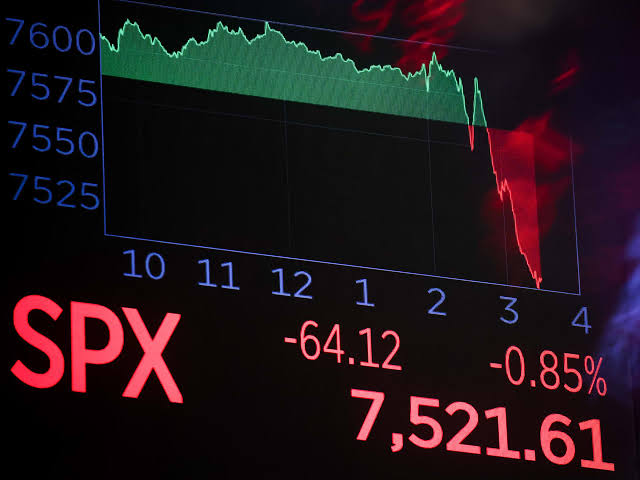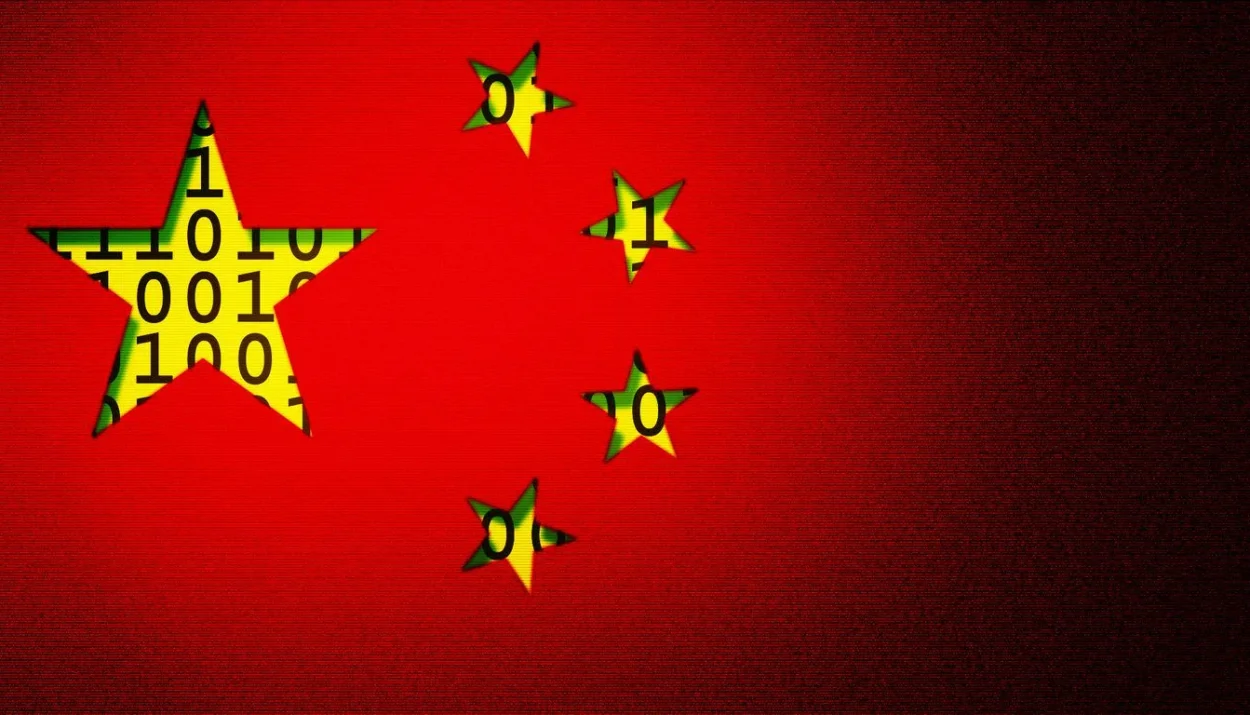

China’s latest AI breakthrough rattled US tech stocks on Friday after Beijing-based startup Moonshot AI released its new Kimi K3 model, challenging the long-held belief that Chinese AI companies remain six to twelve months behind their Western rivals.
The model quickly climbed to the top of the Arena benchmark rankings, delivering frontier-level performance at a significantly lower cost. Kimi K3 ranked first in categories including Brand & Marketing, Reference-Based Design, Data & Analytics, Consumer Products, Simulations, and Content Creation Tools, while placing second only to Fable 5 in Gaming.
The announcement weighed on major AI-related stocks. TSMC and Meta fell 2.8%, Nvidia and Alphabet each lost 2.2%, Microsoft declined 1.8%, while Amazon, AMD, and Broadcom slipped around 1%.
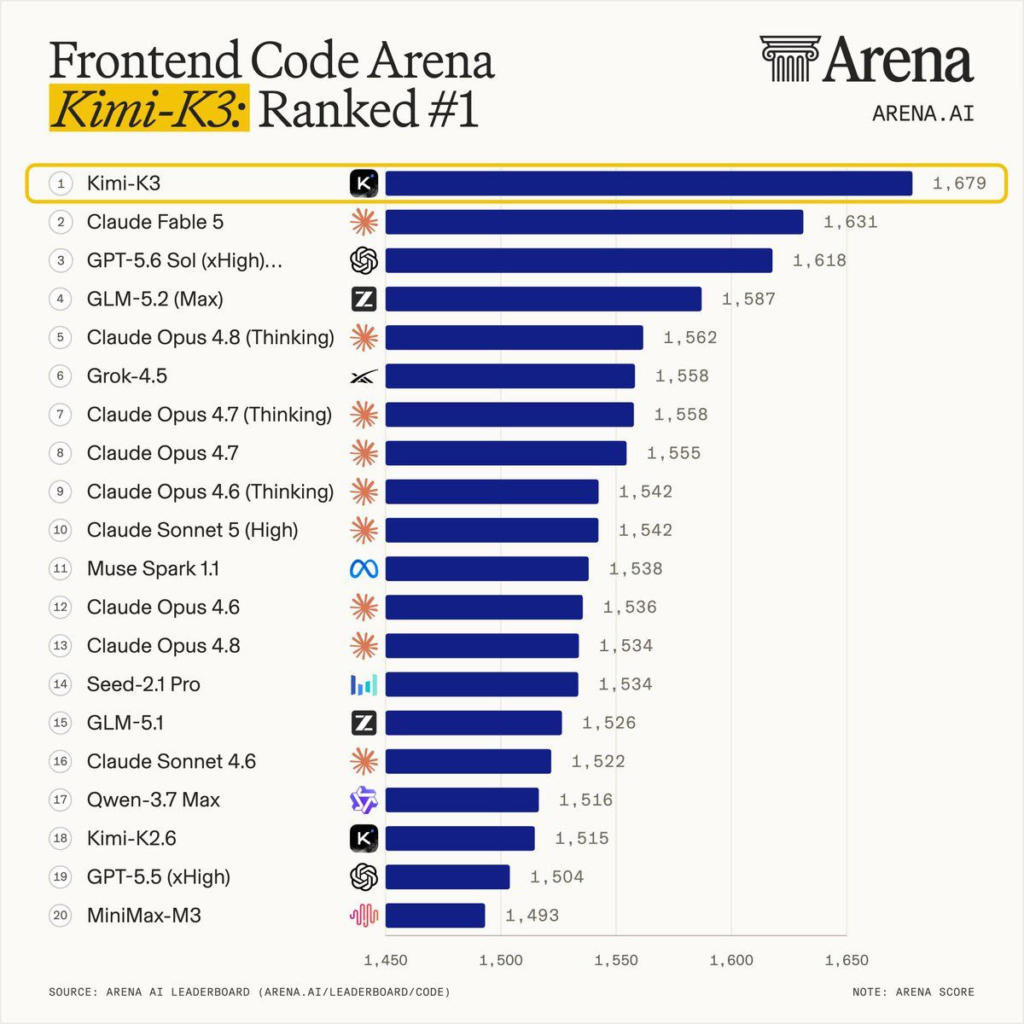
One of Kimi’s biggest advantages is pricing. The model reportedly costs around 40% less than Anthropic’s Opus 4.8 and will become open-weight on July 27, allowing companies to customise and run it on their own infrastructure.
Performance was another surprise. In Arena’s front-end coding benchmark, Kimi outperformed both Anthropic’s Fable 5 and OpenAI’s GPT-5.6 Sol, while also finishing ahead of Opus 4.8 in the platform’s broader text rankings. Although a single benchmark does not determine a long-term leader, strong results combined with lower pricing are increasing pressure on expensive closed AI models.
The timing also added pressure on US AI leaders. Alphabet is reportedly facing delays to its Gemini 3.5 Pro model, while Meta’s shares declined despite a New York Times report that Anthropic is in talks to purchase $10 billion worth of computing capacity from the company.
The emergence of Kimi K3 means Google’s Gemini, Meta’s Llama, Microsoft-backed OpenAI, and Amazon-backed Anthropic now face a competitor that businesses can deploy and customise themselves rather than relying on closed systems.
For semiconductor companies, the implications are mixed. Lower-cost AI models could increase demand for inference computing as AI becomes more accessible, but they also strengthen the argument that future model improvements may require less spending on increasingly expensive training infrastructure.
Retail investor sentiment reflected that uncertainty. Traders remained highly bullish on TSMC (93% bullish) and Nvidia (77% bullish), while sentiment turned more cautious for Broadcom (65% bearish) and was nearly evenly split for AMD. Among the AI labs, Microsoft attracted the weakest sentiment, with 56% of retail investors taking a bearish view.
Disclosure: This article does not represent investment advice. The content and materials featured on this page are for educational purposes only.