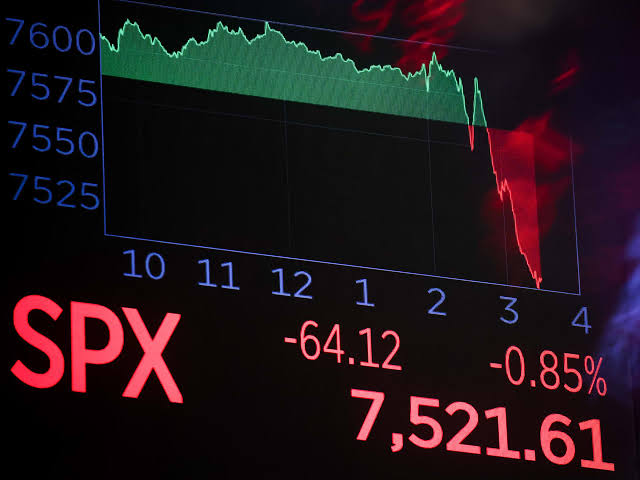

Strong company profits give investors a reason to stay confident. But higher borrowing costs and persistent inflation could still put pressure on stocks, even if businesses continue to grow.
In its September 12 analysis, Macro Mornings highlights a combination worth watching: rising US interest-rate expectations alongside a weakening dollar. Its concern is that investors focused on earnings could miss pressure building elsewhere in the financial system.
Earnings Are Growing Beyond AI
According to the newsletter’s calculations, S&P 500 earnings grew roughly 30% in the second quarter of 2026, after adjusting for gains linked to private investment holdings.
AI infrastructure businesses delivered 54% earnings growth, contributing close to half of the index’s overall increase. But the improvement was not limited to AI. The remaining businesses, excluding energy, recorded 14% growth, compared with 6% in the fourth quarter of 2025.
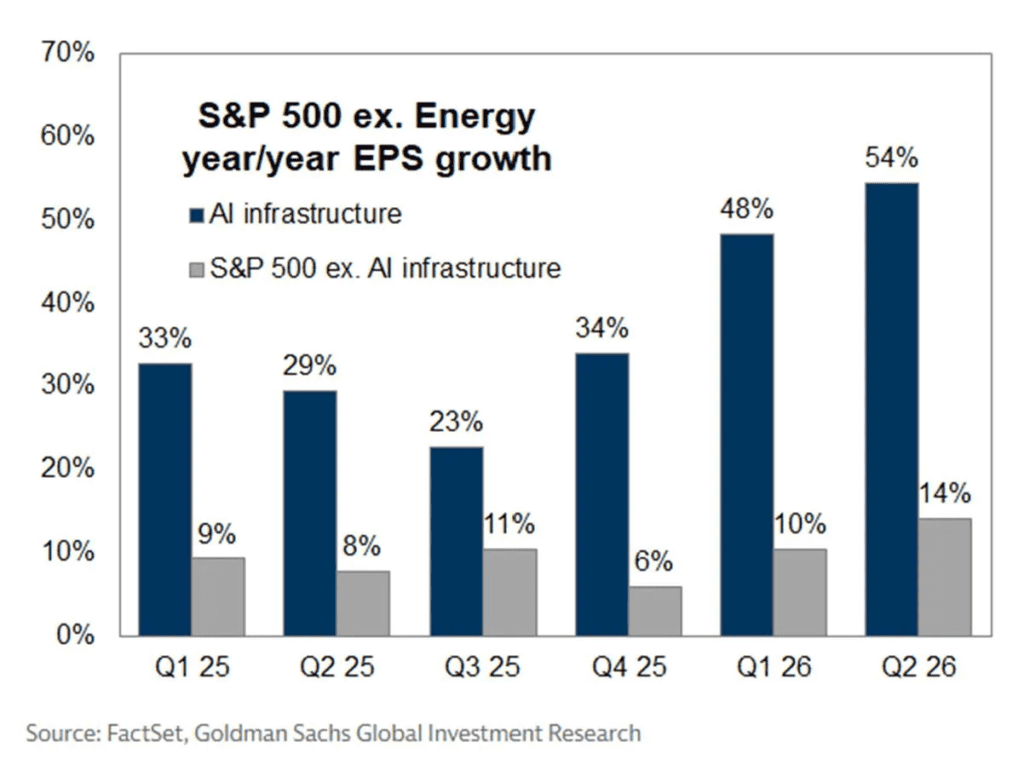
That gives the market a broader base of support. More companies are increasing profits, reducing dependence on a small group of technology businesses.
However, profits are only part of what determines a share price. The other part is how much investors are willing to pay for them.
When bonds offer higher returns, stocks face more competition for investors’ money. Higher rates also make borrowing more expensive and can reduce the value investors place on future growth.
A company can therefore report better results while its shares fall. The business may be performing well, but its price may already assume even stronger growth.
Rate Expectations Have Changed Sharply
The shift in expectations is another important part of the newsletter’s argument.
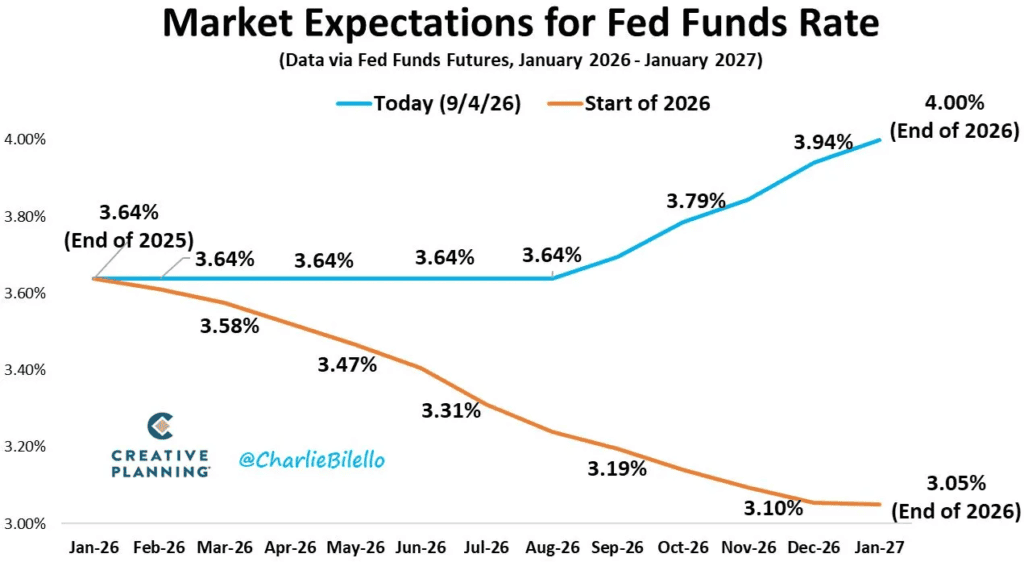
Macro Mornings reports that, at the start of January, futures markets pointed to a year-end US interest rate of around 3.05%. By the period covered in its September analysis, that had risen to roughly 4%.
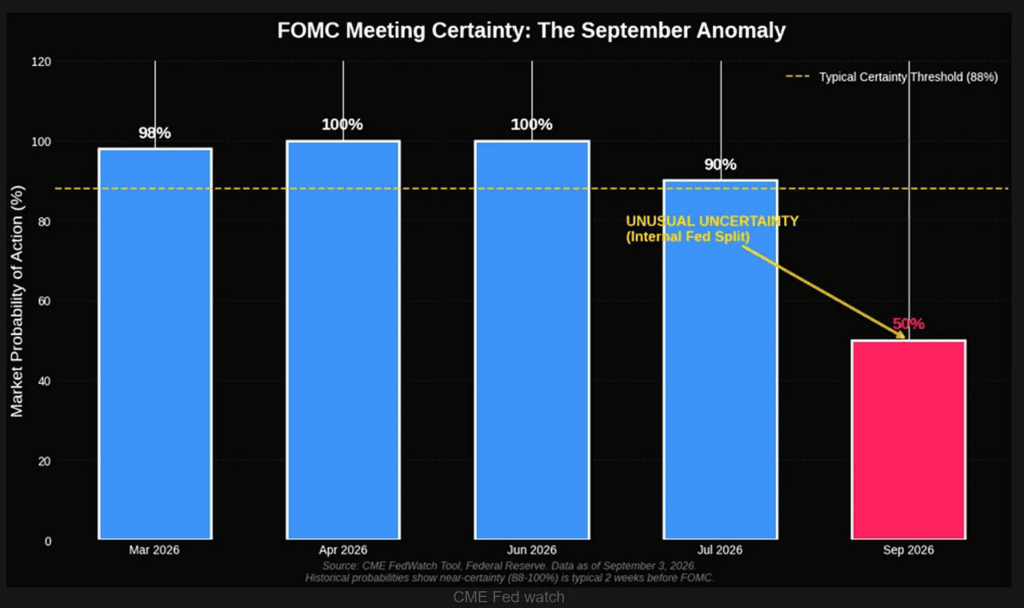
That is a change of about 95 basis points, or almost one percentage point, even though the newsletter says the Fed had left rates unchanged during that period.
For companies and households, expectations can matter before a central bank acts. Bond yields and lending rates can move as investors anticipate tighter policy, making mortgages, business loans and refinancing more expensive.
For stocks, that means the financial environment can become less supportive while the latest earnings reports still look strong.
Inflation Could Make Growth More Expensive
Recent inflation figures help explain that concern.
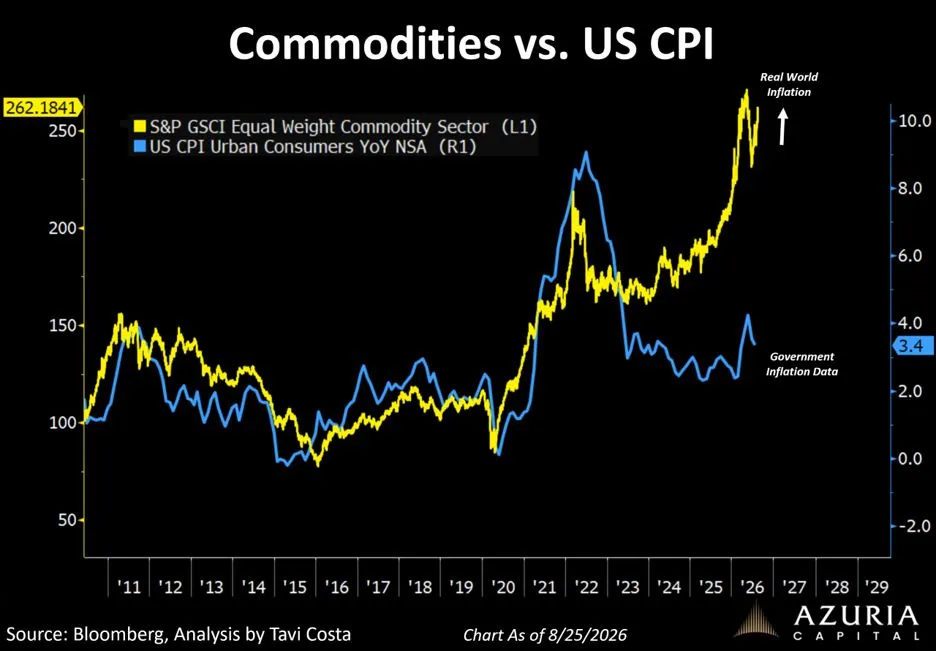
US consumer prices rose 3.4% over the year to August, while monthly inflation accelerated to 0.4%, from 0.1% in July. Gasoline prices climbed 3.9% during August, accounting for more than a third of the monthly increase. Annual core inflation, which excludes food and energy, eased to 2.4%. Bureau of Labor Statistics
Meanwhile, producer prices increased 5.4% annually and 0.4% over the month. Energy accounted for more than three-quarters of the monthly rise in producer goods prices. Bureau of Labor Statistics
Related: CPI Report: August Inflation Stays High, Putting Fed Rate Hike in Focus
For businesses facing higher fuel, transport or material costs, the challenge is keeping enough of their sales as profit.
Some can raise prices without losing customers. Others may need to absorb the increase, find savings or accept lower margins. If price increases become widespread, they could also make inflation harder to bring down.
The two inflation measures cover different baskets, so the two-percentage-point gap does not directly measure lost profit margins. Still, it gives investors a reason to examine costs as closely as revenue.
Why a Weaker Dollar Adds Another Question
Higher US interest rates can support the dollar by making dollar-based investments more attractive. If the currency weakens despite rising yields, the reasons deserve closer attention.
The newsletter draws a comparison with 1994, when US monetary tightening coincided with dollar weakness. Its broader argument is that pressure can emerge in currencies and credit even when the stock market does not immediately reflect it.
That comparison is a warning to investigate, rather than proof that the same outcome will follow. Exchange rates also depend on overseas growth, other central banks’ policies and changes in capital flows.
For businesses, the effects can be mixed. A weaker dollar can make imports more expensive, adding to costs. But it can also help US exporters and increase the dollar value of earnings generated overseas.
That makes the details of each company’s business increasingly important.
The Next Test Is Whether Profits Hold Up
Strong demand matters, but investors also need to see whether companies can turn it into cash after paying for wages, materials, interest and expansion.
For businesses spending heavily on AI infrastructure, that means watching whether new revenue keeps pace with construction and financing costs. For consumer companies, it means seeing whether customers will accept higher prices without cutting back.
The earnings picture can remain strong while investing becomes more difficult. What matters now is whether companies can protect their profits as costs rise, and whether their share prices leave room for anything to go wrong.
Disclosure: This article does not represent investment advice. The content and materials featured on this page are for educational purposes only.