

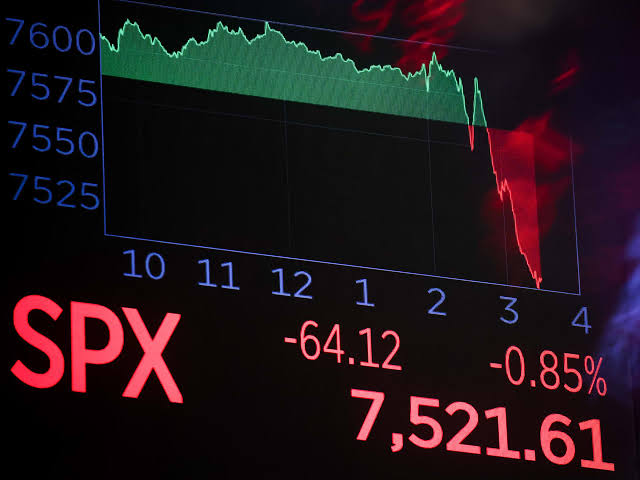

The S&P 500’s steady headline performance is masking a weaker market underneath. The equal-weighted index has fallen more than 5% from its August peak, fewer stocks are holding their long-term trends, and investors have been raising cash.
That is the central argument in Callum Thomas’s September 27 ChartStorm, which examines the widening gap between the biggest companies and the broader market.
The weakness could help set the stage for a fourth-quarter recovery. But expensive valuations, ambitious earnings forecasts and tighter monetary policy leave little room for disappointment. Here are 10 developments shaping the market outlook.
1. A sell-off is happening beneath the surface
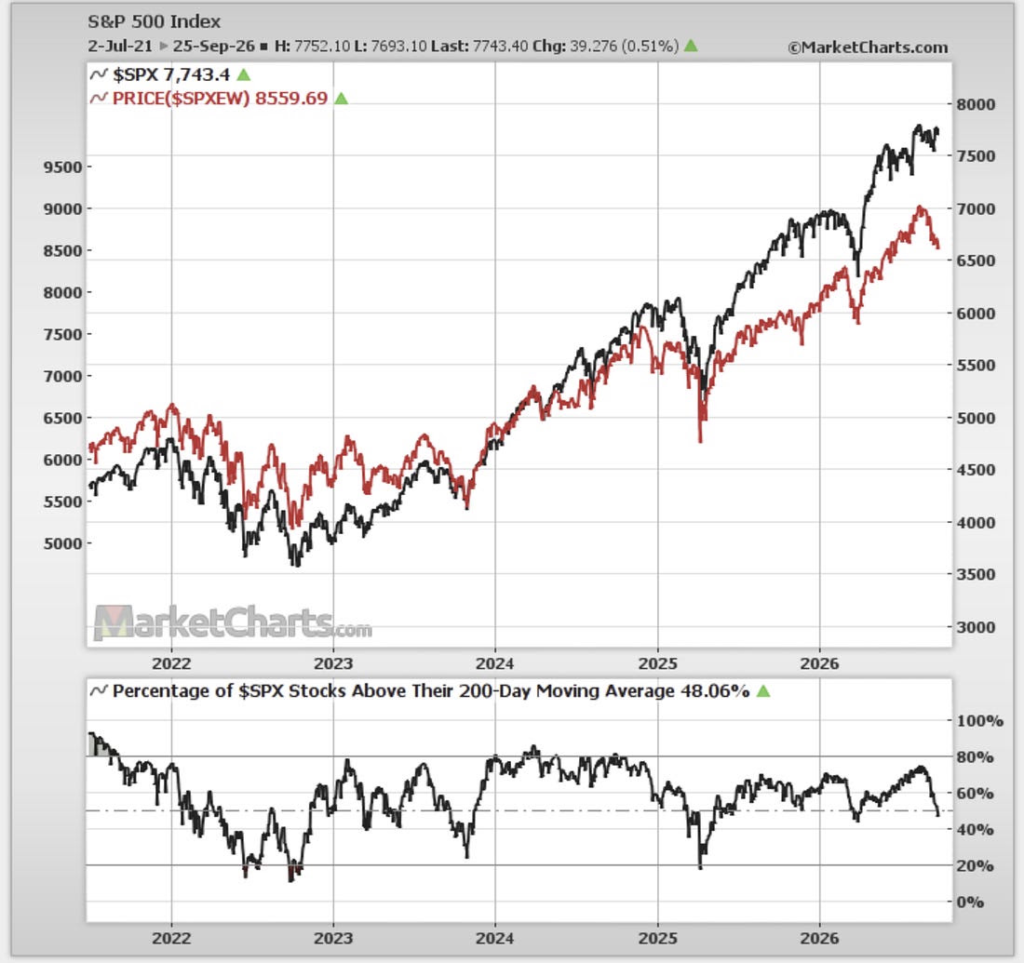
While the headline S&P 500 has largely moved sideways, its equal-weighted version has dropped just over 5% from its August 13 peak.
The difference matters. The standard index gives larger companies more influence, allowing a handful of heavyweights to support its performance. The equal-weighted index gives each company roughly the same importance, revealing more of the weakness across its members.
Market breadth tells a similar story. The share of stocks trading above their 200-day moving average has fallen from the high 70% range to just below 50%.
That means fewer than half are now above that widely watched long-term trend measure. The headline index looks considerably healthier than many of its stocks.
2. The gap between large companies and the rest keeps widening
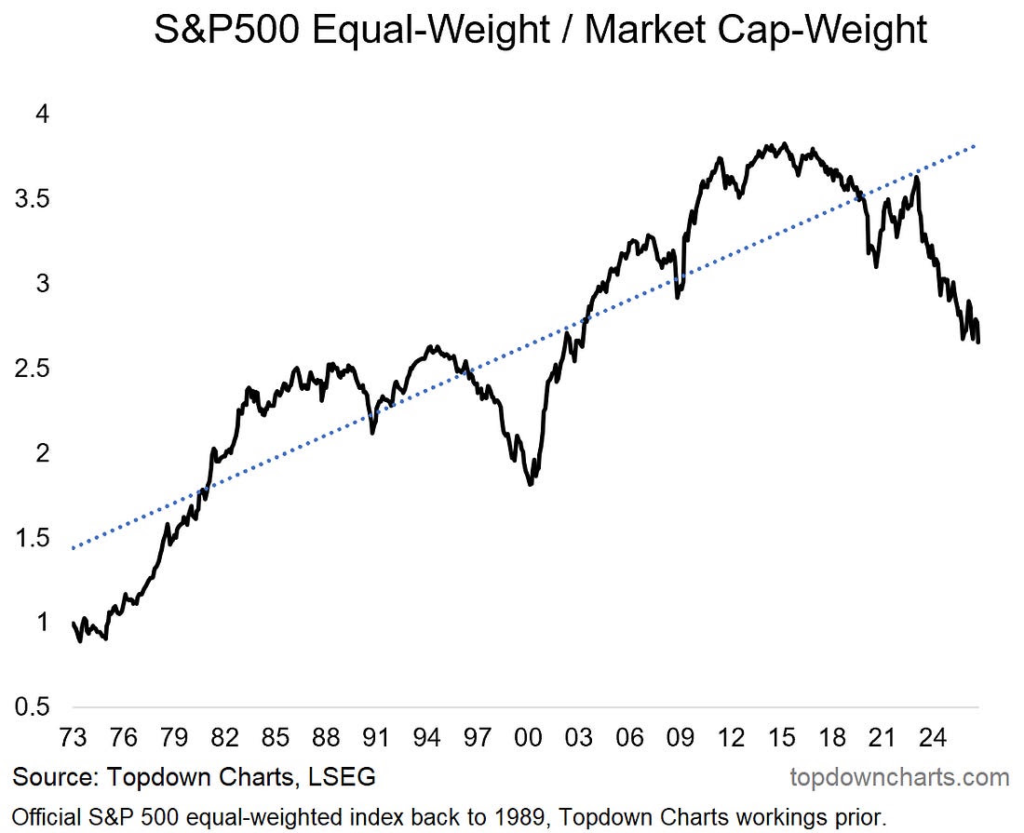
The relative performance of the equal-weighted S&P 500 against the standard index has reached a more than 20-year low.
This is about more than a difficult few weeks. It reflects an extended period in which the largest companies have pulled ahead of the average stock.
That concentration can sustain index gains while market leaders remain strong. But it also increases the importance of their earnings and share-price performance. A broader recovery would require more companies to start participating.
3. Investors have been building cash positions
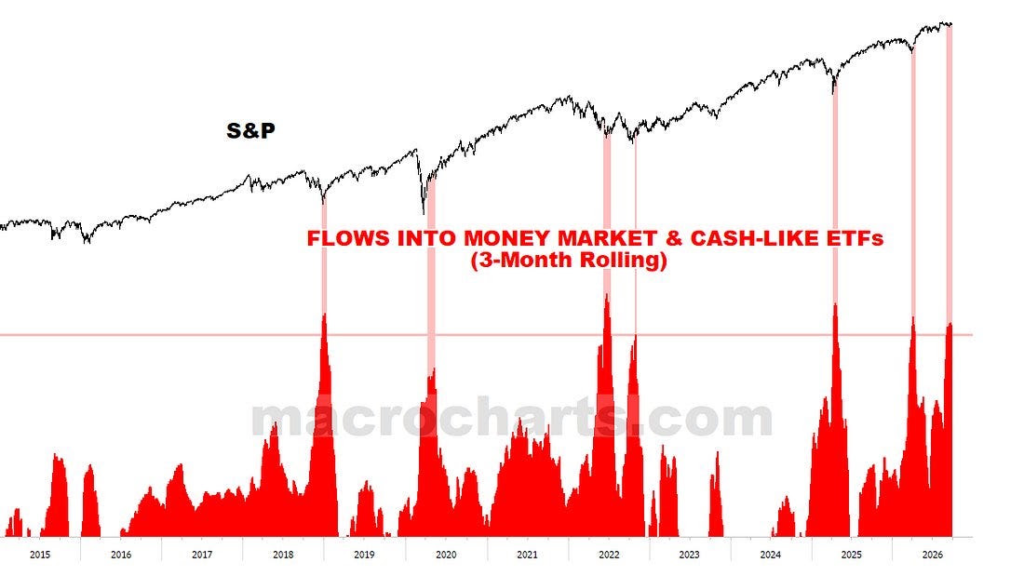
Investor flows show cash raising at a pace comparable with some major market corrections and resets over the past decade.
That supports the idea that investors have already become more defensive, even without a dramatic decline in the headline S&P 500.
Cash can provide buying power if confidence improves. However, it does not guarantee an immediate rebound. Investors may remain cautious if inflation, borrowing costs or corporate results deteriorate.
The encouraging possibility is that some selling pressure has already passed through the market before the fourth quarter begins.
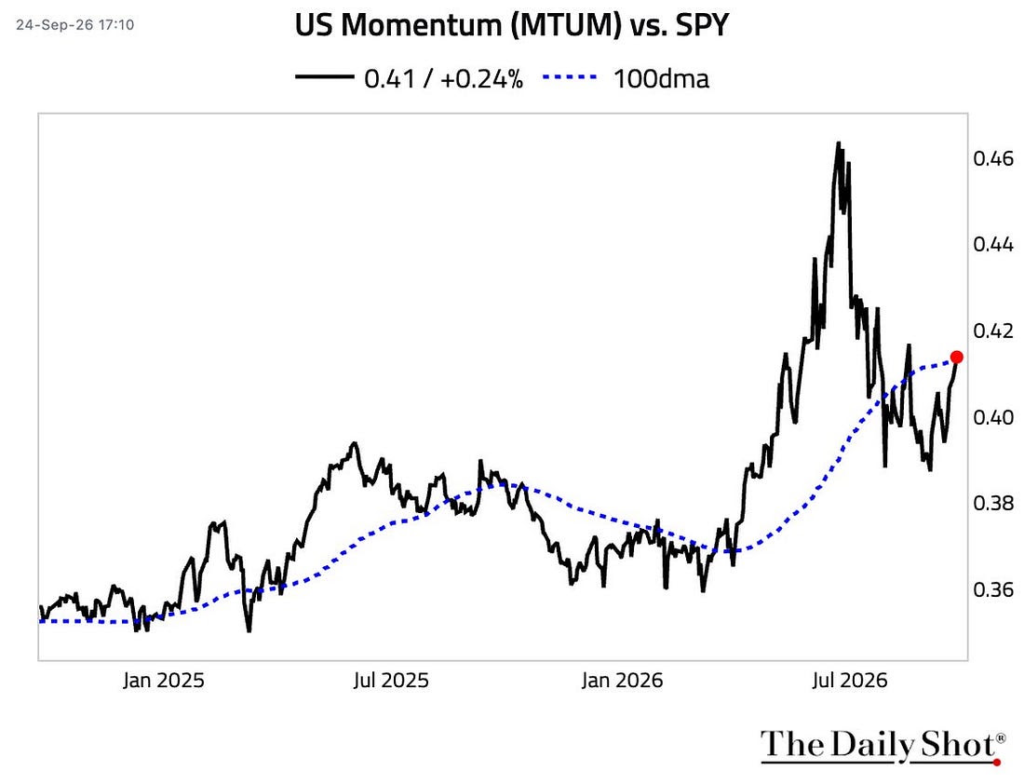
4. Momentum stocks are recovering
Momentum stocks, which investors favor for their strong recent performance, peaked in both absolute and relative terms in June but have since started recovering.
Their renewed strength could help support a year-end advance, particularly if the broader market stabilizes after its recent weakness.
Still, a recovery concentrated in the same group of winners would leave the market’s underlying imbalance unresolved. A more convincing rally would combine strong leadership with improving participation elsewhere.
5. Earnings expectations are becoming demanding
Expectations for corporate profit margins continue to rise, creating a potentially difficult hurdle for companies.
High share prices become easier to justify when earnings grow strongly. But that argument depends on businesses actually delivering the profits investors expect.
If projected margins prove too optimistic, earnings estimates may need to fall. Companies could report growth and still disappoint a market that had priced in something better.
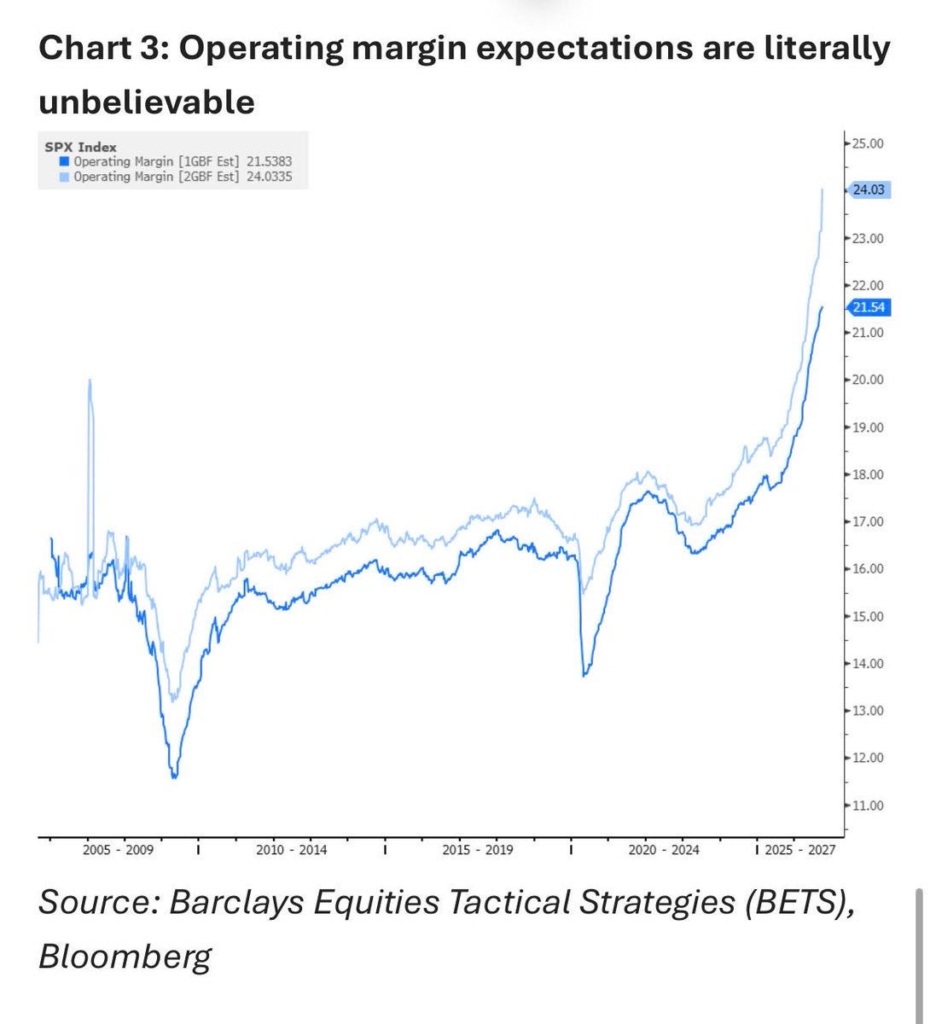
The question is therefore how much future improvement is already reflected in stock prices.
Related: The AI Boom Is Increasingly Being Financed by Debt.
6. Lower forward valuations may offer less comfort than they appear to
The cyclically adjusted price-to-earnings ratio, or CAPE, is approaching some of its highest historical readings. This measure compares prices with inflation-adjusted earnings averaged over a decade.
Forward price-to-earnings ratios can look more reassuring because they use expected future profits. But that creates a dependence on forecasts.
If earnings rise sharply, current prices may become more reasonable. If those forecasts are overstated, stocks could be more expensive than their forward multiples suggest.
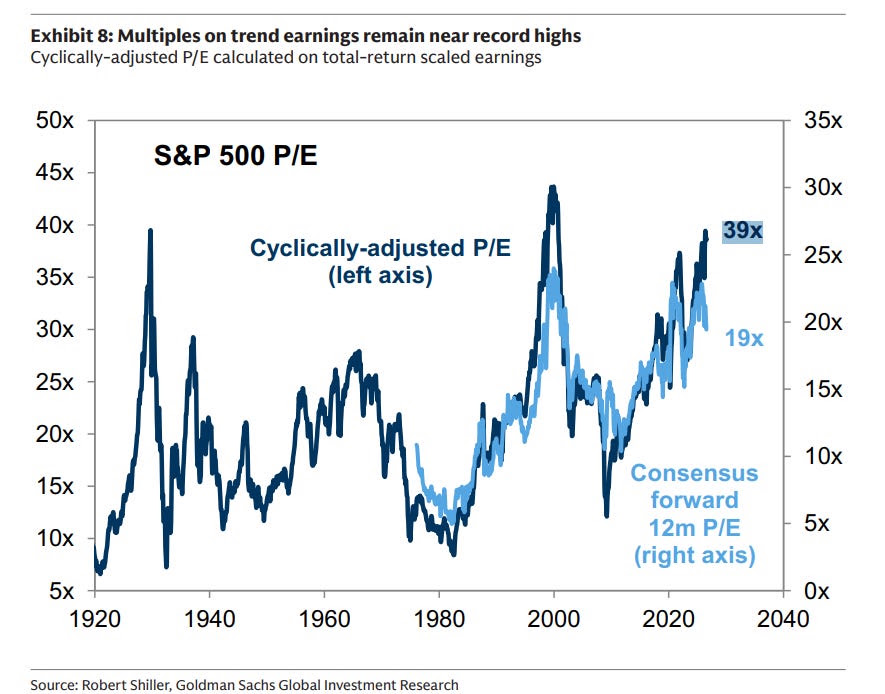
An apparently cheaper market is only reassuring if the earnings behind that calculation are achievable.
7. Technology and defensive stocks are far apart on valuation
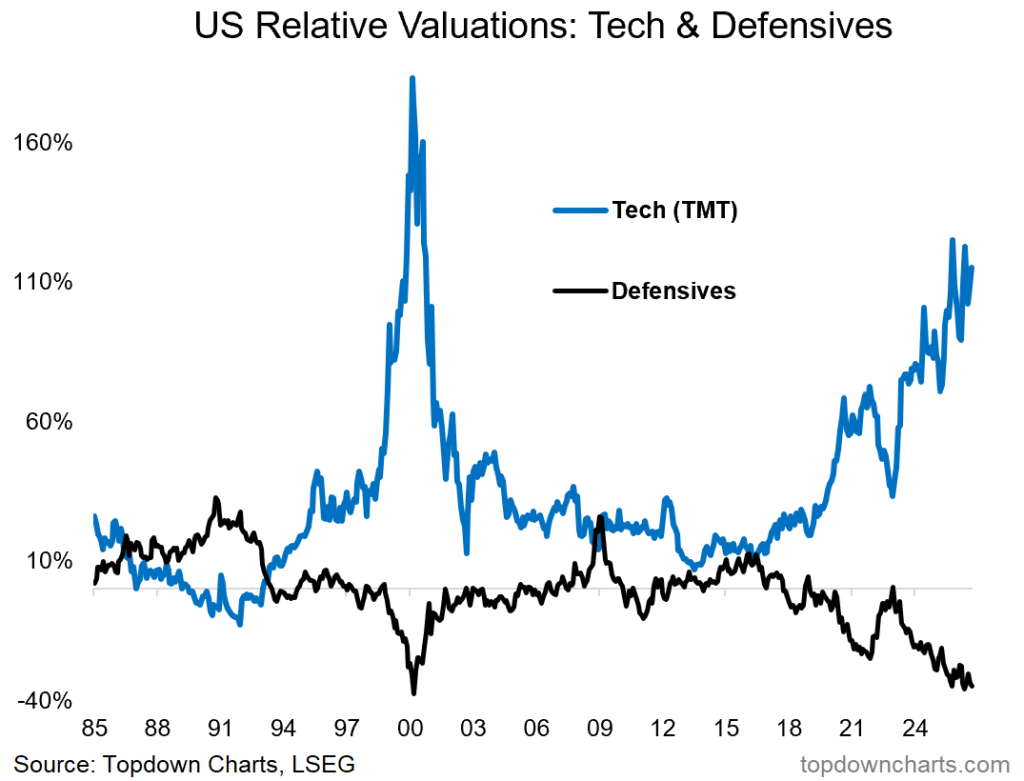
The broader technology, media and telecommunications group is trading at historically elevated valuations relative to the market across several measures.
Meanwhile, healthcare, utilities and consumer staples look as cheap relative to that group as they did around the dot-com era.
This is a relative comparison. It does not automatically mean defensive stocks are cheap in absolute terms or that technology shares must fall.
It does show how strongly investors have favored growth businesses. If expectations change, less fashionable sectors could attract renewed attention. The timing of that shift remains uncertain.
8. The Fed could remain a source of pressure
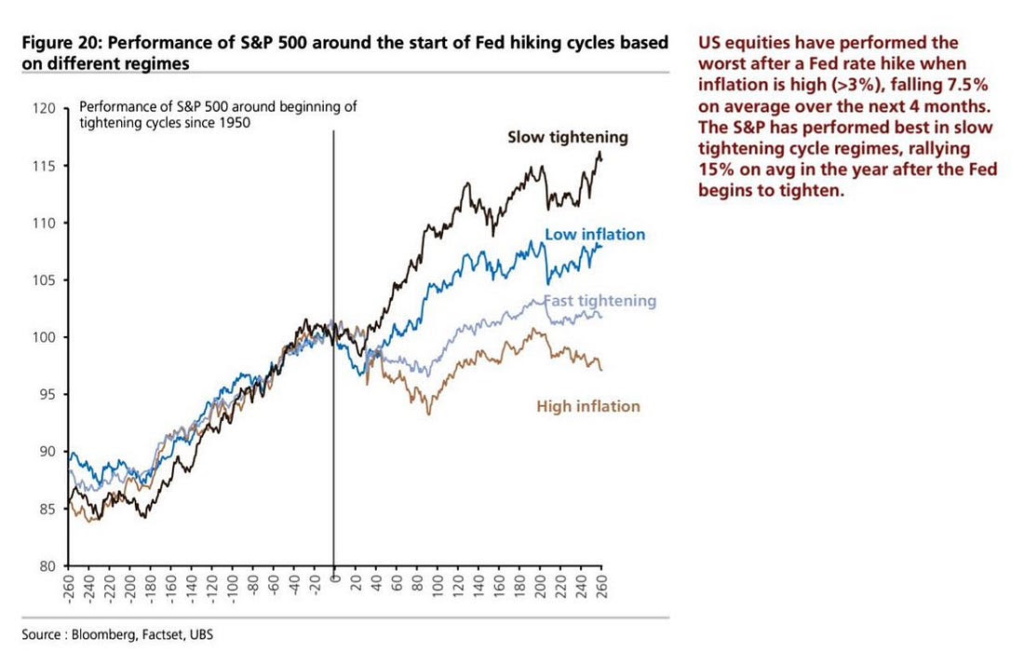
The September 16 interest-rate increase adds another challenge for a market already dealing with elevated inflation.
Further tightening would raise borrowing costs and could put pressure on valuations. Higher bond yields also give investors more alternatives to equities, increasing the returns they may demand for holding stocks.
The key risk is that investors expect strong earnings growth while monetary policy becomes less supportive.
A sustained recovery would be easier if inflation cooled enough to reduce the need for additional tightening.
Related: Fed Rate Hike Could Trigger Another Painful Surge in US Treasury Yields.
9. Passive investing keeps gaining ground
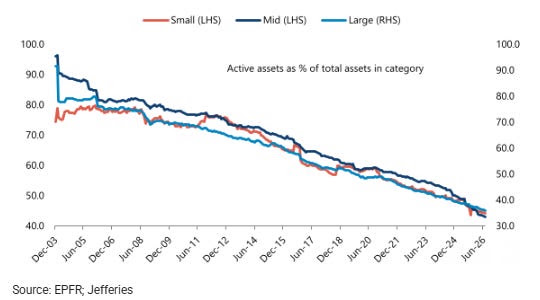
The fund data presented show passive strategies accounting for 64% of large-cap assets, 56% of small-cap assets and 57% of mid-cap assets.
That illustrates the pressure facing active managers as investors increasingly choose funds that track an index.
In a market-cap-weighted index, companies gain weight as their market value grows relative to other constituents. Investors therefore participate automatically in the success of the largest winners.
However, index investing still carries the risks of the underlying market, including concentration when a small group of companies dominates.
10. A small minority of stocks creates most of the wealth
Long-term research covering nearly a century of US equity returns highlights how uneven stock-market outcomes can be.
Most individual stocks did not outperform one-month Treasury bills over their lifetimes, while a small minority generated essentially all of the market’s net wealth above cash returns. The study also found a negative median lifetime return among individual stocks.
That helps explain the appeal of broad diversification: missing the relatively few exceptional winners can have a large effect on long-term results.
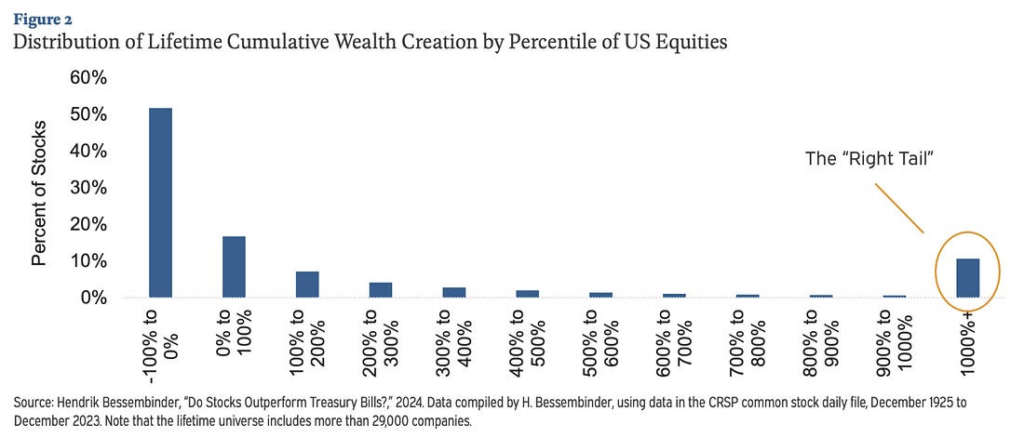
It also shows the difficulty facing stock pickers. Identifying winners matters, but doing so consistently is a demanding task.
The market now faces a clear test. A year-end rally would look stronger if gains spread beyond the biggest companies and earnings justified today’s expectations. Until then, the headline S&P 500 remains only part of the story.
Disclosure: This article does not represent investment advice. The content is for informational and educational purposes only.