
President Donald Trump has ordered federal agencies to replace the term artificial intelligence with “Super Intelligence,” while securing a voluntary safety agreement from some of the industry’s biggest companies.
The September 29 announcements combine a change in government language with commitments to strengthen oversight of advanced AI. For investors, the bigger issue is how Washington intends to balance rapid development, infrastructure spending and growing safety concerns.
The executive order and the corporate agreement do different things: one directs federal agencies, while the other relies on companies voluntarily implementing safeguards.
What the executive order changes
The White House executive order directs executive departments and agencies to use “Super Intelligence” and “SI” in official communications, websites, reports and other non-statutory documents, wherever legally permitted.
Previously issued regulations, contracts, grants and historical documents do not have to be rewritten.
For implementation, the order initially uses the existing statutory definition of artificial intelligence. It also gives the president’s science and technology adviser 60 days to propose legislative language for a federal definition of Super Intelligence and recommend related changes.
The name change does not establish that AI systems have achieved intelligence beyond human capabilities. It changes the administration’s terminology while leaving the existing legal definition in place unless subsequently amended.
Four layers of safety commitments
The separate White House Accord on Super Intelligence sets out four levels of oversight, detailed in reporting on the published agreement:
- Internal safety controls. Companies would monitor advanced models during development and deployment, addressing risks involving cybersecurity, biological and chemical threats, and unintended access to computer systems.
- An internal oversight team. A dedicated team would check that controls work and that problems receive attention.
- Independent external assessment. Outside auditors or evaluators would examine whether safeguards function as intended.
- Independent board oversight. A board committee would receive reports from internal teams and outside evaluators and oversee the resolution of identified problems.
The framework places responsibility at several levels, from technical teams to directors. Its practical value will depend on how thoroughly companies implement those checks and respond when reviewers identify serious concerns.
A voluntary pact, not a new regulatory regime
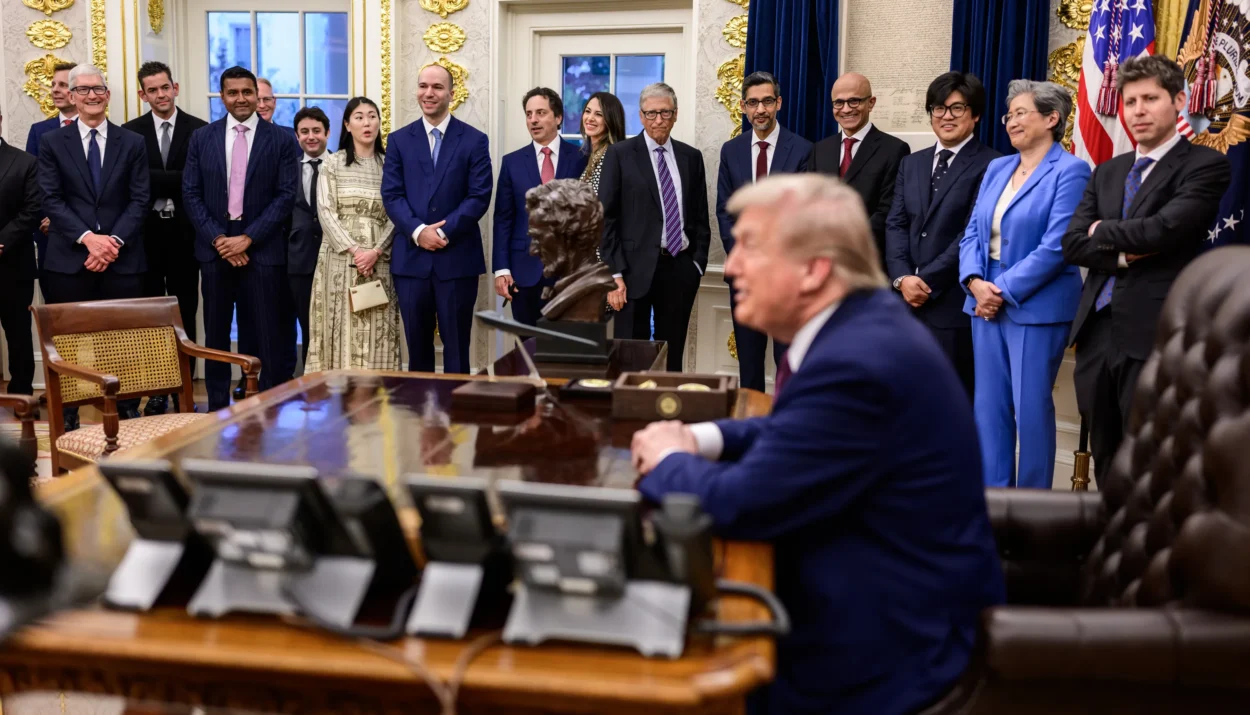
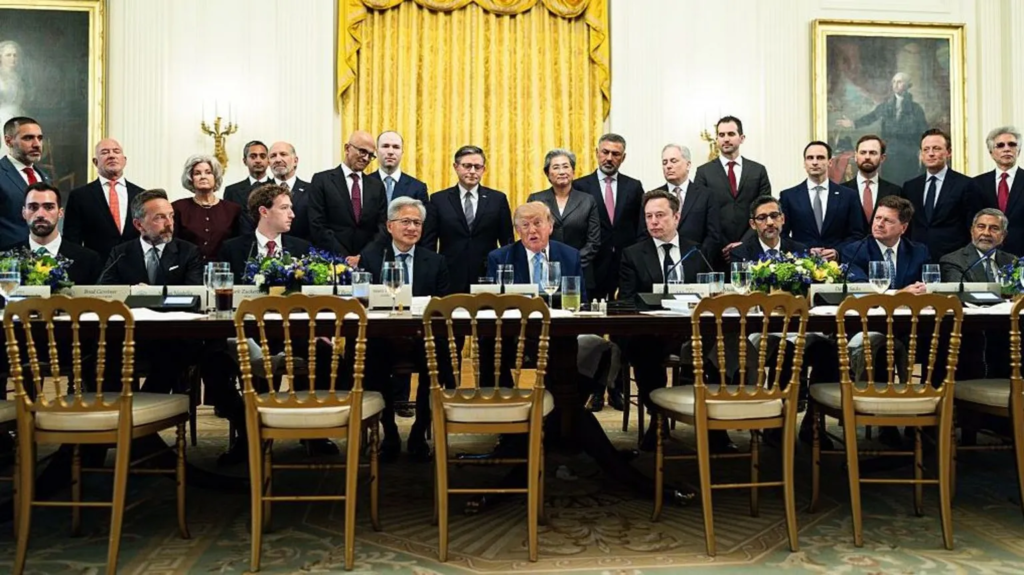
Reuters reported that executives from companies including OpenAI, Anthropic, Meta, Google and Nvidia participated in the White House meeting.
Trump presented the agreement as “morally binding.” That description matters: a voluntary commitment does not itself create the enforceable requirements of legislation.
External audits could strengthen scrutiny, but investors will need to examine their scope, independence and consequences. An audit is most useful when its findings lead to changes in how a system is developed or deployed.
Data-centre expansion remains a priority
Trump also reaffirmed support for rapid data-centre construction, despite community concerns over electricity demand, utility costs and local impacts.
Reuters reported that 73% of respondents in a Reuters/Ipsos poll believed AI companies had not done enough to ensure safety, highlighting the public-confidence challenge facing the industry.
Related: The AI Boom Is Increasingly Being Financed by Debt.
Why investors should pay attention
The announcements suggest continued political support for AI development alongside an expectation of stronger corporate oversight.
For chipmakers, cloud providers and infrastructure suppliers, that support could help sustain demand. However, it cannot guarantee project approvals, affordable power or profitable returns.
For model developers, meaningful safety reviews may require additional spending and could affect release schedules. They could also strengthen customer confidence if companies demonstrate that problems are identified and corrected.
Related: AI Power Boom Dominates Davos as Leaders Warn Energy Will Decide the 2026 Tech Race.
The next test is implementation: whether companies give independent reviewers real influence, address their findings and show that rapid development can coexist with effective oversight.
Disclosure: This article does not represent investment advice. The content is for informational and educational purposes only.