

The fastest way to increase savings is to automate a transfer to a high-yield savings account on payday, before you can spend the money, then cut one recurring expense and redirect any raise or bonus straight into that account. Most people can push their savings rate from near zero to 10 to 20 percent over time this way. Start small if you have to. Even small automated amounts per paycheck build the habit that everything else depends on.
TL;DR:
- Automating transfers to a high-yield savings account immediately after payday can significantly boost savings rates without lifestyle changes.
- Canceling unused subscriptions and negotiating bills typically saves households between $20 and $150 monthly, reducing recurring expenses.
- Using a round-up app or directing windfalls straight into savings can add up to $50 a month with minimal effort.
- Prioritizing an emergency fund of three months’ expenses and capturing employer matching contributions provides a solid financial foundation before investing.
- Boosting income through raises or side hustles requires redirecting at least half into savings to achieve meaningful progress over time.
Table of Contents
- Quick Checklist: 12 High-Impact Ways to Increase Savings
- How Do You Set a Savings Goal and Track Spending?
- Automate Your Savings and Choose the Right Accounts
- Where Are You Losing Money to Recurring Costs?
- Should You Pay Off Debt Before You Save?
- How Can You Increase Income and Redirect It to Savings?
- Emergency Fund First, Retirement Accounts Second: What’s the Right Order?
- How Do You Know If Your Savings Plan Is Working?
- Why Finblog’s Approach to Saving Works
- A Note on Habit-Building From Finblog
- Get Personalized Help Building Your Savings Plan
- Where This Guidance Comes From
- Sources
Quick Checklist: 12 High-Impact Ways to Increase Savings
You don’t need to do all twelve of these at once. Pick three, set them up this week, and let them run.
- Set a specific savings goal. A number and a deadline (say, $5,000 in 12 months) beats “save more” every time and gives you a monthly target to hit.
- Build a simple budget. Even a rough 50/30/20 split shows you where the money actually goes before you start cutting anything.
- Automate your transfers. Schedule a transfer for the day after payday so the habit builds itself rather than depending on willpower.
- Move cash into a high-yield savings account. Switching from a traditional bank can add meaningfully more interest on the same balance with zero extra effort.
- Cancel unused subscriptions. A 10 minute audit of your bank statement typically finds $20 to $50 a month in forgotten charges.
- Plan meals for the week. Batch cooking and a grocery list cut impulse purchases and can save $50 to $150 a month for a typical household.
- Negotiate recurring bills. A short call to your internet or insurance provider often lowers the monthly bill.
- Refinance or consolidate high-interest debt. Lowering your APR frees up cash flow that was previously going straight to interest.
- Ask for a raise or pick up a side hustle. Extra income only builds savings if you redirect it before it hits your regular checking account.
- Use a round-up app. Rounding purchases to the nearest dollar and sweeping the difference into savings adds $10 to $50 a month for many people.
- Try a no-spend week or month. A short, defined challenge resets discretionary spending habits fast.
- Send windfalls straight to savings. Tax refunds, bonuses, and cash gifts disappear into daily spending unless you decide in advance where they go.
How Do You Set a Savings Goal and Track Spending?
The 50/30/20 framework allocates 50% of after-tax income to needs, 30% to wants, and 20% to savings and debt repayment. It’s a reasonable starting benchmark, not a rule carved in stone.
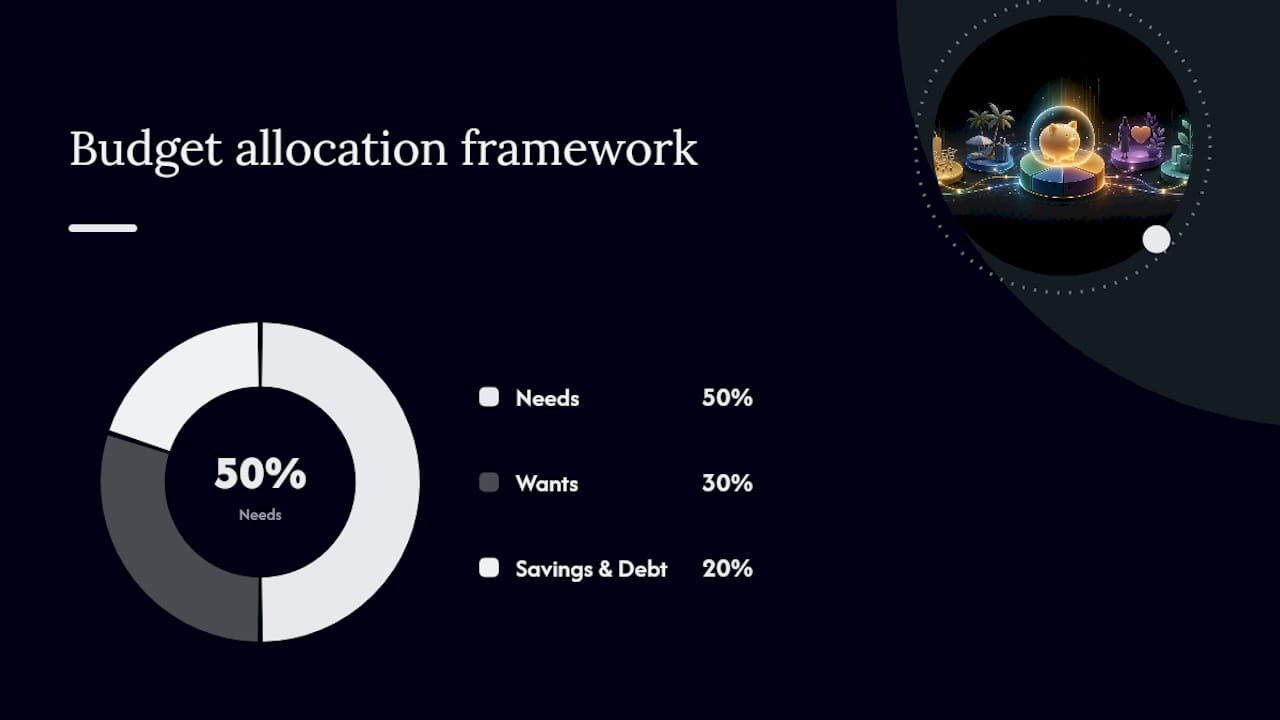
Turning a vague goal into a workable plan takes one calculation. Say you want $5,000 saved in 12 months. That’s $417 a month, or roughly 8% of a $60,000 annual income before taxes. Written out like that, the goal stops being abstract and becomes a line item you can automate.
Tracking spending doesn’t require a complicated system. A few habits do most of the work:
- Pull three months of bank and credit card statements and sort every transaction into five or six broad categories.
- Flag anything recurring you don’t remember signing up for, then cancel or downgrade it.
- Total your “wants” category separately from “needs” so you can see where the real flexibility is.
- Recheck the same categories monthly rather than starting from scratch each time.
A budgeting template makes this faster than building a spreadsheet from scratch, and Finblog’s monthly budgeting template walks through the category breakdown step by step.
Pro Tip: Run your subscription audit the same week your credit card statement closes. You’ll see the full recurring-charge picture in one sitting instead of piecing it together from memory.

Automate Your Savings and Choose the Right Accounts
Automation works because it removes the decision. Set up a transfer to hit your savings account the day after payday, before rent, groceries, or anything discretionary gets a chance to eat into it. This is the pay-yourself-first approach, and it’s consistently one of the most reliable ways to build a savings habit because it doesn’t rely on remembering or feeling motivated.

If your employer offers split direct deposit, use it. Sending a fixed dollar amount straight into a separate savings account from your paycheck removes an entire step, and the money never touches your checking account long enough to get spent.
Where that money sits matters almost as much as how it gets there.
- High-yield savings accounts (HYSAs) at online banks pay significantly more interest than the average traditional savings account, with no added risk to your principal.
- Short-term CDs can make sense for money you won’t need for 6 to 18 months and want locked away from casual spending.
- Brokerage cash sweep accounts work for medium-term goals if you’re already investing and want idle cash to earn something while it waits.
- Separate savings accounts by goal (emergency fund, vacation, down payment) keep you from accidentally raiding one goal to cover another.
- Round-up apps sweep spare change from everyday purchases into savings automatically, adding a modest but steady amount without any active decision-making.
Combining automation, an HYSA, and a subscription cleanup can raise your effective savings rate by roughly 5 to 15 percent without touching your actual lifestyle. That’s the whole appeal: none of these three moves require cutting something you enjoy.
Where Are You Losing Money to Recurring Costs?
Recurring charges and small discretionary purchases are the leak most people underestimate. Tracking spending closely enough to spot small recurring purchases often uncovers hundreds of dollars a year that were leaving the account on autopilot.
Run the audit in this order:
- Pull your last two bank and credit card statements and highlight every charge under $30 that repeats monthly.
- List every subscription by name and cost, then rate each one honestly: used weekly, used occasionally, or forgotten entirely.
- Cancel or downgrade anything in the “forgotten” category before you touch anything else.
- Call your internet, cell phone, and insurance providers and ask directly: “What can you do to lower this bill, or is there a promotional rate available?” Providers often have retention discounts they don’t advertise.
- Get a competing quote from a rival provider before that call. Leverage works better than asking nicely.
- Compare your insurance rates every 12 months. Loyalty rarely earns you the best price.
Groceries deserve their own pass. Meal planning around what’s already in your pantry, buying store brands for staples, and buying non-perishables in bulk typically save a household $50 to $150 a month, depending on family size and how much you were previously wasting. Small behavior changes matter here too: removing saved card details from shopping apps and giving yourself a 24 to 72 hour waiting period before non-essential purchases cuts a surprising amount of impulse spending.
Should You Pay Off Debt Before You Save?
High-interest debt is the single biggest drain on your ability to save, because every dollar going to interest is a dollar that can’t compound in your favor.
Two prioritization methods dominate here. The debt avalanche targets your highest-interest balance first, which saves the most money mathematically. The debt snowball targets your smallest balance first, which builds momentum through quick wins. If you’re motivated by numbers, use the avalanche. If you’ve stalled before, the snowball’s psychological wins often keep you going longer.
Before refinancing or consolidating anything, check three things:
- The new APR versus your current rate, including any promotional period that expires.
- The loan term. A lower monthly payment stretched over more years can cost more in total interest.
- Origination fees, balance transfer fees, or prepayment penalties that eat into the savings.
Refinancing high-interest debt can meaningfully lower your monthly interest costs and free up cash flow that goes straight into savings instead. And the simplest debt habit of all: pay credit cards in full every month.
How Can You Increase Income and Redirect It to Savings?
Cutting expenses has a floor. Increasing income doesn’t. But extra income only builds savings if you decide where it goes before it lands in your checking account.
- Ask for a raise with data, not vague hope. Bring comparable salary figures and a specific list of what you’ve delivered in the past year.
- Redirect at least half of any raise to savings before your lifestyle adjusts to the new number. This one habit is what separates people whose savings grow with their income from people whose spending grows just as fast.
- Pick a side hustle that matches your schedule. Freelance work, tutoring, or selling a skill online can realistically add $200 to $800 a month depending on hours committed.
- Treat windfalls as decisions, not deposits. A tax refund or year-end bonus that lands in checking gets spent within weeks unless you move it immediately.
Pro Tip: The moment a raise hits your paycheck, increase your automated savings transfer by the same dollar amount, same day. Don’t wait for a “good time” to adjust it. There isn’t one.
Emergency Fund First, Retirement Accounts Second: What’s the Right Order?
Building an emergency fund should come before investing, because it covers unexpected costs without forcing you onto a credit card at 20%+ interest. Getting the order of operations right matters more than optimizing any single account.
- Emergency fund first. Aim for three months of essential expenses in a liquid, high-yield account before anything else.
- Employer 401(k) match next. If your employer matches contributions, that’s an immediate, guaranteed return that no other investment can beat. Skipping it is leaving free money on the table.
- Additional tax-advantaged accounts. Once the match is captured, an IRA or additional 401(k) contributions shelter more of your savings from taxes.
- Taxable investing last. Extra cash beyond retirement contributions can go into a standard brokerage account for longer-term goals.
Cash sitting idle loses purchasing power over time as prices rise, which is why money you won’t need for 5+ years generally belongs in investments rather than a savings account. Money you’ll need within the next year or two, on the other hand, belongs in cash, where it’s protected from market swings. Read more on how inflation affects your savings if you want the fuller picture on that tradeoff.
How Do You Know If Your Savings Plan Is Working?
Your savings rate is simply the percentage of your income you save each month. Track it alongside two other numbers: your emergency fund balance and your total saved toward your current goal. Three numbers, checked once a month, tell you almost everything you need to know.
- Review your savings rate on the same day each month, right after payday, so the habit sticks.
- Increase your automated transfer by 2 to 3 percent of income every three months rather than trying to leap straight to 20%.
- Rebalance your goal if your income or expenses shift significantly rather than abandoning the plan entirely.
- Mark milestones visually, whether that’s a simple spreadsheet bar or a savings app’s progress chart.
- Give yourself a small, planned reward at each milestone rather than letting a good month justify unplanned spending.
Setting specific, time-bound goals and breaking them into monthly checkpoints measurably improves the odds you’ll stick with the plan instead of losing steam after the first few weeks. The habit of checking in matters more than the amount you check on any single month.
Why Finblog’s Approach to Saving Works
Finblog builds its guidance around one core idea: habits beat willpower, and small automated wins compound faster than dramatic one-time cuts. That’s the same principle behind government guidance on pay-yourself-first saving, and it’s the lens Finblog’s contributing writer Povilas applies across the site’s savings and budgeting coverage.
A few resources worth bookmarking as you put this plan into action:
- How to create a budget for a full step-by-step walkthrough beyond the quick version above.
- Building an emergency fund fast, with sizing guidance for different income levels.
- Simple steps for building financial habits that actually last past the first month.
Finblog’s forms and templates are built to make these tactics easier to execute, not to replace sound judgment. For anything involving tax strategy or complex investment decisions, talk to a licensed financial or tax professional who can look at your full situation.
A Note on Habit-Building From Finblog
Pick three tactics from this list. Not twelve. Three. Automate them this week, then leave the plan alone for 30 days before you touch it again.
The people who actually raise their savings rate aren’t the ones with the most complicated spreadsheet. They’re the ones who automated a transfer, moved their cash to an account paying real interest, and cut one subscription they weren’t using. Small, boring, repeated actions beat ambitious plans that collapse in week two.
If you want a starting structure rather than building one from scratch, Finblog’s templates are built for exactly that gap between knowing what to do and actually doing it.
— Povilas
Get Personalized Help Building Your Savings Plan
Reading a checklist is one thing. Having someone check your specific numbers, your specific accounts, and your specific goals against a plan is another. Finblog gives you both: practical, habit-focused educational content plus a direct path to financial guidance when you’re ready for something more tailored than a generic article.
If you’ve picked your three tactics from this piece and want a second opinion on whether your savings rate, account setup, or debt payoff order actually makes sense for your situation, Finblog’s advisory resources are built for that next conversation. Head to the Finblog homepage to explore educational resources or submit a quick form to start a conversation about your savings goals. No pressure, just a clearer next step than staring at a spreadsheet alone.
Where This Guidance Comes From
The tactics in this guide draw on federal financial-education guidance and consumer finance research, not generic advice recycled from other blogs.
- Mymoney, the U.S. government’s financial literacy site, for pay-yourself-first and habit-formation guidance.
- The Consumer Financial Protection Bureau for emergency fund sizing and sequencing advice.
- FRED (Federal Reserve Economic Data) for inflation context relevant to cash versus investment decisions.
- Experian for practical, consumer-tested savings tactics and debt refinancing guidance.
This article is general information, not a substitute for advice from a qualified financial advisor. Consult a qualified financial professional about your own circumstances before acting on anything here.
Sources
- Mymoney
- An essential guide to building an emergency fund
- Boost Personal Savings Rate: 12 Proven Strategies 2026 | Gerald
- 26 Ways to Save Money in 2026