



Over half of all American households lack enough savings to cover a $1000 emergency, leaving many vulnerable when the unexpected strikes. Knowing where you stand financially is the first critical step toward true peace of mind. By examining your income, expenses, and potential to save, you set the foundation for an emergency fund that protects against life’s surprises and helps you take control of your financial future.
Table of Contents
- Step 1: Assess Current Financial Situation
- Step 2: Set Realistic Emergency Fund Goals
- Step 3: Calculate Optimal Fund Amount
- Step 4: Structure And Automate Savings
- Step 5: Monitor Progress And Reevaluate Regularly
Quick Summary
| Key Point | Explanation |
|---|---|
| 1. Assess Your Financial Situation | Thoroughly analyze your income and expenses to identify savings opportunities for your emergency fund. |
| 2. Set Realistic Savings Goals | Aim to save three to six months’ worth of living expenses by breaking down your target into manageable milestones. |
| 3. Automate Your Savings | Set up automatic transfers to your emergency fund to consistently grow it without relying on willpower. |
| 4. Regularly Monitor Progress | Review your emergency fund status quarterly and adjust your savings strategy based on changes in income or expenses. |
| 5. Store Fund in High Yield Account | Place your emergency savings in a high yield account for liquidity and modest interest while keeping it accessible. |
Step 1: Assess Current Financial Situation
Understanding your current financial landscape is the critical first step in building a robust emergency fund. This foundational assessment provides clarity about your income, expenses, and potential savings opportunities. Analyzing your financial health involves a strategic examination of multiple financial elements that will inform your emergency fund strategy.
Start by gathering comprehensive documentation of your monthly income sources including your primary salary, any side hustle earnings, investment returns, or additional revenue streams. Next, meticulously track and categorize all expenses for the past three months. Break these down into fixed expenses like rent or mortgage, utilities, insurance, and transportation costs, and variable expenses such as dining out, entertainment, and discretionary spending. Identifying areas where you can potentially reduce spending will create opportunities for emergency fund contributions. Your detailed expense review should highlight potential savings that can be redirected toward building financial security.
A practical tip is to use digital tools or spreadsheets to categorize and visualize your spending patterns. Look for recurring expenses that can be eliminated or reduced, such as subscription services you rarely use or dining out frequently. By understanding your current financial situation with precision, you create a clear roadmap for establishing an emergency fund that provides genuine financial protection and peace of mind.
Step 2: Set Realistic Emergency Fund Goals
Establishing realistic emergency fund goals provides a clear roadmap for financial security. Your objective is to create a targeted savings plan that protects you during unexpected financial challenges. Implementing SMART criteria helps transform vague intentions into actionable financial strategies.
Start by calculating your ideal emergency fund target based on your monthly living expenses. Financial experts typically recommend saving three to six months of total living costs. This means if your monthly expenses are $3000, aim for a $9000 to $18000 emergency fund. Break this larger goal into smaller achievable milestones that feel less overwhelming. For instance, first target saving $1000, then gradually increase your savings until you reach your complete emergency fund goal. Aligning financial goals with personal values ensures your savings strategy feels meaningful and motivating.

A practical approach is to automate your savings by setting up direct deposits from your paycheck into a dedicated emergency fund account. This method removes the emotional friction of manual transfers and helps you consistently progress toward your financial security objective. Consider your unique financial situation when setting goals realistic for your income level and lifestyle, understanding that building an emergency fund is a journey of steady progress rather than an overnight achievement.
Step 3: Calculate Optimal Fund Amount
Determining the right emergency fund amount requires a strategic approach that balances your financial security with practical savings goals. The core principle is to create a cushion that covers your essential living expenses during unexpected financial disruptions. Calculating emergency fund size involves systematically analyzing your monthly expenses and creating a targeted savings strategy that provides genuine financial protection.
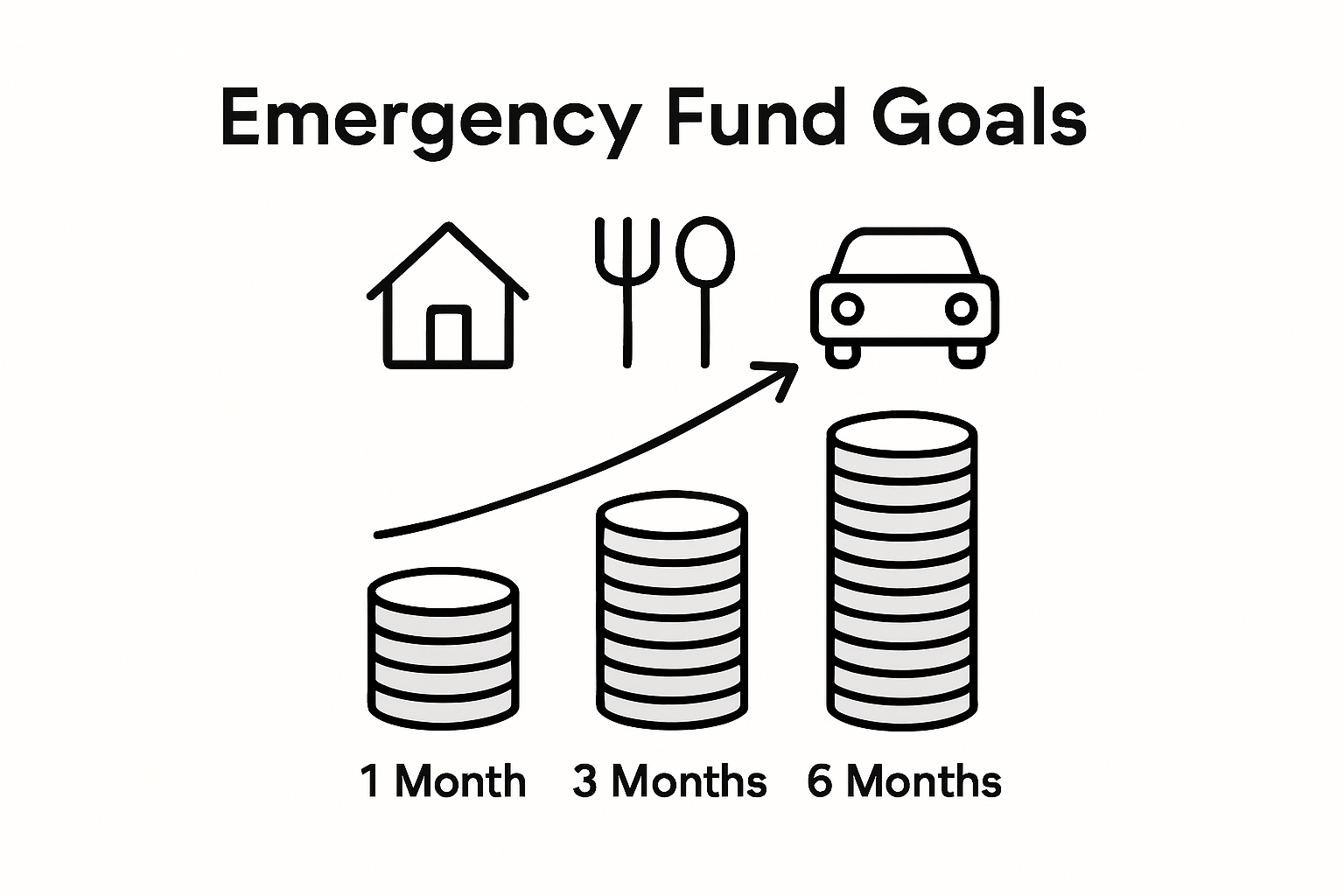
To calculate your optimal emergency fund amount, start by tallying your essential monthly expenses including housing, utilities, groceries, transportation, healthcare, and minimum debt payments. Most financial experts recommend saving between three to six months of these critical expenses. For individuals with less stable income or working in industries with higher job volatility, consider extending this to seven or eight months. If your monthly essential expenses total $4000, your emergency fund target would range from $12000 to $32000. Break this larger goal into incremental milestones to make the savings process feel more achievable and less overwhelming.
A practical tip is to store your emergency fund in a high yield savings account that provides easy access while earning some modest interest. This approach ensures your money remains liquid and protected, ready for unexpected expenses or income disruptions. Remember that your emergency fund is a dynamic financial tool that should evolve with your changing life circumstances, income levels, and financial responsibilities.
Step 4: Structure and Automate Savings
Building a successful emergency fund requires a systematic approach that transforms saving from a sporadic activity into a consistent financial habit. Developing a saving mindset through small consistent contributions is the foundation of creating lasting financial security. Automation is the most powerful strategy to ensure you consistently grow your emergency fund without relying on willpower or manual transfers.
Start by opening a dedicated high yield savings account specifically for your emergency fund. Then set up automatic monthly transfers from your primary checking account that align with your pay schedule. If you earn biweekly, configure transfers that match your paycheck timing. Choose an amount that feels comfortable yet meaningful 10% to 20% of your take home pay is an excellent target. Many banks offer automatic transfer features that allow you to schedule recurring deposits without manual intervention. This approach removes the psychological friction of manual saving and ensures your emergency fund grows steadily without requiring constant decision making.
A strategic tip is to gradually increase your automatic savings rate by 1% every six months. This incremental approach allows your budget to adjust slowly while consistently improving your financial resilience. By treating your emergency fund contribution as a non negotiable expense similar to rent or utilities you transform saving from an optional activity to a fundamental financial priority. Remember that building financial security is a marathon not a sprint your consistent small actions will compound into significant protection over time.
Step 5: Monitor Progress and Reevaluate Regularly
Successful emergency fund management requires consistent tracking and strategic adjustments as your financial landscape evolves. Regularly reviewing financial goals and budgets helps ensure your emergency fund strategy remains aligned with your changing life circumstances and financial objectives.
Set up quarterly review sessions to assess your emergency fund progress. During these check ins, evaluate your current savings rate, compare your actual contributions against your original goals, and analyze any changes in your monthly expenses or income. Use digital spreadsheets or financial tracking apps to visualize your savings trajectory. Look for opportunities to increase contributions if your income has grown or identify potential areas where you can trim expenses to boost your emergency fund. Pay special attention to significant life changes like job transitions, salary increases, or unexpected expenses that might necessitate adjusting your savings strategy.
A practical tip is to create a simple tracking system that motivates rather than intimidates. Celebrate milestone achievements like reaching 25% or 50% of your emergency fund goal. Consider using visual progress trackers or setting small rewards for consistent saving. Remember that financial planning is not about perfection but consistent progress. Your emergency fund is a dynamic tool that adapts with your financial journey, providing increasing security and peace of mind as you continue to nurture your financial resilience.
Build Your Emergency Fund With Confidence and Expert Guidance
Facing the challenge of creating a reliable emergency fund can feel overwhelming when juggling income fluctuations and monthly expenses. The article highlights key pain points like knowing where to start, setting realistic savings goals, and automating contributions to protect against unexpected financial disruptions. You deserve a clear roadmap and steady progress toward financial security.
Take control of your financial future today by visiting finblog.com for tailored expert advice and strategies that simplify emergency fund planning. Discover how to turn saving into a consistent habit and track your progress effectively. Don’t wait until uncertainty hits — get the support you need now with actionable insights at finblog.com. Start building your financial resilience and experience peace of mind.
Frequently Asked Questions
How can I assess my current financial situation to build my emergency fund?
To assess your financial situation, gather documentation of your monthly income and track all expenses for the past three months. Organize these into fixed and variable expenses to identify potential savings opportunities for your emergency fund.
What is a realistic goal for my emergency fund?
A realistic emergency fund goal typically ranges from three to six months’ worth of living expenses. For instance, if your monthly essential expenses are $3,000, aim to save between $9,000 and $18,000; breaking this into smaller milestones can make it more manageable.
How do I calculate the optimal amount for my emergency fund?
Calculate your emergency fund amount by tallying your essential monthly expenses such as rent, groceries, and transportation. A recommended target would be three to six months of those expenses; for example, if your monthly expenses are $4,000, save between $12,000 and $24,000.
What steps should I take to automate my emergency fund savings?
To automate your savings, open a high-yield savings account dedicated to your emergency fund and set up automatic monthly transfers that align with your pay schedule. Aim to transfer 10% to 20% of your take-home pay each month to ensure consistent growth without relying on willpower.
How often should I monitor and adjust my emergency fund?
You should monitor your emergency fund progress quarterly to ensure your savings strategy aligns with any changes in your financial situation. Review your savings and income, and adjust your contributions if needed to stay on track toward your goals.
What should I do if I experience a major life change that impacts my finances?
If you experience a significant life change, such as a job loss or salary increase, reassess your emergency fund goals accordingly. Consider adjusting your savings rate or the target amount to accommodate your new circumstances to maintain financial security.
Recommended
- What is a Financial Plan? Understanding Its Importance – Finblog
- How to Budget Effectively: Master Your Finances in 2025 – Finblog
- Financial Security Tips for Achieving Long-Term Stability – Finblog
- Master Financial Planning for Freelancers in 2025 – Finblog
- Szybkie pożyczki przez internet na dowód- kiedy po nie sięgnąć? – TePozyczki.pl