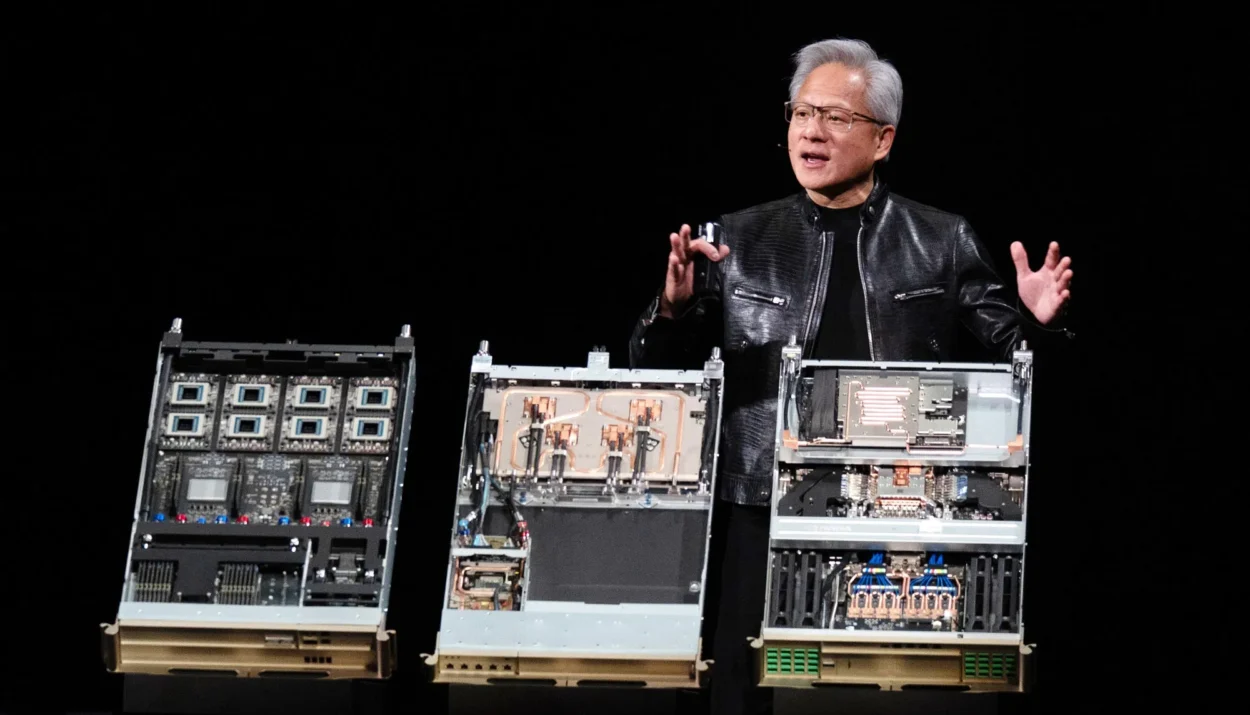

Nvidia is no longer just selling the chips powering the artificial intelligence boom. It is increasingly using its own financial strength to help customers build the infrastructure needed to buy and operate those chips.
That strategy can keep AI spending growing, but it is also creating a new question for investors: How much financial risk is Nvidia taking on to support its own customers?
Recent deals show how quickly Nvidia’s role is expanding beyond semiconductor manufacturing. The company has provided financial guarantees and other support that could leave it exposed to roughly $230 billion of lease obligations and asset-value arrangements, according to recent reporting. These include a $105 billion backstop connected to an OpenAI data-center lease in Ohio and potentially as much as $125 billion of residual-value support for financing arrangements.
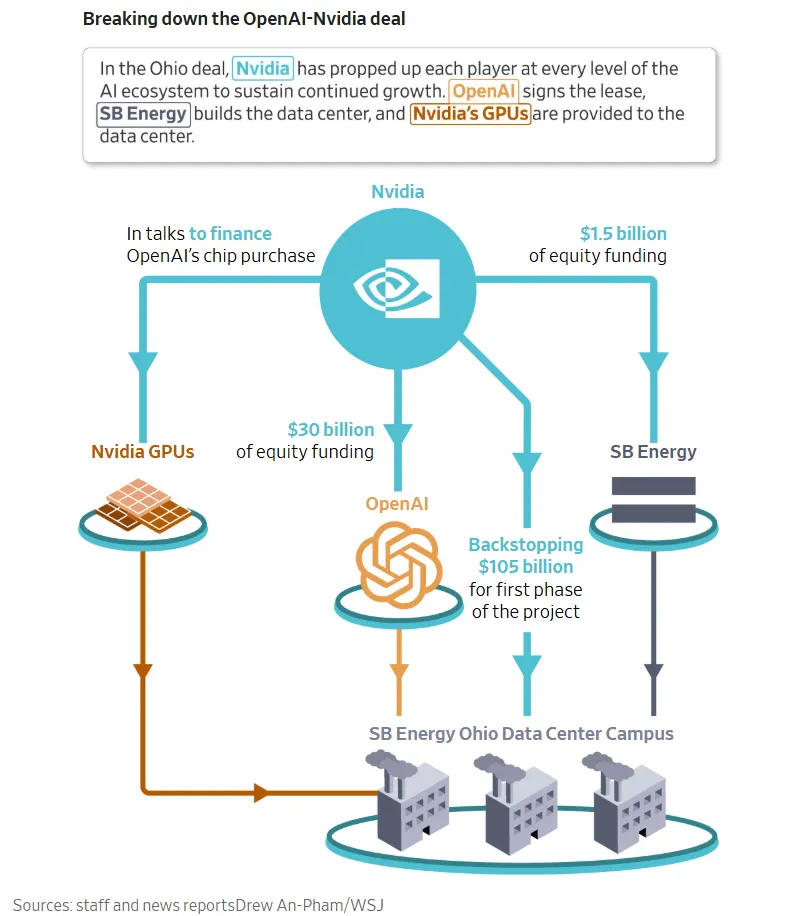
In simple terms, Nvidia is increasingly helping make sure that the enormous AI data centers using its chips can actually get financed.
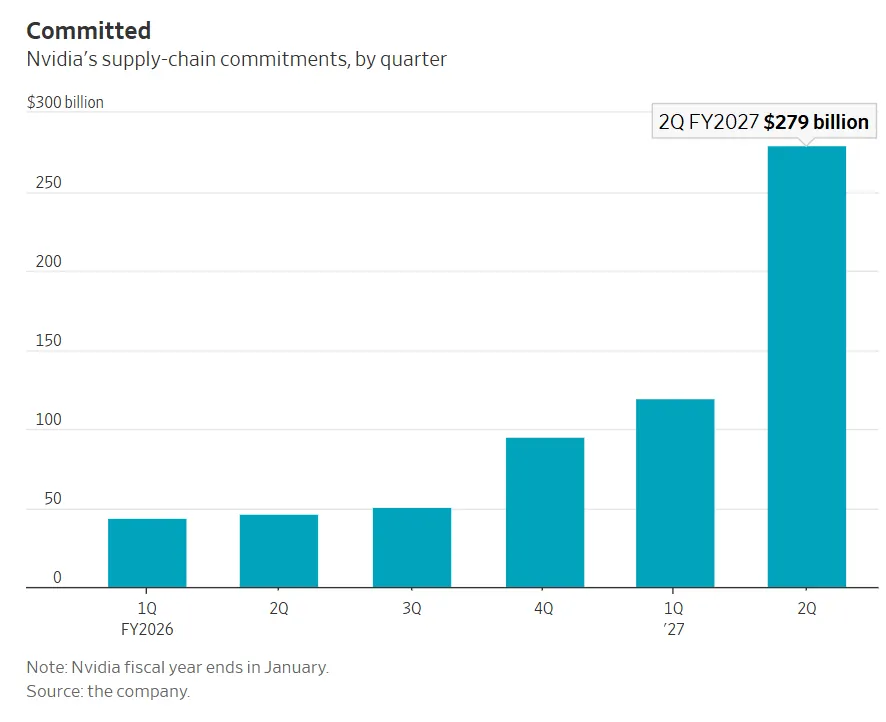
Nvidia Is Becoming More Than a Chip Supplier
The model creates a powerful cycle.
AI companies need enormous amounts of computing power, but building data centers can cost tens of billions of dollars. Nvidia sells the GPUs, while also investing in AI companies, supporting cloud providers and helping financial institutions fund the infrastructure where those GPUs will operate.
One example is a huge 1-gigawatt data center in Texas being developed by Hut 8. Nvidia has agreed to lease the entire facility under a 15-year commitment worth about $19.6 billion, with renewal options that could eventually bring the total value to around $50 billion. The facility is expected to contain hundreds of thousands of Nvidia GPUs.
Nvidia has also teamed up with major financial institutions on an initiative designed to mobilize more than $500 billion for AI infrastructure.
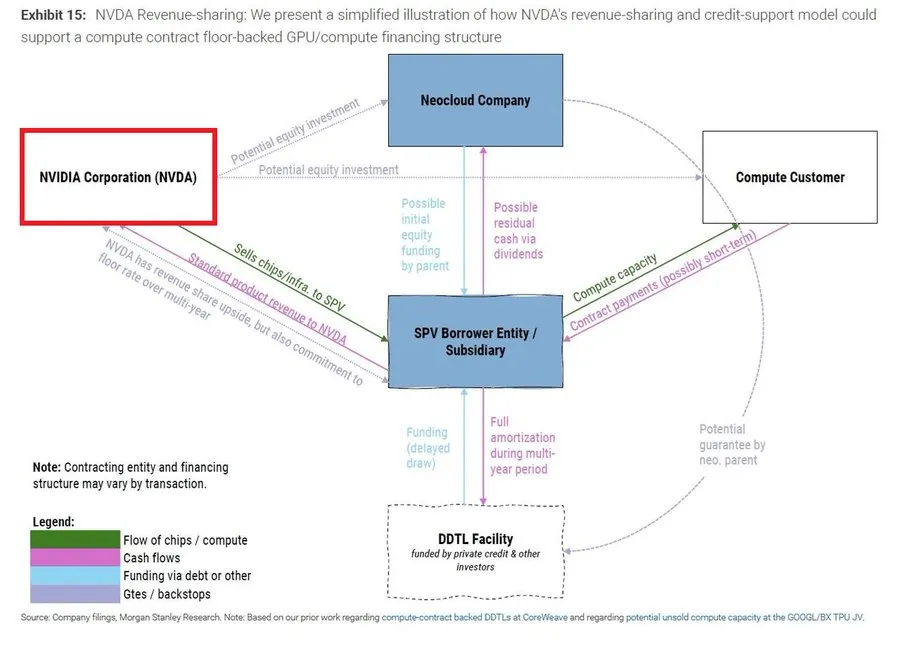
The strategy helps solve one of the industry’s biggest problems: AI demand is enormous, but not every customer has enough cash to finance the infrastructure required to meet it.
The Numbers Are Getting Bigger
Nvidia’s exposure is expanding alongside its business.
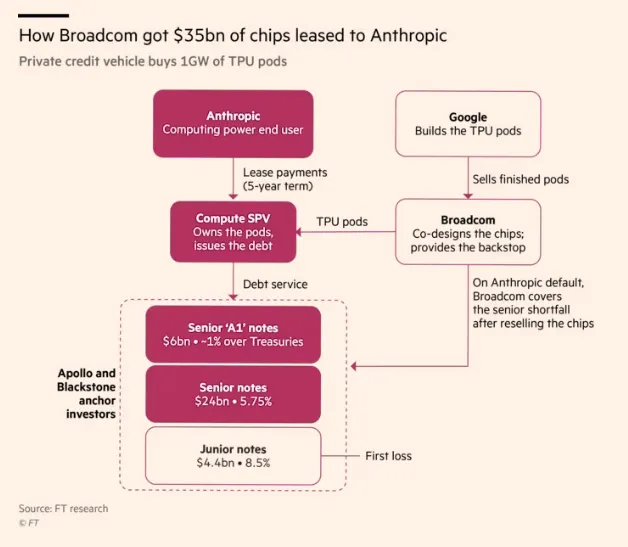
Morgan Stanley estimates the company’s financial exposure from these arrangements could reach roughly $200 billion by late 2028. The bank described the strategy as a kind of “balance-sheet-as-a-service” model, where Nvidia’s financial strength becomes another tool for expanding the AI ecosystem.
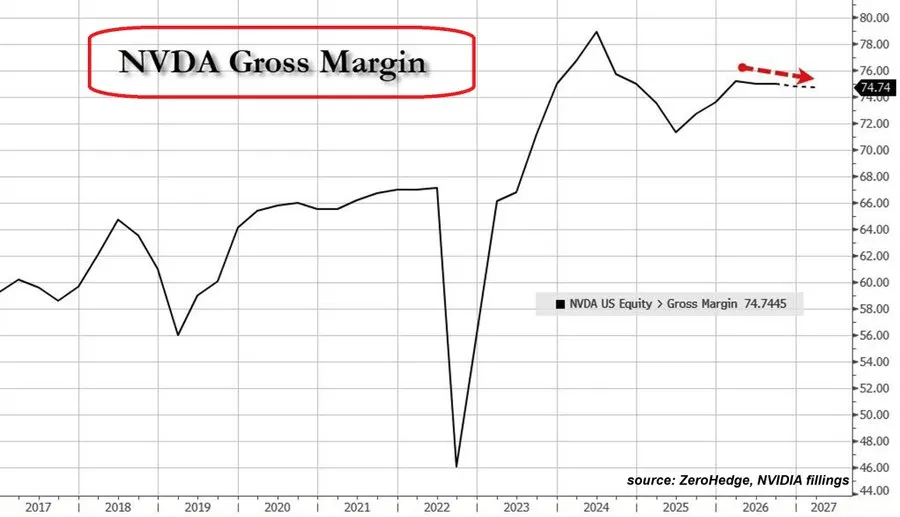
At the same time, Nvidia remains financially powerful enough to absorb substantial commitments. Morgan Stanley estimates its debt-to-EBITDA ratio could remain around 0.4 times, supported by the company’s enormous cash generation.
And demand itself remains strong.
Nvidia’s latest quarter produced $89 billion in Data Center revenue, with major cloud providers accounting for roughly $49 billion. The rest increasingly comes from a broader group including AI startups, enterprises, neoclouds and sovereign AI projects.
SpaceX alone accounted for around 5% of Nvidia’s fiscal second-quarter revenue, up from about 3% in the previous quarter, according to an estimate from Deepwater Asset Management cited by MarketWatch. Nvidia also held about $21 billion of SpaceX shares as of June 30.
Why Investors Are Paying Attention
There is nothing automatically negative about Nvidia helping finance the AI ecosystem. If demand continues growing, the strategy could strengthen Nvidia’s position by making it easier for customers to deploy more GPUs.
The risk appears if the cycle reverses.
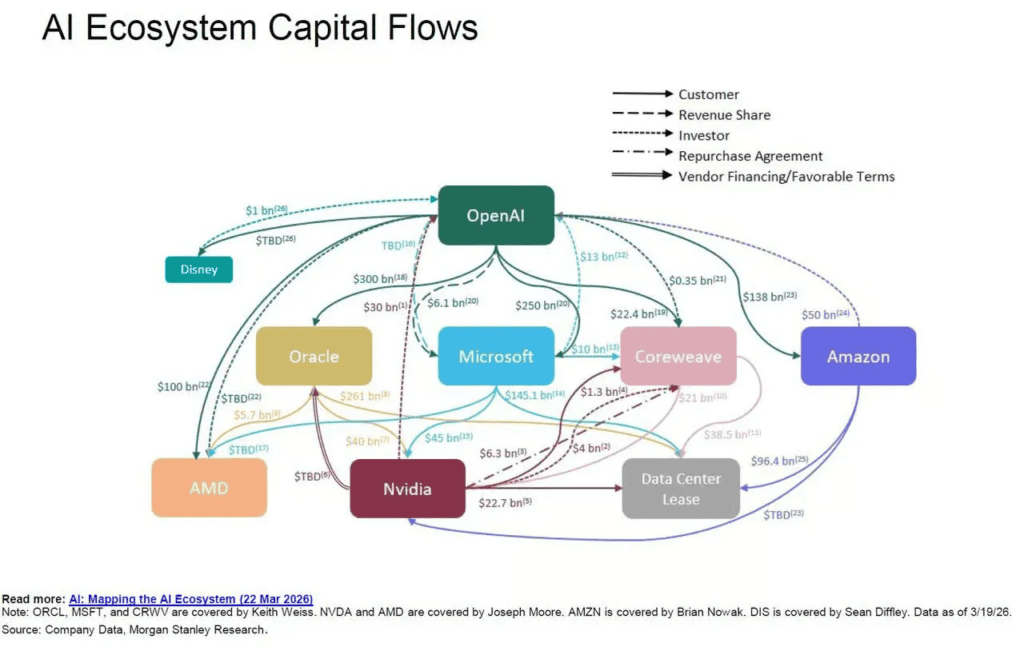
If AI companies eventually struggle to generate enough revenue from their expensive infrastructure, some customers could have trouble meeting their financial commitments. Nvidia would then be exposed not only because it sells chips to these companies, but also because it invested in them, guaranteed parts of their financing or committed to infrastructure built around its own hardware.
That makes Nvidia increasingly connected to the financial health of the entire AI ecosystem.
For now, investors appear comfortable with the strategy. After Nvidia’s latest earnings, its shares jumped 8.7% in a single session, adding about $442 billion in market value, as strong results and guidance reinforced confidence that AI demand remains intact.
Investor takeaway: Nvidia’s AI dominance is giving it enough financial power to help build the market it sells into. That could extend the AI infrastructure boom and create even more demand for Nvidia chips. But it also means the company is gradually taking on more of its customers’ financial risk. As these commitments grow into the hundreds of billions of dollars, investors may need to watch Nvidia’s balance sheet almost as closely as its GPU sales.
Disclosure: This article does not represent investment advice. The content and materials featured on this page are for educational purposes only.
Related: NVIDIA Q2 2027 Earnings Results: Revenue Jumps 106% as Data Center Sales Soar