

Managing your income across rent, utilities, and loan payments can sometimes feel like a balancing act with no clear starting point. Urban life often brings steady expenses and unpredictable splurges, making money management challenging for young professionals trying to clear student loans or save for investments. Learning to track your financial details and structure your spending gives you the confidence to make purposeful decisions, paving a path toward real financial growth.
Table of Contents
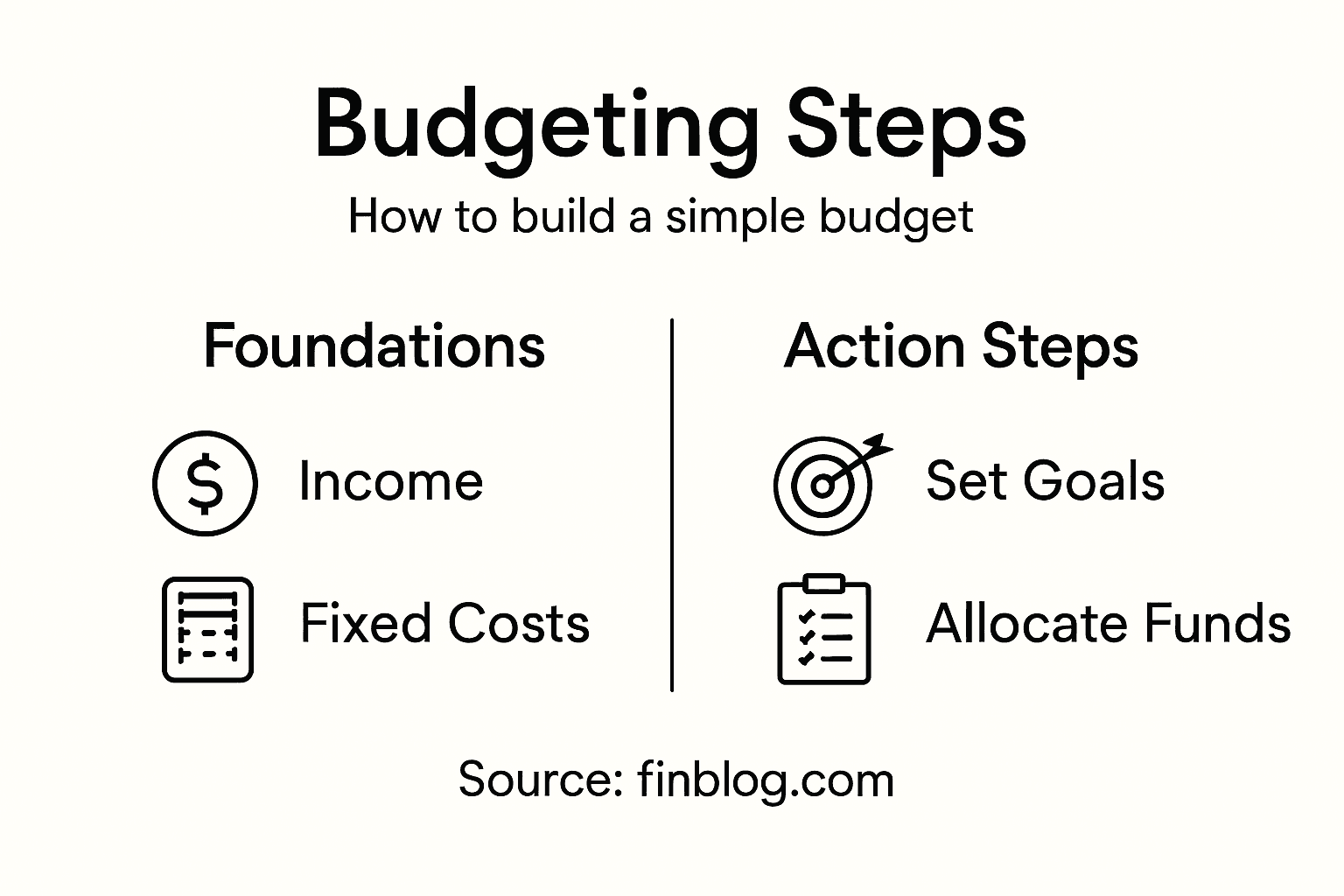
- Step 1: Assess Your Income And Fixed Expenses
- Step 2: List Your Variable And Discretionary Spending
- Step 3: Set Specific Saving And Debt Repayment Goals
- Step 4: Allocate Funds To Each Category Effectively
- Step 5: Review Progress And Adjust Your Budget Regularly
Quick Summary
| Key Point | Explanation |
|---|---|
| 1. Assess Income and Fixed Expenses | Calculate total monthly income and fixed costs to understand your financial foundation and remaining discretionary funds. |
| 2. Track Variable and Discretionary Spending | Identify flexible expenses, categorize them, and calculate averages to uncover potential savings opportunities. |
| 3. Set SMART Goals for Savings and Debt | Establish specific, measurable, achievable, relevant, and timely financial targets to guide your budget and wealth-building strategy. |
| 4. Use the 50/30/20 Budgeting Rule | Allocate funds effectively by distributing 50% to needs, 30% to wants, and 20% to savings and debt repayment for balanced spending. |
| 5. Review and Adjust Your Budget Regularly | Monitor your budget consistently to adapt to financial changes and maintain alignment with your saving and spending goals. |
Step 1: Assess your income and fixed expenses
Launching a successful budget starts with understanding your financial foundation: your total monthly income and consistent expenses. This crucial first step helps you gain clarity on how much money you actually have to work with each month.
Begin by calculating your total monthly income from all sources. For most young professionals, this includes your primary salary, but don’t forget additional revenue streams like freelance work, side gigs, or passive income. Tracking financial details systematically ensures you capture every dollar.
Next, list out your fixed monthly expenses. These are predictable costs that remain relatively constant each month:
- Rent or mortgage payment
- Utility bills
- Insurance premiums
- Student loan payments
- Car payments
- Phone and internet subscriptions
- Recurring subscription services
To calculate these, review your bank statements and compile a comprehensive list. Organize expenses by category and total each one. Subtract your total fixed expenses from your monthly income to understand your remaining discretionary funds.
Here’s a summary of typical budgeting categories and what to watch for in each:
| Category Type | Common Items | Key Risks | Smart Tips |
|---|---|---|---|
| Fixed Expenses | Rent, loans, utilities | Overlooking subscriptions | Review annually |
| Variable Expenses | Groceries, fuel, travel | Overspending on wants | Set category limits |
| Discretionary | Dining out, hobbies | Impulse purchases | Track monthly averages |
| Savings & Debt | Emergency fund, repayments | Skipping contributions | Automate transfers |
Knowing your true financial picture helps prevent overspending and enables strategic money management.
Pro tip: Use digital budgeting apps or spreadsheets to automatically track and categorize your income and expenses, saving time and providing real-time financial insights.
Step 2: List your variable and discretionary spending
After establishing your fixed expenses, the next critical step is identifying and tracking your variable and discretionary spending. These are the flexible expenses that can significantly impact your overall financial health and offer the most opportunities for potential savings.
Variable expenses are costs that fluctuate month to month, while discretionary spending represents non-essential purchases you can adjust or eliminate. Consumer spending categories help break down these expenses into manageable groups.
Typical variable and discretionary spending categories include:
- Dining out and restaurants
- Entertainment (movies, concerts, streaming services)
- Shopping for clothing and accessories
- Personal care and grooming
- Hobbies and recreational activities
- Travel and vacation expenses
- Gym memberships
- Impulse purchases
- Social events and nights out
To track these expenses effectively, review your bank and credit card statements from the past three months. Categorize each expense and calculate the average spending in each category. This approach provides a realistic view of your spending patterns.
Understanding your discretionary spending helps you make informed financial decisions and identify areas where you can cut back.
Pro tip: Use budgeting apps with automatic expense categorization to simplify tracking and gain real-time insights into your spending habits.

Step 3: Set specific saving and debt repayment goals
With your income and expenses clearly mapped out, it’s time to establish meaningful financial targets that will transform your budget from a tracking tool to a powerful strategy for wealth building. Creating actionable financial goals requires a structured and intentional approach.
Use the SMART framework to design your savings and debt repayment objectives:
- Specific: Define exact dollar amounts and timelines
- Measurable: Create trackable milestones
- Achievable: Set realistic targets based on your current income
- Relevant: Align goals with your broader financial vision
- Timely: Establish clear deadlines for each objective
Debt Repayment Goals might include:
- Eliminate credit card balance within 12 months
- Reduce total debt by 25% in the next year
- Pay an extra $100 monthly toward student loans
Savings Goals could encompass:
- Build a $5,000 emergency fund
- Save 10% of monthly income for retirement
- Create a dedicated travel or personal development fund
Financial goals are not one-size-fits-all. Your targets should reflect your unique financial situation and personal aspirations.
Pro tip: Break down larger financial goals into smaller, monthly targets to maintain motivation and track your progress more effectively.
Step 4: Allocate funds to each category effectively
With your financial landscape clearly mapped, the next crucial step is strategically distributing your income across different spending and saving categories. Maximizing resource allocation requires a thoughtful and intentional approach that balances your financial goals with practical needs.
Use the 50/30/20 budgeting rule as a foundational framework for allocating your funds:
- 50% for Needs: Essential expenses like housing, utilities, groceries, transportation
- 30% for Wants: Discretionary spending such as dining out, entertainment, hobbies
- 20% for Savings and Debt Repayment: Emergency fund, retirement accounts, loan payments
Breakdown of potential category allocations:
- Fixed Expenses (50%):
- Housing: 25-35%
- Utilities: 5-10%
- Transportation: 5-10%
- Insurance: 5-10%
- Discretionary Spending (30%):
- Dining and entertainment
- Personal care
- Subscriptions
- Hobbies and recreation
- Financial Goals (20%):
- Emergency fund contributions
- Retirement savings
- Debt repayment
- Investment contributions
Strategic fund allocation ensures your money works efficiently toward your most important financial objectives.
Pro tip: Regularly review and adjust your budget allocations every 3-4 months to ensure they remain aligned with your changing financial circumstances and goals.
Step 5: Review progress and adjust your budget regularly
Creating a budget isn’t a one-time event but an ongoing process that requires consistent monitoring and strategic adjustments. Budget monitoring practices help you stay aligned with your financial goals and adapt to changing circumstances.
Key aspects of budget review and adjustment include:
- Tracking actual spending against planned categories
- Identifying unexpected expenses or income changes
- Recognizing patterns in your financial behavior
- Reallocating funds based on current priorities
Recommended review frequency and methods:
Compare common methods for reviewing and adjusting your budget:
| Review Method | Frequency | Benefit | Drawback |
|---|---|---|---|
| Weekly Quick Check | Weekly | Catch issues early | May miss trends |
| Monthly Review | Monthly | See spending patterns | Can be time-consuming |
| Quarterly Deep Dive | Quarterly | Adjust long-term goals | Less immediate feedback |
- Weekly Quick Check
- Spend 15-20 minutes reviewing transactions
- Categorize any untagged expenses
- Note any significant deviations from your budget
- Monthly Comprehensive Review
- Compare total income and expenses
- Assess progress toward savings goals
- Evaluate discretionary spending patterns
- Make necessary category adjustments
- Quarterly Deep Dive
- Analyze long-term spending trends
- Reassess financial goals
- Update budget percentages
- Consider major life changes affecting finances
Consistent budget monitoring transforms your financial plan from a static document into a dynamic tool for wealth building.
Pro tip: Use digital budgeting apps with automatic tracking and visual reporting to simplify your monthly review process and gain instant insights into your financial health.
Take Control of Your Finances with Expert Guidance
Creating a detailed budget that captures all your income sources, fixed expenses, and discretionary spending is essential for effective financial control. The challenge many face is not just tracking numbers but setting specific savings and debt repayment goals that truly motivate change. If you want to stop feeling overwhelmed by managing your money and start building a financial plan that adapts to your life, it is time to go beyond simple spreadsheets.
Discover how strategic fund allocation and consistent budget review can unlock your path to financial freedom. At finblog.com, we specialize in turning budgeting challenges into actionable solutions that align with your personal goals. Begin your journey today by visiting our site and accessing expert insights that empower you to automate tracking, set achievable milestones, and adjust your plan confidently. Start making your money work for you now with trusted advice and personalized support.
Frequently Asked Questions
How do I start creating a budget for effective financial control?
To start creating a budget, first assess your total monthly income and fixed expenses. Calculate your monthly earnings from all sources, then list predictable expenses like rent, bills, and loan payments to get a clear picture of your finances.
What are variable and discretionary expenses, and why do they matter in my budget?
Variable expenses are costs that fluctuate each month, while discretionary expenses are non-essential purchases. Understanding these categories helps you identify where you can save and control spending more effectively.
How can I set realistic savings and debt repayment goals within my budget?
You can set realistic goals by using the SMART framework to define specific, measurable, achievable, relevant, and timely targets. For example, aim to save $200 per month for an emergency fund to build it up to $2,400 within a year.
How do I allocate my income across different budget categories?
Use the 50/30/20 budgeting rule to allocate your income effectively: 50% for needs, 30% for wants, and 20% for savings and debt repayment. For instance, if your monthly income is $3,000, allocate $1,500 for essential expenses, $900 for discretionary spending, and $600 for savings and debt.
How often should I review and adjust my budget?
Review your budget at least monthly to track actual spending against planned categories and adjust for any changes in income or expenses. A comprehensive review allows you to reassess your financial goals and make timely adjustments, such as reallocating funds based on current needs.
What tools or methods can I use to make budgeting easier?
Utilize digital budgeting apps or spreadsheets to track and categorize your income and expenses automatically. This can save you time and provide real-time insights into your financial situation, making it easier to stay on top of your budget.
Recommended
- How to Budget Effectively: Master Your Finances in 2025 – Finblog
- Effective Financial Stress Management for a Secure Future – Finblog
- What is a Financial Plan? Understanding Its Importance – Finblog
- Master Financial Planning for Freelancers in 2025 – Finblog
- Βήματα βελτίωσης φορολογικής απόδοσης για επιχειρήσεις – Χρήστος Καβαλλάρης – Λογιστής