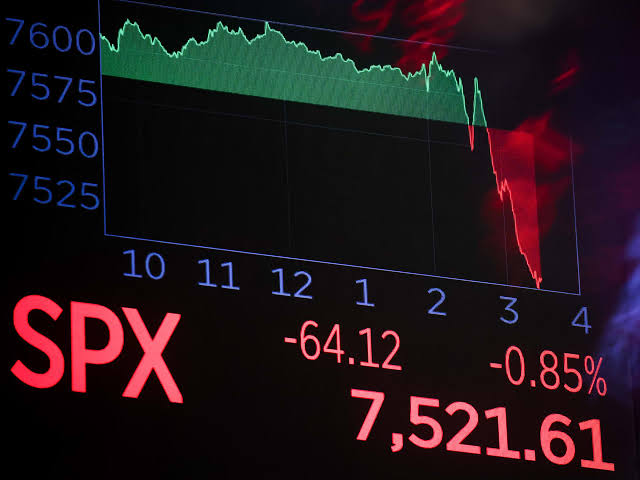

How beginners can start trading in US financial markets
The fastest path to confident trading is not finding the perfect stock. It’s building a foundation before you risk a single dollar. Beginners who skip this step tend to learn the hard way, and the losses are rarely small.
Here’s what a sound starting point actually looks like:
- Learn the vocabulary first. Terms like bid-ask spread, margin, and stop-loss are not optional reading. They describe the mechanics of every trade you’ll ever place.
- Pick one familiar market. Stocks are the natural starting point for most Americans because you already know the companies. Indices like the S&P 500 offer broad exposure with less single-company risk.
- Open a demo account before anything else. Practice order execution, test your instincts, and make your inevitable early mistakes with virtual money, not real capital.
- Write a trading plan. Define what you’ll trade, when you’ll enter, when you’ll exit, and how much you’re willing to lose on any single trade. A plan written down is a plan you’ll actually follow.
- Start with small positions. Your first live trades should be small enough that a loss stings but doesn’t derail you. The goal is learning, not winning.
- Apply risk rules from day one. Professional traders typically risk no more than 1% to 2% of their total capital on any single trade. That discipline is what keeps them in the game long enough to get good.
What every new trader needs to understand about markets and terminology
Trading and investing are not the same thing. Investing means buying an asset and holding it for months or years, betting on long-term growth. Trading means actively buying and selling to profit from shorter-term price movements. The US stock market has risen in about 73% of the past 96 years, which is why long-term buy-and-hold investing tends to carry lower risk than frequent trading for beginners. That context matters when you’re deciding how active you want to be.
Each financial market has its own personality. Stocks trade on exchanges like the NYSE and Nasdaq, which are open from 9:30 AM to 4:00 PM Eastern. Forex, the foreign exchange market, runs 24 hours a day, five days a week, and handles over $7 trillion in daily volume. Indices like the S&P 500 or Dow Jones Industrial Average track baskets of stocks and give you broad market exposure in a single trade. Commodities such as gold and oil respond to global supply and demand shifts. Options give you the right, but not the obligation, to buy or sell an asset at a set price before a specific date, making them a more complex instrument that beginners should approach carefully.
Understanding the basics of trading in stock market contexts also means knowing how derivative products work. CFDs (contracts for difference) let you speculate on price movements without owning the underlying asset. They use leverage, which means you control a large position with a small deposit. That amplifies both gains and losses, which is why leveraged products carry serious risk for retail traders.
Core trading terms you need to know:
- Bid-ask spread: The bid is the highest price a buyer will pay; the ask is the lowest a seller will accept. The gap between them is your transaction cost.
- Leverage: Controlling a larger position than your deposited capital would normally allow. A 10:1 leverage ratio means $1,000 controls a $10,000 position.
- Margin: The deposit required to open and hold a leveraged position.
- Stop-loss order: A preset price at which your broker automatically closes your trade to limit losses.
- Liquidity: How easily you can buy or sell an asset without moving its price. High-liquidity assets like large-cap stocks are easier and cheaper to trade.
- Volatility: The degree of price fluctuation. High volatility means bigger potential gains and bigger potential losses.
- Pip: The smallest standard price movement in forex, typically the fourth decimal place in a currency pair.
- Market order vs. limit order: A market order executes immediately at the best available price. A limit order only executes at your specified price or better.
How to build a trading plan that actually keeps you disciplined
A trading plan is not a wish list. It’s a written set of rules that tells you exactly what to do before emotion gets involved. Traders who skip this step tend to make reactive decisions, chasing losses or holding winners too long.
Your plan needs six components to be functional:
- Goals: What are you trying to achieve, and over what timeframe? Be specific. “I want to grow a $5,000 account by 10% over six months” is a goal. “I want to make money” is not.
- Asset selection: Which markets or instruments will you trade? Stick to one or two at the start.
- Entry criteria: What specific conditions trigger a trade? “Price breaks above the 50-day moving average on above-average volume” is testable. “Looks like it’s going up” is not.
- Exit criteria: Where do you take profit, and where do you cut losses? Both need to be defined before you enter.
- Position sizing: How much capital goes into each trade? This connects directly to your risk rules.
- Review schedule: When do you evaluate what’s working and what isn’t?
Pro Tip: Review your trading journal weekly, not just when something goes wrong. Patterns in your losing trades are usually visible within a few weeks if you’re looking for them. Adjust your plan based on what the data shows, not what your gut says.
A documented plan also counters the single biggest enemy of new traders: impulsive decisions driven by fear or greed. When the market moves against you, your plan tells you what to do. Without it, you’re guessing. Finblog’s resources on risk management and planning walk through position sizing and stop-loss placement in practical detail for anyone building their first plan.
Which trading strategies actually work for beginners?
Not every strategy suits every trader. The right approach depends on how much time you can commit, your risk tolerance, and how quickly you want to see results.
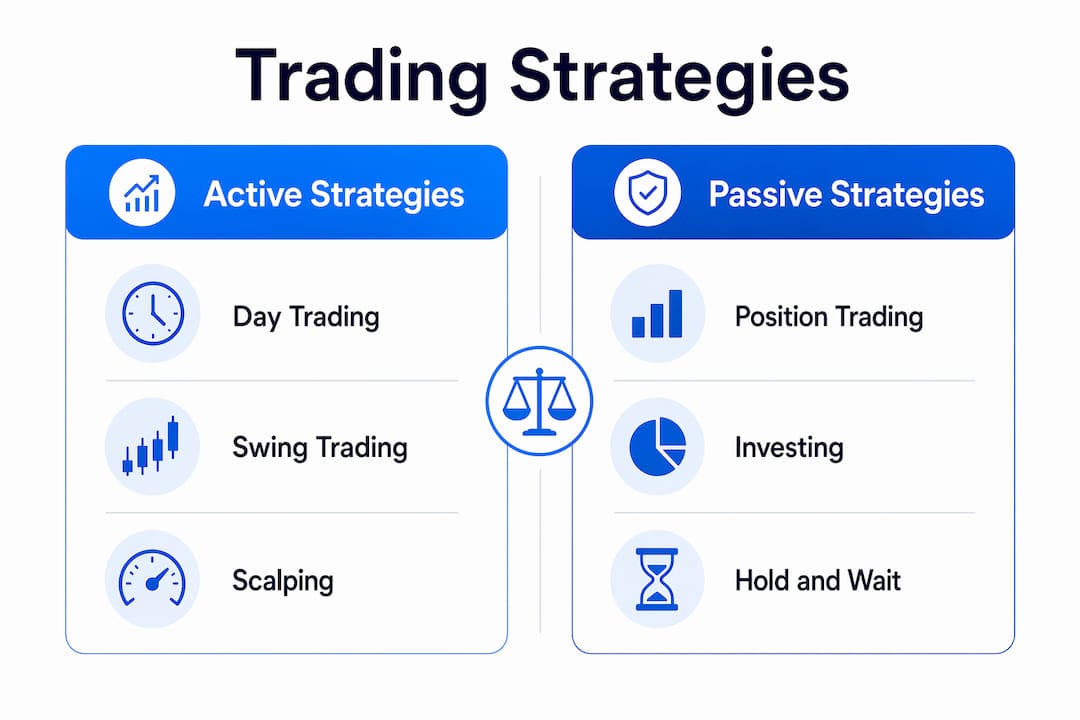
Swing trading is the most beginner-friendly active strategy. You hold positions for several days to a few weeks, targeting medium-term price moves. It doesn’t require you to watch charts all day, and it gives you time to analyze before acting. Most beginners find this timeframe manageable.

Position trading stretches holding periods to weeks or months. It sits closer to investing than active trading, but still uses market timing and analysis. The slower pace reduces the pressure of rapid decisions.
Scalping sits at the opposite extreme. Scalpers open and close trades within minutes, targeting tiny price movements at high volume. It demands intense focus, fast execution, and a very tight grip on transaction costs. For most beginners, it’s the wrong place to start.
Day trading means opening and closing all positions within a single session, with no overnight exposure. It sounds appealing because you never hold risk overnight, but it requires constant attention during market hours and rapid decision-making under pressure. Chase recommends against day trading for novice investors due to the high risk and potential for significant capital loss.
| Strategy | Timeframe | Time commitment | Beginner-friendly? |
|---|---|---|---|
| Swing trading | Days to weeks | Moderate | Yes |
| Position trading | Weeks to months | Low to moderate | Yes |
| Day trading | Within one session | Very high | Rarely |
| Scalping | Seconds to minutes | Extremely high | No |
Technical analysis tools underpin most of these strategies. Moving averages help identify trends. The Relative Strength Index (RSI) signals when an asset may be overbought or oversold. Bollinger Bands show volatility ranges. None of these tools predict the future with certainty, but they give you a structured framework for reading price behavior. Always test any strategy in a demo account before applying it with real money.
The fundamentals of risk management every beginner must apply
Risk management is not a defensive afterthought. It’s the reason traders survive long enough to become profitable. Most beginners focus on finding winning trades. Experienced traders focus on limiting losing ones.
The professional standard is clear: risk no more than 1% to 2% of your total trading capital on any single trade. On a $10,000 account, that means your maximum loss per trade is $100 to $200. It feels conservative until you string together five losing trades in a row, which happens to everyone.
Statistic to know: 69% of retail investor accounts lose money when trading complex leveraged products like CFDs and spread bets. That figure isn’t a warning to avoid markets entirely. It’s a warning to understand leverage before you use it.
Stop-loss orders are your primary defense against runaway losses. You set a price level, and your broker closes the trade automatically if the market hits it. The catch: stop-losses don’t always execute at your exact price. In fast-moving or illiquid markets, slippage can push your actual exit price below where you set it, meaning your realized loss is larger than planned. Stop-losses reduce risk. They don’t eliminate it.
Essential risk management techniques:
- Position sizing: Calculate trade size based on your maximum acceptable loss, not on how confident you feel.
- Stop-loss placement: Set stops at technically meaningful levels (below support, above resistance) rather than arbitrary round numbers.
- Risk-reward ratio: Aim for at least 1:2, meaning you risk $1 to potentially earn $2. This lets you be wrong more than half the time and still come out ahead.
- Diversification: Avoid concentrating all your capital in a single stock or sector.
- Daily loss limit: Set a maximum you’re willing to lose in a single day. When you hit it, stop trading.
- Avoid over-leveraging: Just because leverage is available doesn’t mean you should use all of it.
Understanding how leverage works mechanically is worth time on its own. Finblog’s guide to financial leverage and risk covers the mechanics in plain terms, including how margin calls work and when leverage turns from tool to trap. For a broader view of how risk management connects to financial decision-making, the team at Ready Accounting has a solid breakdown of risk management principles that translates well to trading contexts.
How to practice trading safely before you risk real money
Demo accounts let you practice market dynamics and test strategies without risking real capital. Most major US brokerages offer them, and there’s no good reason to skip this step. Think of it the way you’d think about learning to drive: you study the rules, then you practice in a parking lot before you get on the highway.
The goal of demo trading is not to rack up virtual profits. It’s to build operational fluency. You want to get comfortable placing market orders, limit orders, and stop-losses without fumbling. You want to understand how your chosen platform displays price data and executes trades. You want to test your strategy across different market conditions before real money is on the line.
Tips for getting the most out of demo trading:
- Trade realistic position sizes. Don’t use the full virtual balance on every trade just because you can.
- Treat each demo trade as if it were real. Record your reasoning, your entry, your exit, and your result.
- Test one strategy at a time, not five simultaneously.
- Run the demo for at least four to six weeks before considering a live account.
- Note how you feel when a demo trade goes against you. That emotional response will be stronger with real money.
That last point matters more than most beginners expect. Moving from demo to live trading often triggers emotional stress that demo success doesn’t prepare you for. The mechanics are identical. The psychology is not. Knowing this in advance gives you a head start on managing it. Finblog’s beginner trading roadmap covers the transition from practice to live trading in detail, including how to structure your first weeks with real capital.
Why trading psychology determines your results more than any strategy
You can have the best strategy in the market and still lose money consistently. The reason is almost always psychological. Fear causes traders to exit winning positions too early. Greed causes them to hold losing ones too long. Overconfidence after a winning streak leads to oversized positions. A bad day leads to revenge trading, where you take impulsive trades to recover losses, usually making things worse.
“Trading success depends as much on psychology and emotional control as on technical indicators. A concrete plan is essential to prevent reactive trading.”
This is not a soft observation. It’s the central finding from practitioners who study trading behavior: the traders who survive long-term are not necessarily the ones with the best analysis. They’re the ones who follow their rules when it’s hardest to do so.
The most common psychological pitfalls for beginners:
- Overtrading: Taking too many trades because sitting on the sidelines feels like missing out.
- Moving stop-losses: Widening your stop because you don’t want to accept a loss, which turns a small loss into a large one.
- Abandoning the plan: Deviating from your strategy mid-trade because of a news headline or a gut feeling.
- Anchoring: Refusing to sell a losing position because you’re mentally attached to the price you paid.
A documented trading plan is the strongest practical countermeasure to all of these. When the rules are written down and you’ve committed to following them, the decision is already made before emotion enters the picture. Finblog’s guide to the psychology of investing goes deeper on the behavioral patterns that trip up new traders, with practical techniques for building the kind of discipline that holds under pressure.
The other piece is self-awareness. After every trade, ask yourself whether you followed your plan. Not whether you made money. A trade that loses money but follows the plan is a good trade. A trade that makes money but breaks your rules is a warning sign.
Key Takeaways
Beginners who start with a written plan, practice in a demo environment, and apply strict position sizing give themselves a real structural advantage over those who simply open an account and start trading.
| Point | Details |
|---|---|
| Start with a demo account | Practice order execution and test strategies with virtual funds before risking real capital. |
| Apply the 1% to 2% rule | Risk no more than 1% to 2% of total capital per trade to survive losing streaks and stay in the game. |
| Know your market | Stocks and indices suit most beginners; leveraged products like CFDs carry significantly higher risk. |
| Write your trading plan | Define entry, exit, and position sizing rules before you place a single live trade. |
| Manage the psychology | A documented plan is your best defense against fear, greed, and impulsive decisions under pressure. |