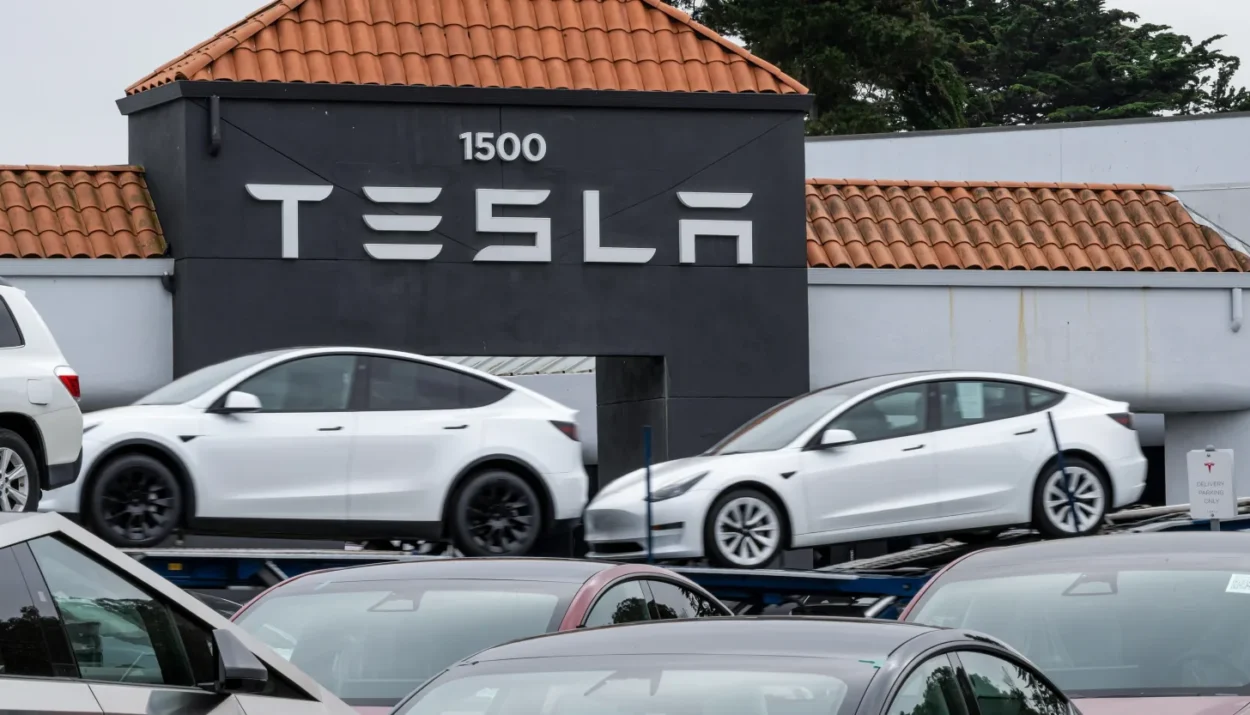

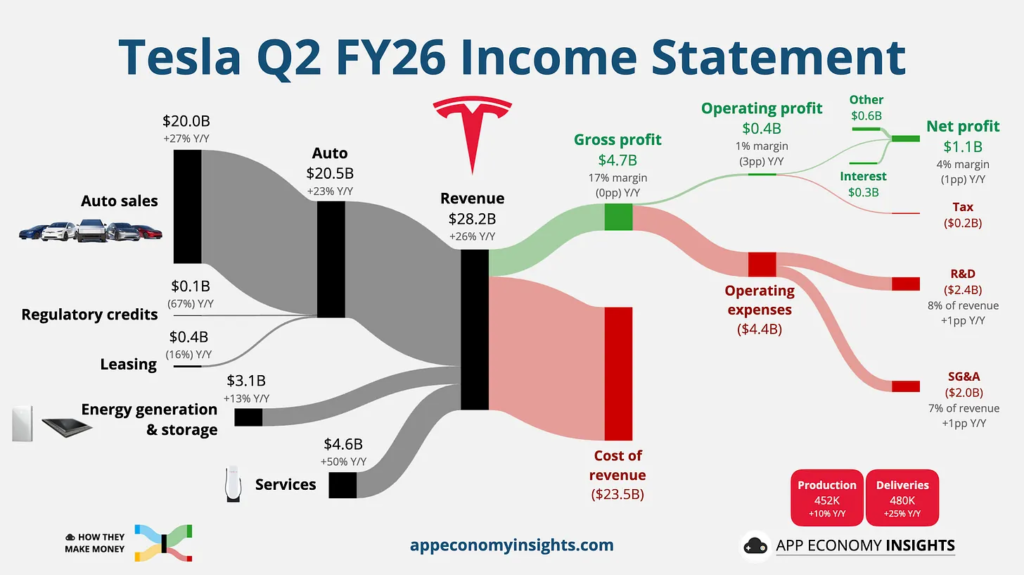
Tesla reported record second-quarter revenue, driven by a rebound in vehicle deliveries, but the electric vehicle maker fell short of Wall Street’s profit expectations as aggressive spending on artificial intelligence, robotics and manufacturing weighed on earnings.
The company generated $28.2 billion in revenue, up 26% year over year, exceeding analysts’ forecasts and marking the first time Tesla’s trailing 12-month revenue has surpassed $100 billion. However, adjusted earnings came in at $0.33 per share, missing expectations, while operating profit fell 57% to $398 million.
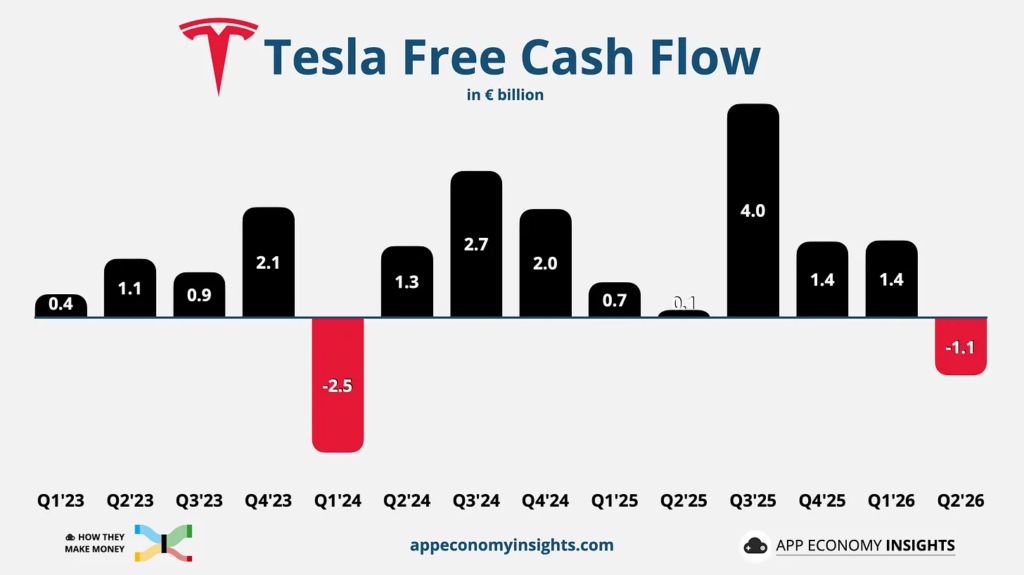
The biggest concern for investors was cash flow.
Tesla posted negative free cash flow of $1.1 billion—its first cash burn in more than two years—as capital expenditures surged 142% to $5.8 billion. The spending reflects Elon Musk’s strategy of transforming Tesla beyond an electric vehicle manufacturer into an AI and robotics company focused on Robotaxi, Optimus, semiconductor manufacturing and AI computing infrastructure.
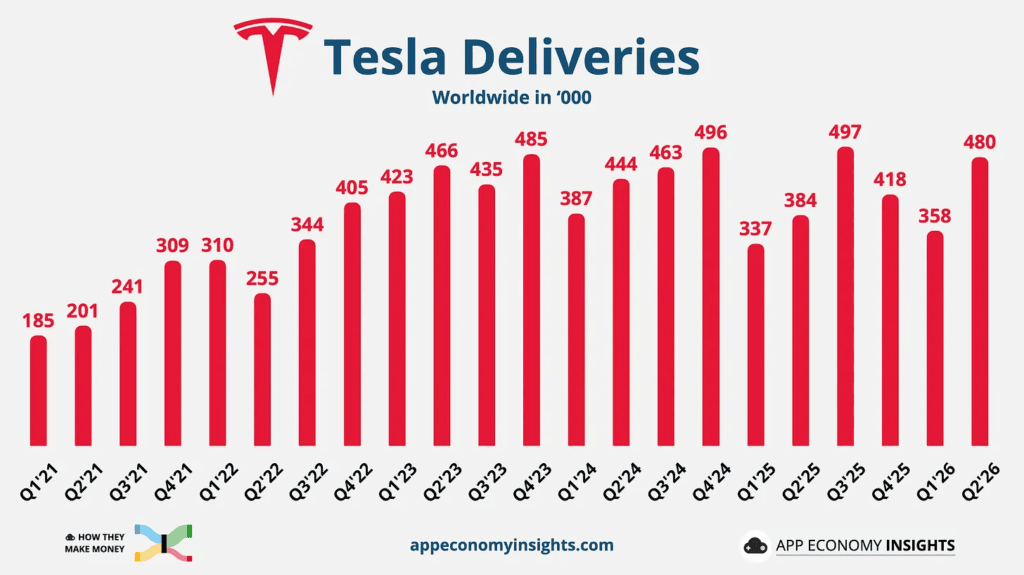
Despite the pressure on profits, Tesla’s core automotive business showed renewed momentum.
- Vehicle deliveries reached a record 480,126, up 25% from a year earlier.
- Automotive revenue increased 23% to $20.5 billion.
- Services revenue jumped 50% to $4.6 billion, supported by Supercharging, insurance and used-vehicle sales.
- Tesla said it ended the quarter with its largest order backlog since 2023, helped by growing adoption of Full Self-Driving (FSD).
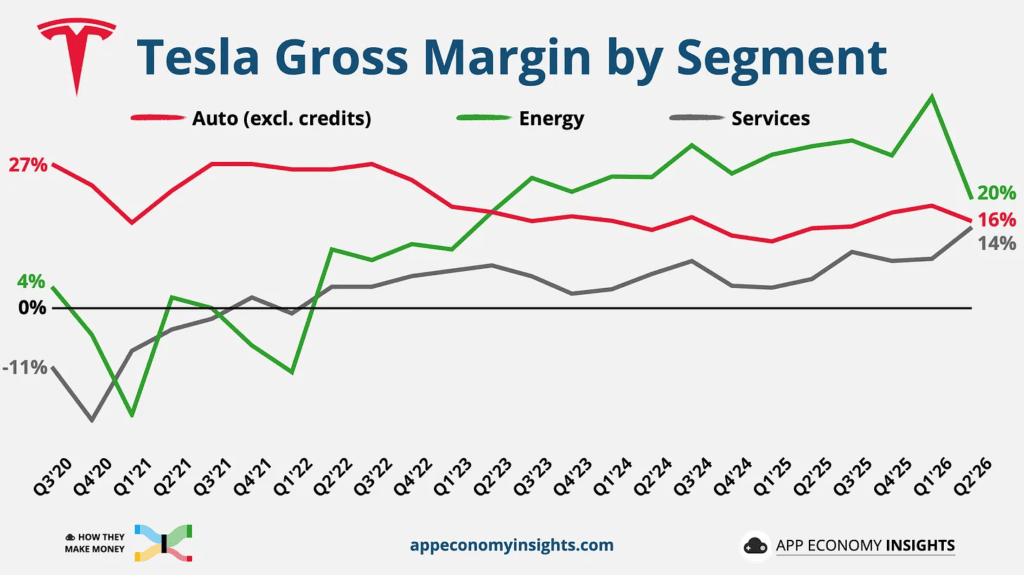
The energy business also continued to grow, although profitability weakened. Energy storage deployments climbed to 13.5 GWh, one of Tesla’s strongest quarters on record, but margins declined due to warranty costs, lower industrial storage pricing and the absence of one-time benefits recorded in the previous quarter.
Looking ahead, Tesla reiterated that its heavy investment cycle is only beginning. Management expects capital expenditures to exceed $25 billion this year and continue rising over the next several years as it expands Robotaxi operations, scales production of the Optimus humanoid robot, builds semiconductor facilities and invests in AI infrastructure. The company is also arranging additional debt capacity, despite holding $43.5 billion in cash and investments.
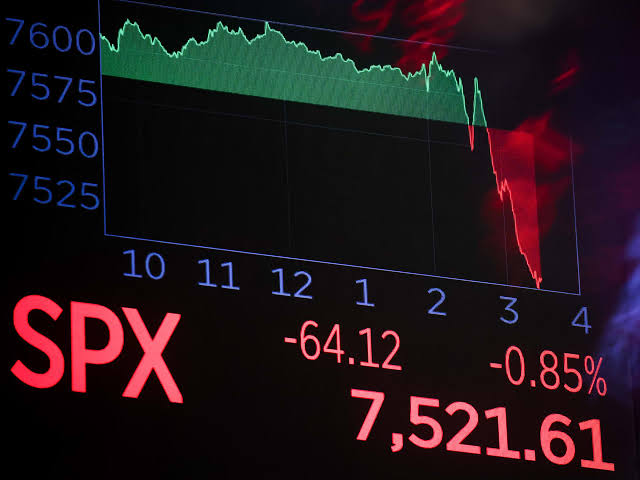
Investors reacted negatively to the results, sending Tesla shares sharply lower after the earnings release. While demand for the company’s vehicles has improved, the market is increasingly focused on whether Tesla’s massive AI investments can generate enough future profits to justify today’s rising costs.
For investors, Tesla’s latest quarter highlights a changing story. Vehicle demand appears to be recovering, but the company’s valuation is becoming increasingly tied to the success of its AI, autonomous driving and robotics ambitions rather than its traditional car business. Until those businesses begin contributing meaningfully to earnings, investors are likely to remain focused on Tesla’s growing cash burn and profit margins.
Disclosure: This article does not represent investment advice. The content and materials featured on this page are for educational purposes only.