


TL;DR:
- 2025’s market was shaped by competing forces with persistent inflation and modest growth.
- AI investments supported resilience but created valuation and sector concentration risks.
- Policymakers and investors should stress-test portfolios against layered shocks and supply chain risks.
Heading into 2025, serious investors and financial professionals faced a landscape that resisted easy interpretation. Growth projections pointed modestly upward, yet inflation refused to retreat to target levels. Tariffs disrupted trade flows while artificial intelligence spending injected unexpected resilience into markets. The result was a year defined by competing forces rather than a single dominant narrative. This article cuts through that complexity by evaluating the most consequential financial trends of 2025, comparing their real market impact, and delivering the kind of actionable clarity that actually informs strategic planning.
Table of Contents
- Key criteria for assessing 2025 financial trends
- Growth, inflation, and market drivers: The 2025 outlook
- AI investments: Catalyst and risk in the 2025 landscape
- Tariffs, policy, and volatility: Navigating risks in 2025
- Our perspective: Cutting through noise in 2025’s financial trends
- Stay ahead with expert financial insights
- Frequently asked questions
Key Takeaways
| Point | Details |
|---|---|
| Below-average growth | Global economic growth in 2025 lagged pre-pandemic rates, demanding careful planning. |
| Stubborn inflation | US inflation remained above target, largely due to ongoing tariff effects. |
| AI investments shape risks | Massive AI spending continued to drive growth and volatility across financial markets. |
| Tariff volatility persists | Policy responses and tariffs created uncertainty, requiring agility from investors. |
| Framework for strategy | Using data-driven criteria helps professionals cut through market noise and set resilient strategies. |
Key criteria for assessing 2025 financial trends
With the high-level challenge set, let’s start by clarifying how to rigorously assess the financial trends that matter most for 2025. Not every trend deserves equal weight in your portfolio decisions. The ones that matter are those that interact with the broadest range of asset classes, sectors, and geographies simultaneously.
The foundation of any solid evaluation starts with three macro pillars: growth, inflation, and monetary policy. These variables set the tone for everything else. Global growth in 2025 was projected at 3.0% to 3.3%, below pre-pandemic averages but supported by AI-driven resilience in key sectors. That gap between historical norms and current reality is exactly where strategic opportunity lives.
Beyond the macro pillars, a rigorous assessment should factor in the following:
- AI capital expenditure: Record-breaking investment cycles create both productivity tailwinds and valuation risks across tech and adjacent sectors.
- Geopolitical developments: Trade policy shifts, particularly tariff regimes, can reprice entire supply chains within quarters.
- Sector rotation signals: Capital moving between sectors often precedes broader market moves by weeks or months.
- Currency and rate dynamics: Central bank divergence across the US, Europe, and emerging markets creates both hedging needs and carry opportunities.
- Resilience versus volatility scores: A trend that generates strong returns in calm markets but collapses under stress is not the same as one that holds across cycles.
That last point deserves emphasis. Many professionals focus on upside potential and underweight downside resilience. In a year like 2025, where multiple shocks arrived in sequence, resilience was the differentiator between portfolios that held and those that scrambled.
You also need to track how trends interact. AI spending, for example, was not independent of tariff policy. Supply chain costs for semiconductor equipment, data center hardware, and energy infrastructure were all affected by trade restrictions. Monitoring economic indicators 2025 in isolation misses these feedback loops entirely.
Pro Tip: Weight trend significance based on your portfolio’s geographic exposure. A US-heavy equity portfolio faces a very different set of 2025 risks than one tilted toward emerging market debt or European industrials.
Growth, inflation, and market drivers: The 2025 outlook
Now that we’ve set our evaluative criteria, let’s explore the foundational macro trends shaping the financial landscape in 2025. The numbers tell a story of stubborn persistence rather than dramatic resolution.
Global headline inflation fell to 4.2% in 2025, a meaningful decline from prior years, but US inflation remained above the 2% Federal Reserve target largely because tariff-driven cost increases kept feeding through to consumer prices. That divergence between global and US inflation created a split in central bank postures that directly affected bond markets and equity valuations.
Here is how the key macro drivers stacked up:
| Macro trend | 2025 reading | Market impact | Key risk |
|---|---|---|---|
| Global GDP growth | 3.0% to 3.3% | Moderate equity support | Below pre-pandemic baseline |
| Global headline inflation | 4.2% | Rate cut delays in US | Tariff pass-through |
| AI capital expenditure | $325B+ (hyperscalers) | Tech sector resilience | Overvaluation risk |
| US tariff regime | Broad and escalating | Supply chain repricing | Deferred inflation spike |
The key drivers behind these readings included:
- AI capital spending: Hyperscale tech companies committed over $325 billion in infrastructure investment, propping up earnings and equity multiples in the technology sector.
- Tariff escalation: New and expanded tariffs on imports created cost pressure across manufacturing, retail, and consumer goods sectors.
- Sector rotation: Capital shifted away from rate-sensitive sectors like real estate and utilities toward technology and energy infrastructure.
For financial planning purposes, the US inflation story is the most operationally significant. Portfolios built on a 2% inflation assumption needed recalibration. Reviewing your inflation forecast 2025 assumptions and adjusting fixed income duration accordingly was not optional. It was necessary.
If you are refining your approach, the investing strategies 2025 framework offers a structured way to map these macro shifts to specific allocation decisions.
AI investments: Catalyst and risk in the 2025 landscape
Among the new market drivers, none made a larger impact than artificial intelligence investments. The scale of capital commitment was genuinely unprecedented, and its effects rippled far beyond the technology sector.

Hyperscalers committed over $325 billion in AI-related capital expenditure during 2025, and that spending acted as a significant buffer against the drag from tariffs and slowing global trade. It supported earnings, employment in high-skill sectors, and equity market multiples in ways that surprised even experienced analysts.
The upside catalysts from AI investment included:
- Productivity gains: Enterprise AI adoption began delivering measurable efficiency improvements in financial services, logistics, and healthcare.
- New revenue streams: Cloud providers and semiconductor manufacturers opened entirely new market segments tied to AI inference and training demand.
- Labor market resilience: High-paying tech jobs offset some of the manufacturing displacement from tariff-driven reshoring costs.
But the risks were equally real:
- Overvaluation: Price-to-earnings multiples in AI-adjacent equities stretched well beyond historical norms, raising the probability of sharp corrections.
- Sector concentration: Portfolios overweight in mega-cap tech were effectively making a single bet on AI spending continuing at current rates.
- Energy and infrastructure bottlenecks: Data center power demand created supply constraints that could slow AI deployment timelines.
The AI crash scenario is not a fringe concern. Research has modeled a potential 38% S&P 500 correction if AI capital spending disappoints. Meanwhile, understanding AI as an economic driver helps frame why policymakers were reluctant to let the cycle deflate. The AI spending impact on Big Tech also showed that even the biggest beneficiaries were starting to feel margin pressure from the sheer cost of staying competitive.
“It’s the convergence of AI capital cycles, policy responses, and macro conditions that determines market outcomes, not any single headline figure.”
Pro Tip: Monitor sector rotation signals closely. When tech outperforms by a wide margin, it often masks deteriorating fundamentals elsewhere. That gap eventually closes, and it rarely closes gently.
Tariffs, policy, and volatility: Navigating risks in 2025
While technology and growth reshaped markets, policy shocks were never far behind. Tariffs were the most disruptive policy variable of 2025, but their full impact was more complex than initial headlines suggested.
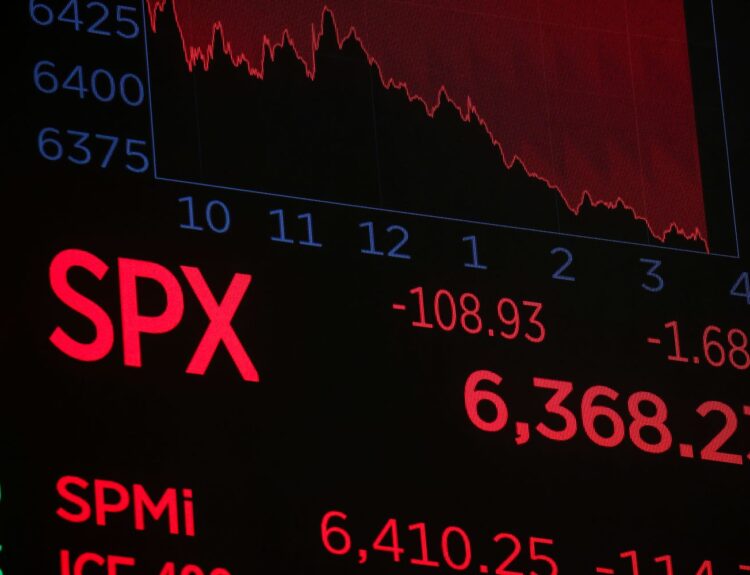
Tariffs caused early market instability and fed inflation through supply chain cost increases, but AI investment and fiscal policy responses absorbed much of the damage in the near term. The critical phrase here is “near term.” Deferred effects are not eliminated effects.
| Policy variable | Short-term market impact | Inflation effect | Volatility score |
|---|---|---|---|
| Broad tariff increases | Equity sell-off, sector rotation | Moderate upward pressure | High |
| AI policy support | Tech equity rally | Neutral to deflationary | Moderate |
| Rate policy divergence | Bond repricing | Amplified by tariffs | High |
Three practical steps professionals can take to mitigate tariff-driven disruption:
- Diversify supply chain exposure: Equities in companies with geographically concentrated supply chains carry hidden tariff risk that standard valuation models do not capture.
- Reassess fixed income duration: Tariff-driven inflation delays rate cuts, which punishes long-duration bonds. Shortening duration reduces that exposure.
- Stress-test for deferred shocks: Model scenarios where tariff effects that were absorbed in 2025 materialize fully in 2026. Your portfolio should survive that scenario.
Understanding tariff increases and how stock markets got reshaped in 2025 provides critical context. For those building longer-term resilience, inflation hedging strategies for 2026 are worth reviewing now, before deferred pressures arrive.
Pro Tip: Watch mid-cap equities and industrial commodities for early volatility signals. These segments tend to price in tariff and policy stress before large-cap indices reflect it.
Our perspective: Cutting through noise in 2025’s financial trends
After reviewing the top trends, it’s worth stepping back and asking a harder question: how many investors were actually misled by the narrative rather than informed by it?
The conventional obsession with headline growth projections is a trap. A 3.0% global growth number gets enormous press coverage, but it tells you almost nothing about where risk-adjusted returns will actually come from. What matters is the composition of that growth, which sectors are driving it, which geographies are lagging, and which policy variables could reverse it.
We believe the professionals who navigated 2025 best were not the ones who read the most forecasts. They were the ones who tracked fundamentals while everyone else chased themes. AI was real. But so was the valuation risk embedded in it.
“It’s the convergence of multiple trends, not any one headline, that shapes market outcomes.”
Stress-testing your portfolio for layered shocks, not just single-variable scenarios, is the discipline that separates reactive investors from strategic ones. Avoiding inflation forecasting pitfalls is one concrete place to start.
Pro Tip: Run a scenario where AI capex slows 30%, tariff effects double, and rate cuts are delayed 12 months simultaneously. If your portfolio cannot survive that combination, you are carrying more risk than your model shows.
Stay ahead with expert financial insights
Ready to apply these lessons to your investment planning? The trends shaping 2025 are not fading quietly into 2026. They are evolving, and the professionals who act on data-driven analysis now will be better positioned than those who wait for consensus to catch up.
Finblog delivers timely, research-backed financial insights designed for serious investors and professionals who need more than headlines. From macro analysis to sector-specific planning guides, our resources are built to support real strategic decisions. Explore the full investing strategies 2025 report to see how these trends map to actionable allocation frameworks. Sign up to receive our latest analysis directly, and make sure your planning is grounded in the data that actually moves markets.

Frequently asked questions
What was the projected rate of global economic growth for 2025?
Global growth was projected at 3.0% to 3.3% for 2025, which falls below pre-pandemic historical averages and reflects ongoing structural headwinds in major economies.
Did inflation in the US reach the target in 2025?
No. US inflation stayed above the Federal Reserve’s 2% target throughout 2025, with tariff-driven cost increases being a primary reason for the persistent overshoot.
How did AI investments impact financial markets in 2025?
Record AI capital spending above $325 billion from hyperscalers supported market resilience against tariffs, but also introduced concentrated valuation risk and sector volatility that required active monitoring.
What role did tariffs play in shaping markets in 2025?
Tariffs triggered early equity instability and fed inflation through supply chains, but their most severe effects were deferred by AI investment and policy responses, meaning the full impact may still be arriving.
What practical steps can investors take given 2025’s financial trends?
Investors should diversify supply chain and sector exposure, shorten fixed income duration to manage inflation risk, and stress-test portfolios against layered shocks rather than single-variable scenarios.
Recommended
- Investing strategies for 2025: trends that shaped markets – Finblog
- Understanding Personal Finance Trends 2025 for Better Decisions – Finblog
- Economic Indicators 2025: How They Shape Investor Decisions – Finblog
- Digital Banking Trends 2025: Shaping Wealth Strategies – Finblog
- Tax Trends in 2025 – What Leeds Businesses Must Know