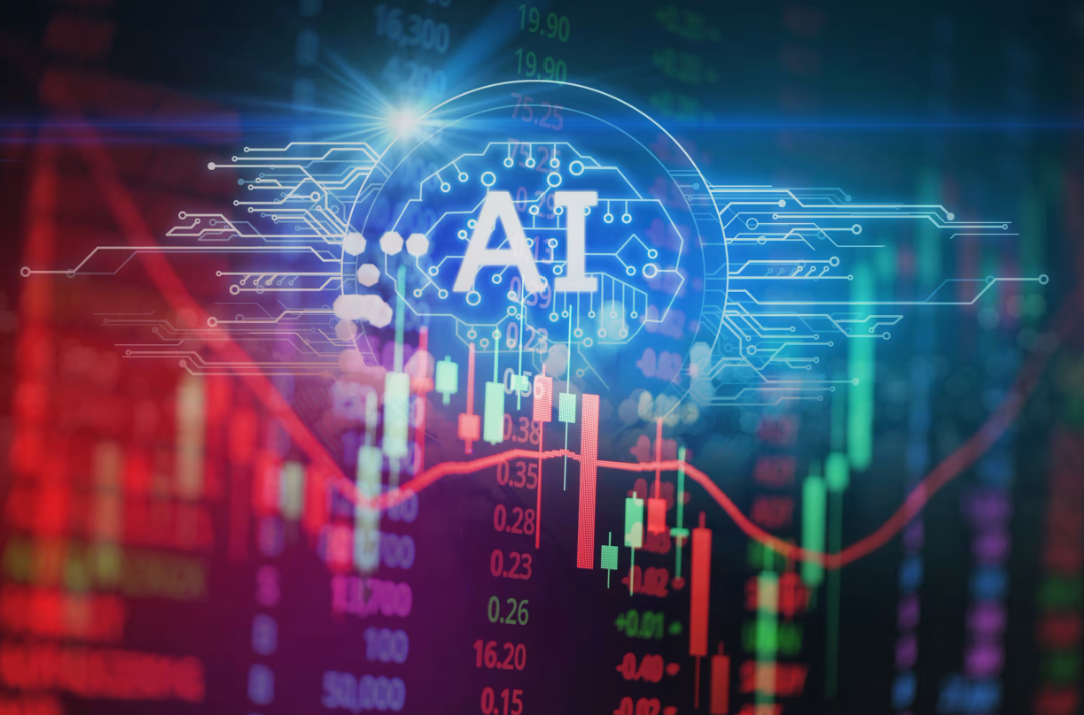

A new research note making the rounds on Wall Street outlines a scenario where the AI boom delivers on its full promise, but that very success triggers a broader economic downturn and a potential S&P 500 crash of nearly 40%.
The commentary, published by Citrini Research and guest co-author Alap Shah of Lotus Technology Management, presents a hypothetical look back from mid-2028. In that scenario, unemployment rises to 10.2%, and the S&P 500 falls 38% from its October 2026 peak near 8,000.
The authors stress that the piece is not a prediction, but a stress-test of a risk that markets may be underestimating.
Related: Could these 6 non-AI chip stocks be the next leg of the AI boom?
The Core Argument: AI Success Could Hurt Jobs
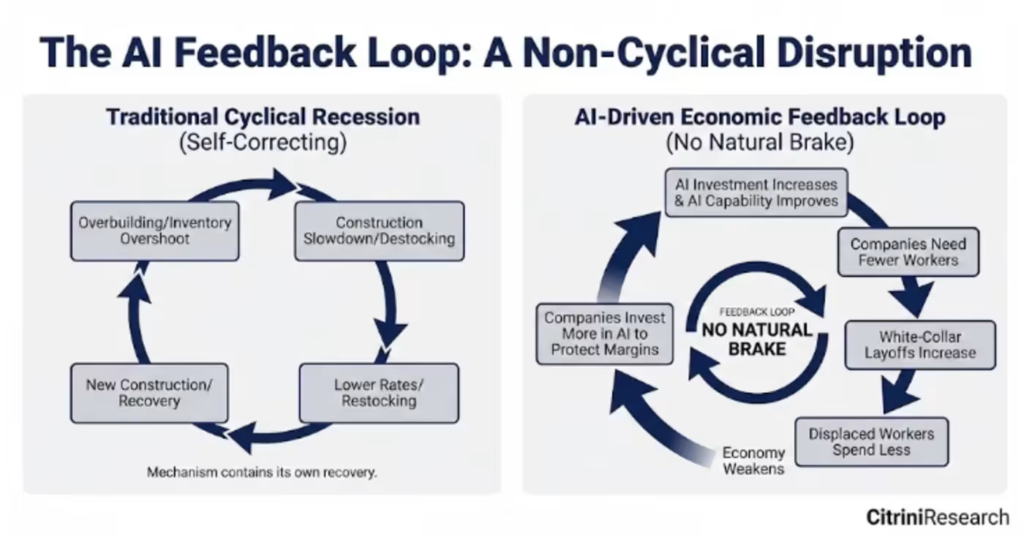
The thesis begins with “agentic AI”, systems that automate complex white-collar tasks. In the scenario, software-as-a-service companies see declining demand as clients adopt more advanced AI tools that replace traditional workflow systems.
Companies respond by cutting headcount and using cost savings to invest further in AI, accelerating job losses.
By early 2027, AI agents are assumed to be embedded into smartphones and business systems. These systems automatically optimise consumer choices, cancelling subscriptions, finding cheaper alternatives, and reducing brand loyalty.
The result: lower corporate margins and shrinking profits.
The disruption spreads to payments, with stablecoins replacing traditional processors such as Mastercard, adding further sector pressure.
From Sector Risk to Systemic Risk
Citrini argues the dynamic becomes systemic because AI may differ from previous technological revolutions.
Unlike past innovations, displaced white-collar workers cannot easily move into “AI management” roles, since AI can already perform those tasks.
White-collar employment represents roughly 50% of US jobs and 75% of discretionary consumer spending, according to the scenario. A hiring collapse in that segment weakens consumption across the economy.
Bond markets notice first. Treasury yields fall as investors price in economic slowdown. By February 2027, initial jobless claims spike to 487,000, triggering a 6% drop in the S&P 500 in a single move. A recession follows in the second quarter.
Related: Two Stock Market Trends Investors Should Know
Financial Contagion Scenario
The research outlines a chain reaction in financial markets:
- Private credit firms mark down software investments
- Moody’s downgrades billions in debt
- Software-backed loans default
- Insurers linked to private credit are forced to raise capital or sell assets
San Francisco home prices fall 11% in the scenario. Policymakers struggle to respond, reluctant to tax high-growth AI sectors to support displaced workers.
Meanwhile, the AI sector continues expanding, even as the broader economy weakens.
Market Reaction and Debate
The note generated strong online reactions. Some analysts argue the disruption risk is overstated, suggesting governments could respond with re-industrialisation or fiscal stimulus.
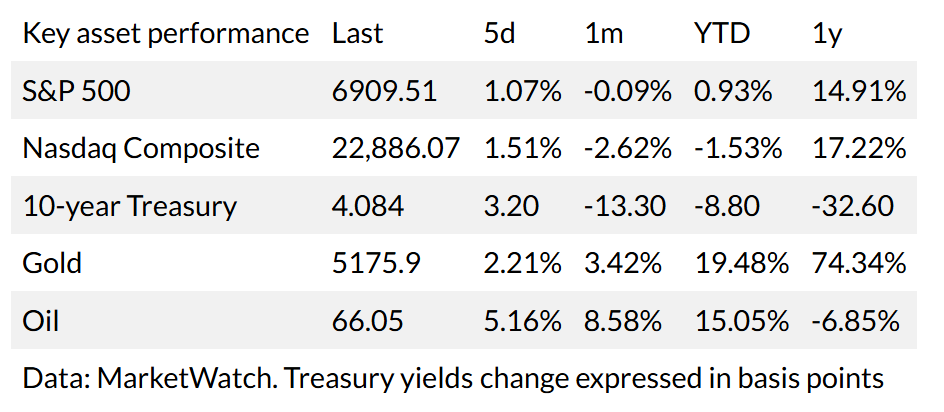
For now, markets remain relatively stable near record highs.
As of the latest data:
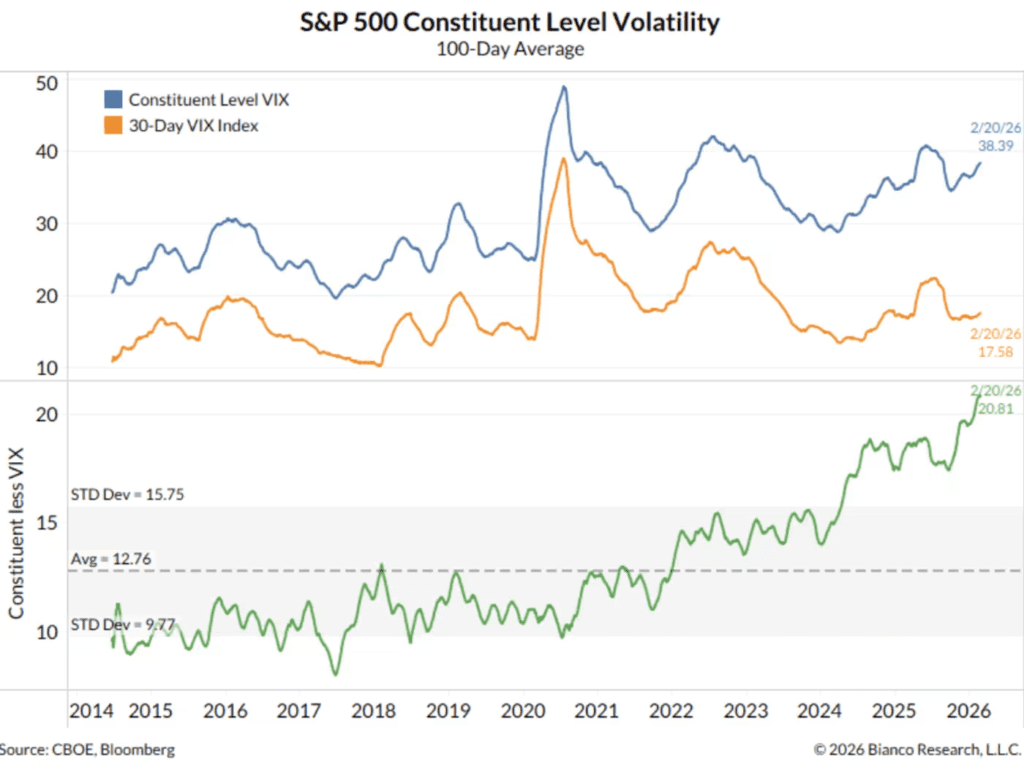
Yet volatility beneath the surface is rising. Individual stock volatility is widening sharply compared to the broader index, according to Bianco Research.
The scenario raises a central question: What if AI works too well?
If productivity gains come alongside widespread white-collar job losses and shrinking consumer demand, the stock market could face pressures few models currently account for.
Citrini emphasizes the exercise is about modeling an underexplored risk, not forecasting doom. But as AI adoption accelerates in 2026, investors are increasingly debating whether the next phase of technological growth could carry unexpected economic consequences.
Disclosure: This article does not represent investment advice. The content and materials featured on this page are for educational purposes only.