
Economic indicators shape everything from American investment decisions to global policy changes, yet many people overlook how powerful these signals can be. With more than 100 different indexes tracked worldwide, these numbers are more than financial jargon—they offer a real-time snapshot into what drives economies forward. Whether you are curious about market health or planning your next big move, understanding economic indicators provides a major advantage.
Table of Contents
- What Are Economic Indicators
- Major Indicator Categories Explained
- How 2025 Trendlines Influence Outlook
- Using Indicators to Gauge Risks
- Comparisons Across Economies Today
Key Takeaways
| Point | Details |
|---|---|
| Understanding Economic Indicators | Economic indicators are vital tools for analyzing the health of economies, encompassing leading, lagging, and coincident indicators. They provide insights that inform investment and policy decisions. |
| Adaptability and Innovation for 2025 | The economic landscape is evolving due to technological advancements and geopolitical factors, necessitating that investors adopt flexible and innovative strategies. |
| Risk Assessment through Indicators | Investors must utilize economic indicators to assess risks by predicting market disruptions and identifying vulnerabilities in interconnected economies. |
| Global Economic Comparisons | The performance of different economies is shaped by technology, policy flexibility, and recovery patterns, highlighting the need for nuanced understanding in international investments. |
What Are Economic Indicators
Economic indicators are statistical measurements that help analysts and policymakers understand the current state and potential future trajectory of economic activity. These key statistical tools provide critical insights into how different sectors and markets are performing, enabling investors, governments, and businesses to make informed decisions.
At their core, economic indicators represent quantitative data points that track various aspects of economic performance. These metrics can measure everything from employment rates and industrial production to consumer spending and inflation. By examining these statistical measures, economists can assess the overall health of an economy and predict potential shifts or challenges.
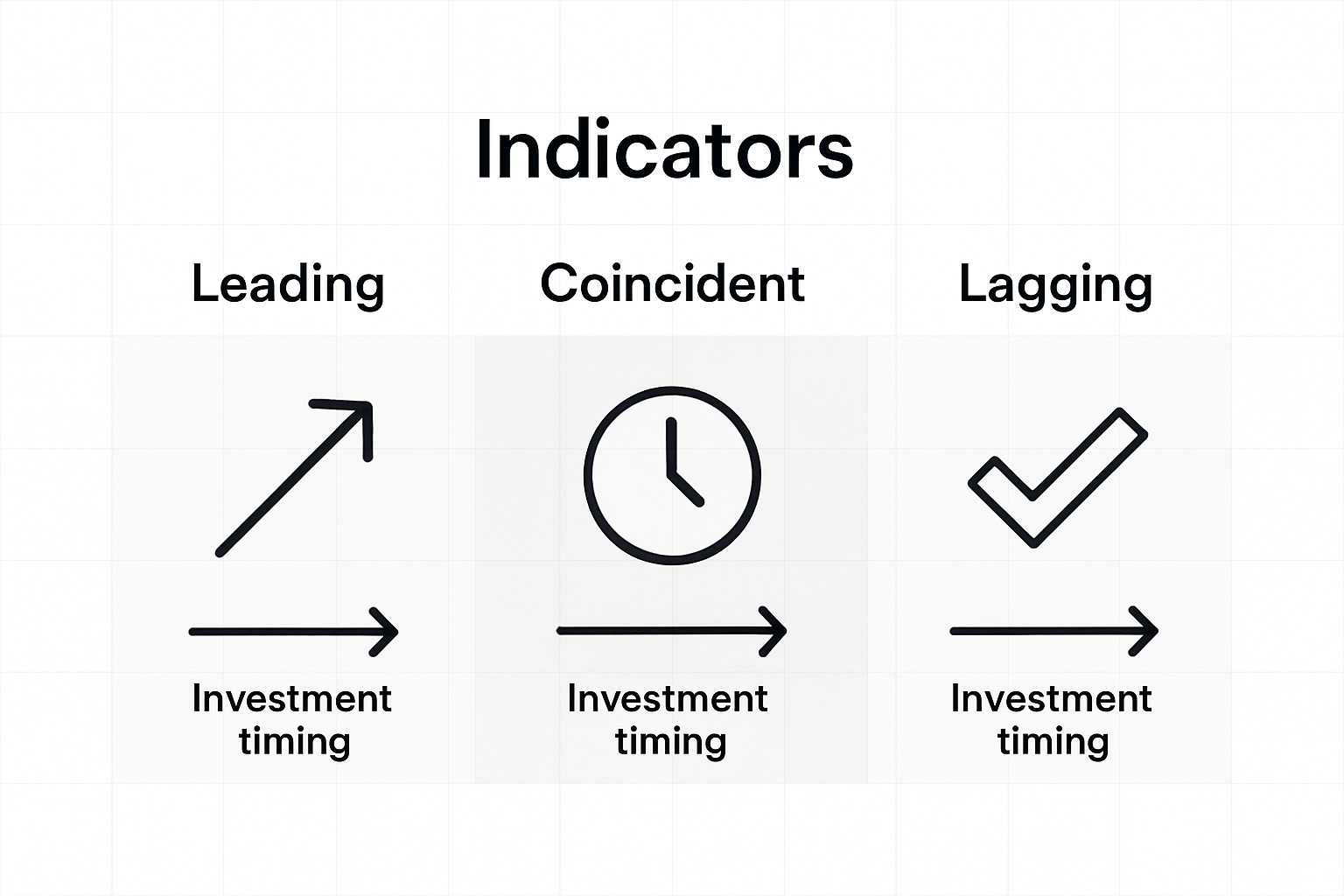
There are three primary categories of economic indicators that professionals consistently monitor:
- Leading Indicators: Signals that predict potential future economic changes (e.g., stock market performance, manufacturing orders)
- Lagging Indicators: Measurements that confirm trends after they have occurred (e.g., unemployment rates, consumer debt levels)
- Coincident Indicators: Real-time measurements reflecting current economic conditions (e.g., personal income, industrial production)
Understanding these indicators requires more than just looking at raw numbers. Skilled analysts interpret these statistics in context, recognizing how different metrics interact and influence each other. The complex interplay between various economic signals can reveal nuanced insights about potential economic growth, potential recession risks, and overall market sentiment.
Major Indicator Categories Explained
Economic indicators are systematically categorized into three distinct groups that help analysts and investors understand economic dynamics from different temporal perspectives. These categories – leading, coincident, and lagging indicators – provide comprehensive insights into economic performance and potential future trends.
Leading indicators are forward-looking metrics that signal potential economic changes before they occur. Stock market performance, manufacturing orders, consumer confidence indexes, and building permits are prime examples of leading indicators. These predictive measurements help investors and policymakers anticipate economic shifts, allowing them to make proactive strategic decisions.
Coincident indicators represent real-time economic measurements that reflect current economic conditions. These metrics include personal income levels, industrial production rates, and employment statistics. By tracking these statistical measures, economists can assess the immediate state of economic activity and validate ongoing trends.
Lagging indicators confirm economic trends after they have already transpired, serving as retrospective validation tools. Unemployment rates, consumer price indexes, and commercial lending volumes fall into this category. While these indicators might seem less dynamic, they provide crucial context for understanding sustained economic patterns and structural changes.
Understanding the nuanced interactions between these indicator categories is essential. Skilled analysts don’t just examine individual metrics in isolation but analyze how different indicators complement and contradict each other, creating a holistic view of economic health and potential future developments.
How 2025 Trendlines Influence Outlook
The economic landscape of 2025 is being shaped by complex and interconnected global trends that are fundamentally transforming investor strategies. Global economic projections suggest a nuanced environment where traditional investment approaches are being rapidly reevaluated in response to unprecedented technological and geopolitical shifts.

Technological innovation remains a critical driver of economic trendlines. Artificial intelligence, blockchain technologies, and sustainable energy solutions are creating new investment corridors that were virtually non-existent just a few years ago. Investors are increasingly focusing on sectors that demonstrate adaptive capabilities and resilience in the face of rapid technological disruption.
Geopolitical dynamics are equally influential in shaping the 2025 economic outlook. International economic developments are highlighting the increasing interconnectedness of global markets, with regional economic policies having cascading effects on international investment strategies. Supply chain realignments, emerging market growth, and shifting trade relationships are compelling investors to develop more sophisticated, flexible investment frameworks.
Climate change and sustainability have transitioned from peripheral considerations to central investment strategy components. Investors are now integrating environmental, social, and governance (ESG) metrics into their decision-making processes, recognizing that long-term economic value is increasingly tied to sustainable practices. Understanding predicting market trends will be crucial for navigating these complex economic landscapes.
The convergence of these trendlines suggests that successful investors in 2025 will require unprecedented levels of adaptability, technological literacy, and global perspective. Traditional investment models are being systematically reimagined, demanding a more holistic, forward-looking approach to understanding economic potential.
Using Indicators to Gauge Risks
Risk assessment in modern investing requires a sophisticated approach that goes beyond traditional analytical methods. Financial system vulnerabilities are increasingly complex, demanding investors develop nuanced strategies for identifying potential economic risks through comprehensive indicator analysis.
Economic indicators serve as critical early warning systems for potential market disruptions. Leading indicators play a particularly crucial role in risk assessment, offering predictive signals about potential economic shifts. Investors closely monitor metrics like stock market performance, manufacturing orders, and consumer confidence indexes to anticipate potential downturns or economic instabilities before they fully materialize.
Systemic financial risks can be effectively mapped by analyzing interconnected economic indicators across multiple domains. This approach involves examining relationships between employment rates, industrial production, consumer spending, and international trade metrics. By creating a holistic view, investors can identify potential vulnerabilities and develop more robust risk mitigation strategies.
Technology has dramatically transformed risk assessment techniques. Advanced data analytics and machine learning algorithms now enable investors to process complex indicator interactions with unprecedented speed and accuracy. Investment risk management now requires not just understanding individual indicators, but comprehending their dynamic relationships and potential cascading effects.
Ultimately, effective risk gauging is about developing a comprehensive, forward-looking perspective. Successful investors recognize that economic indicators are not isolated data points, but interconnected signals that together reveal the intricate landscape of potential financial risks and opportunities.
Comparisons Across Economies Today
Global economic comparisons reveal a complex landscape of interconnected yet distinctly different economic environments. The traditional narrative of developed versus emerging markets has evolved into a more nuanced understanding of economic performance, where technological adaptation, policy flexibility, and structural resilience play critical roles in determining national economic trajectories.
Technological infrastructure has become a primary differentiator among global economies. Nations that have invested heavily in digital transformation, artificial intelligence, and sustainable technology ecosystems are demonstrating remarkable economic adaptability. Countries like Singapore, South Korea, and certain European nations have positioned themselves at the forefront of this technological economic revolution, creating environments that attract global investment and foster innovation.
Economic recovery patterns post-pandemic continue to diverge significantly across different regions. Some economies have shown remarkable resilience, quickly rebounding and even exceeding pre-pandemic economic indicators, while others continue to struggle with structural challenges. Global markets in focus highlight the increasing importance of understanding these regional economic variations and their potential impact on international investment strategies.
Global trade dynamics and geopolitical tensions have further complicated economic comparisons. Shifting supply chains, regional trade agreements, and emerging economic blocs are creating new patterns of economic interdependence and competition. Investors and policymakers must now consider a much more complex set of variables when assessing economic performance, moving beyond traditional metrics to understand the intricate relationships that define modern global economic interactions.
Master Economic Indicators for Smarter Investing in 2025
Navigating the complex world of economic indicators can be overwhelming. This article highlights crucial challenges investors face such as interpreting leading, coincident, and lagging indicators to predict market shifts and assess financial risks effectively. Understanding these signals is vital to adapting investment strategies amid the rapid technological, geopolitical, and sustainability changes defining 2025.
Take control of your investment decisions today by gaining expert insights and tailored guidance. Visit finblog.com to explore educational resources and sign up for personalized advice that helps you decode economic trends and manage risks confidently. Don’t let uncertainty hold you back—unlock the power of economic indicators and secure your financial future now with Investment Risk Management and stay informed by reading Understanding Predicting Market Trends. Your smarter investment journey starts here.
Frequently Asked Questions
What are economic indicators and why are they important?
Economic indicators are statistical measurements that provide insights into the current state and potential future trajectory of economic activity. They are crucial for investors, policymakers, and businesses as they inform decision-making processes.
What are the three main categories of economic indicators?
The three main categories of economic indicators are leading indicators, which predict future economic changes; coincident indicators, which reflect current economic conditions; and lagging indicators, which confirm trends after they have occurred.
How do technological advancements influence economic indicators?
Technological advancements, such as artificial intelligence and blockchain, drive new economic trends and change investment dynamics. These innovations create new opportunities and risk assessments that investors must consider when analyzing economic indicators.
How can investors use economic indicators to manage risks?
Investors can monitor leading indicators to anticipate potential economic shifts, analyze the relationships between different indicators, and utilize advanced data analytics to identify vulnerabilities. This comprehensive approach helps in developing robust risk mitigation strategies.