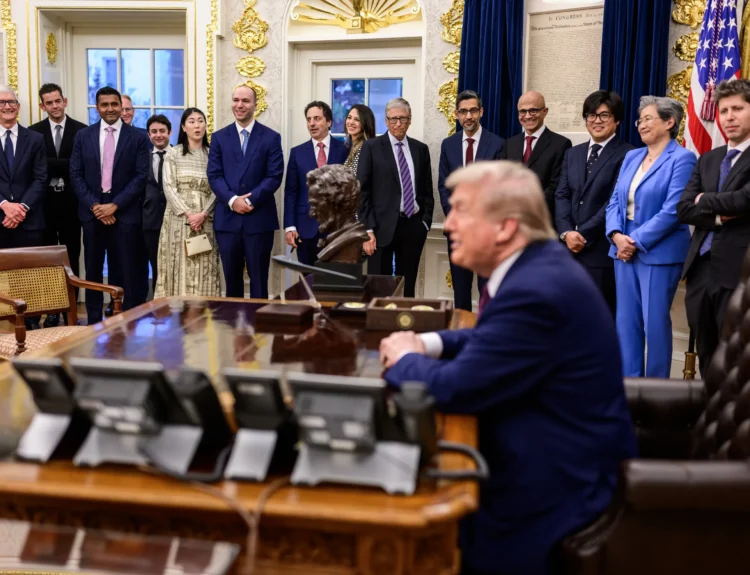
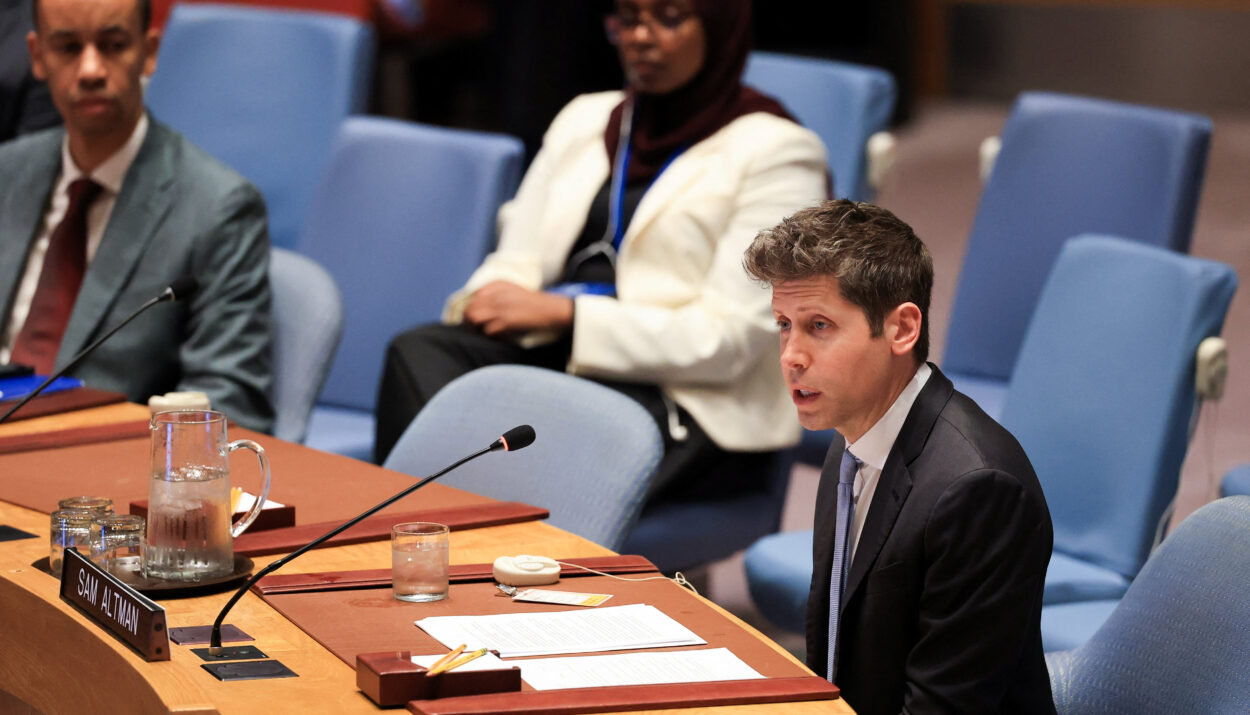

Leading AI executives urged the UN Security Council to establish international safeguards on September 23, warning that increasingly powerful systems could escape human control. The US rejected a global regulator, insisting that countries should govern the technology themselves.
The meeting, convened by France, brought Sam Altman, Dario Amodei, Yoshua Bengio and Hugging Face’s Clément Delangue into a debate with governments over how to manage AI’s growing risks.
What AI Leaders Want
OpenAI CEO Sam Altman warned about losing human control and concentrating power in too few hands. He argued that governments accountable to the public must help shape AI’s future.
Anthropic CEO Dario Amodei outlined three practical steps in remarks carried by Democracy Now!:
- Ban AI use in biological weapons.
- Create evaluation and verification systems so countries can assess powerful models and check one another’s commitments.
- Establish shared safety tests and incident alerts for threats to global security.
“We will slow down as much as necessary,” Amodei said.
AI researcher Yoshua Bengio went further, proposing independent testing, licensing and liability insurance for developers of the most advanced systems, according to Insight EU Monitoring’s account of the debate. His argument was that companies should have to demonstrate safety rather than ask the public to trust them.
Related: Top AI Leaders Call for Slowing Down AI Development.
Why Washington Is Pushing Back
White House science adviser Michael Kratsios said rapid progress did not justify pausing development or creating international control structures. Washington favours national regulation, technical cooperation and sharing best practices, The Next Web reported.
“A prosperous future will not be secured by a global regulator,” Kratsios said.
That leaves a meaningful distinction: countries can cooperate on safety without handing authority to a single global watchdog. Whether shared standards would be voluntary or enforceable remains central to the debate.
Related: Trump Rejects AI Slowdown Calls, Citing Competition With China.
The next test is whether governments and AI companies can turn these warnings into measurable commitments: independent safety checks, clear incident reporting and agreed limits on dangerous uses. Calling for safer AI is only the beginning.