
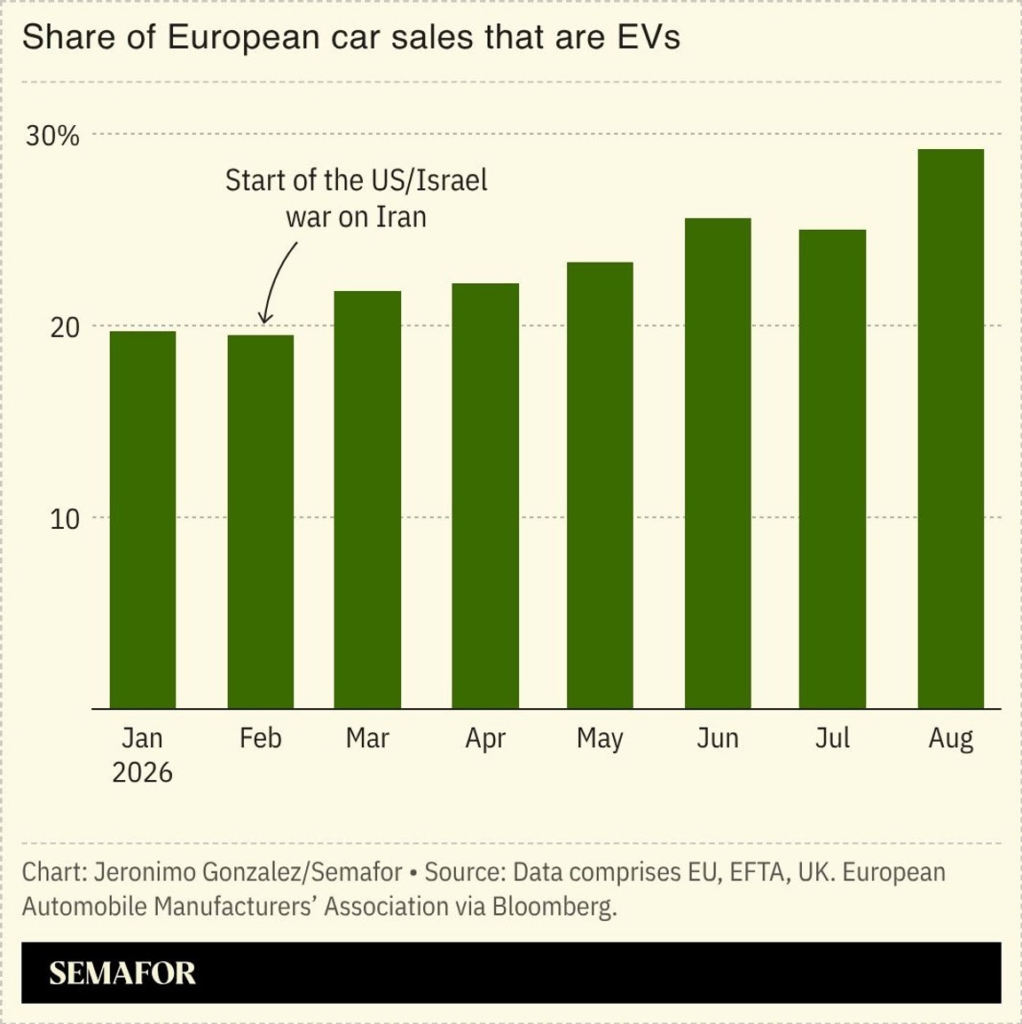
European electric-car registrations jumped 52% in August from a year earlier, as expensive petrol and diesel gave buyers another reason to switch to battery power.
Germany recorded a 75% increase, while sales in France more than doubled, according to Bloomberg’s reporting on ACEA data.
Fuel Costs Change the Calculation
Disruption to Gulf oil shipments and attacks on Russian refineries have intensified pressure on fuel supplies. In Germany, average petrol prices reached €2.31 a litre, making running costs harder for drivers to ignore.
Home charging can offer substantial savings. A Verivox analysis cited in the report estimated that charging a mid-range or luxury EV at home in Germany costs around 70% less than fuelling a petrol car. Actual savings depend on the vehicle, electricity tariff and access to home charging.
More affordable models and government incentives are also supporting demand. Through August, more than one in three new vehicles sold in Europe had a plug, a measure that includes plug-in hybrids as well as fully electric cars.
Related: Rising Fuel Costs Reshape Politics as Voters Demand Relief
Even Bentley Is Going Electric
The shift is reaching the luxury market. Bentley unveiled its first fully electric vehicle on September 23, testing wealthy buyers’ appetite for battery-powered motoring, Reuters reported.
However, Bentley previously abandoned its goal of becoming fully electric by 2030, showing that the transition remains uneven across brands and customers.
Manufacturing Countries Face Pressure to Adapt
South Africa risks losing future vehicle production to Asian competitors as carmakers choose where to build their next electric models.
A separate Reuters analysis highlights the stakes: the automotive industry accounted for 23.8% of South Africa’s manufacturing output in 2025 and directly employed about 113,000 people.
Investment incentives could help, but reliable electricity, infrastructure and competitive production costs remain essential.
High fuel prices are changing more than household budgets. They are accelerating buying decisions and putting pressure on manufacturers to ensure their factories can build the cars customers increasingly want.
Disclosure: This article does not represent investment advice. The content and materials featured on this page are for educational purposes only.