

Shipping crude from the US to Asia now costs as much as $77 million per tanker voyage, showing why oil futures alone cannot capture the full cost of securing supplies.
Hiring a very large crude carrier on that route cost an average of $9.2 million in 2025. The latest figure, based on Baltic Exchange data reported by Bloomberg, is more than eight times higher.
Oil is moving, but ships are tied up
Disruption around the Strait of Hormuz has changed how crude reaches buyers. Smaller vessels move oil through the waterway, while larger tankers wait outside to collect their cargoes.
Those transfers take time. Ships occupied for longer cannot quickly return for another load, effectively reducing available capacity and pushing freight costs higher, including on routes far from the Gulf.
For refiners, that means the price of crude is only part of the bill. Transport, insurance and delivery delays can make securing physical barrels considerably more expensive.
Related: Oil Tanker Rates Top $1 Million a Day: 3 Ways Investors Can Trade the Surge.
The $200 warning depends on supply
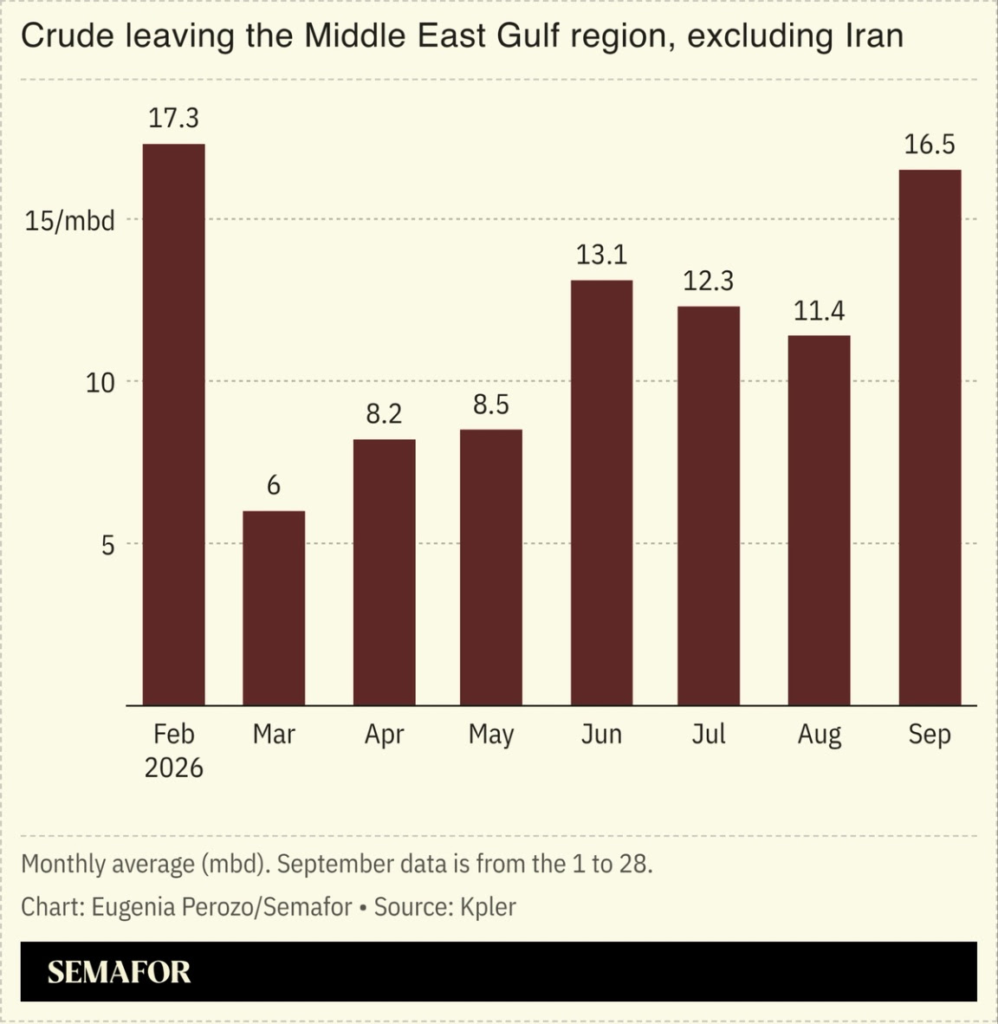
Vitol CEO Russell Hardy said approximately 12 million barrels of crude and 2 million barrels of refined products per day had left the Middle East over the preceding seven to ten days.
Those flows were helping contain prices.
“Without it, you do have that $200 per barrel scenario,” Hardy said, according to Reuters.
His warning describes a risk if supplies deteriorate, rather than a forecast that oil will inevitably reach $200.
Emergency reserves have not run out
The International Energy Agency clarified on October 7 that governments would accelerate releases already pledged in March, prioritising diesel.
Approximately 325 million barrels have been released, with around 100 million barrels of previously pledged supplies still to come.
Crucially, emergency stocks are not exhausted. Member governments retain approximately 1.1 billion barrels, including more than 200 million barrels of diesel. The latest action speeds up an existing commitment rather than authorising an additional release.
The pressure extends beyond how much oil exists. Available ships, functioning routes and timely deliveries determine what buyers actually pay.
Disclosure: This article does not represent investment advice. The content is for informational and educational purposes only.