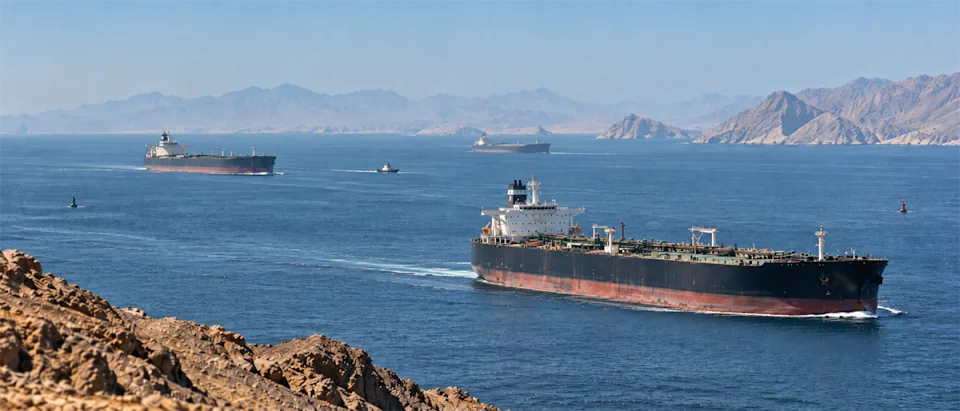

The cost of moving crude on a key Persian Gulf-to-China route has exceeded $1 million a day, pushing tanker operators into the spotlight as the Iran war disrupts shipping and reduces vessel availability.
The benchmark reached $1.035 million a day on September 14, according to Baltic Exchange data reported by Bloomberg. That figure applies to a specific route and vessel category, rather than every tanker operating worldwide.
Why Shipping Costs Are Surging
Fewer operators are willing to enter the Strait of Hormuz. Oil is increasingly being shuttled through the waterway for collection by tankers waiting outside, adding time and tying up vessels.
Even shipping crude from the Gulf of Oman to China, without crossing Hormuz, cost the equivalent of about $644,000 a day in the same report. Longer voyages and additional transfers are spreading the pressure beyond the immediate conflict zone.
The basic problem is availability: when each delivery occupies a ship for longer, fewer vessels remain for the next cargo.
Related: Iran’s Plan to Create an Exclusion Zone Near the Strait of Hormuz.
Three Different Ways to Gain Exposure
A MarketBeat analysis published by Yahoo Finance highlights Okeanis Eco Tankers, International Seaways and the Breakwave Tanker Shipping ETF. Each responds differently to freight-market conditions.
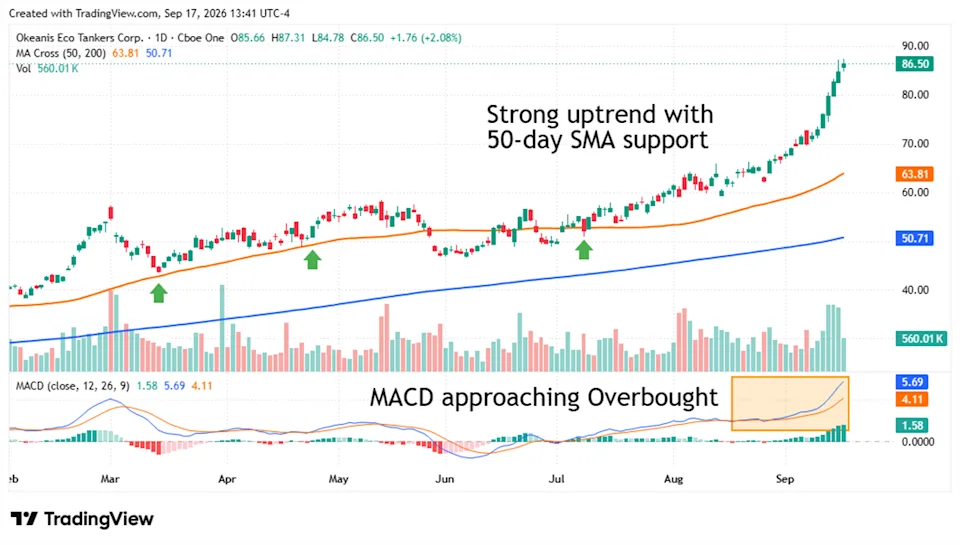
Okeanis Eco Tankers (NYSE: ECO) offers exposure to strong spot rates. Management said around 52% of third-quarter fleet days remained open at its August earnings call, leaving room to secure later bookings at higher prices. That was an August snapshot, not a measure of availability today.
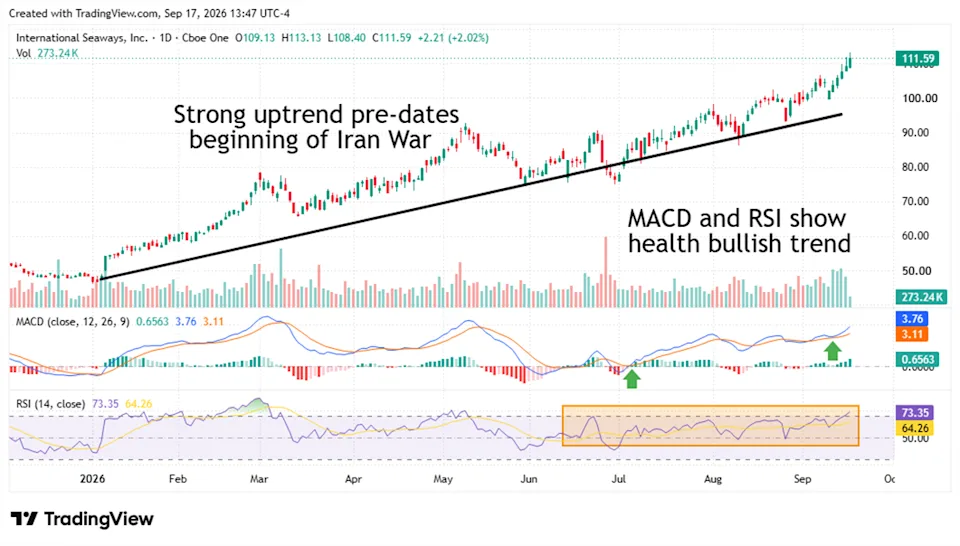
International Seaways (NYSE: INSW) combines spot exposure with time charters. Those contracts can moderate the effect of falling rates, while limiting participation in a sudden surge.
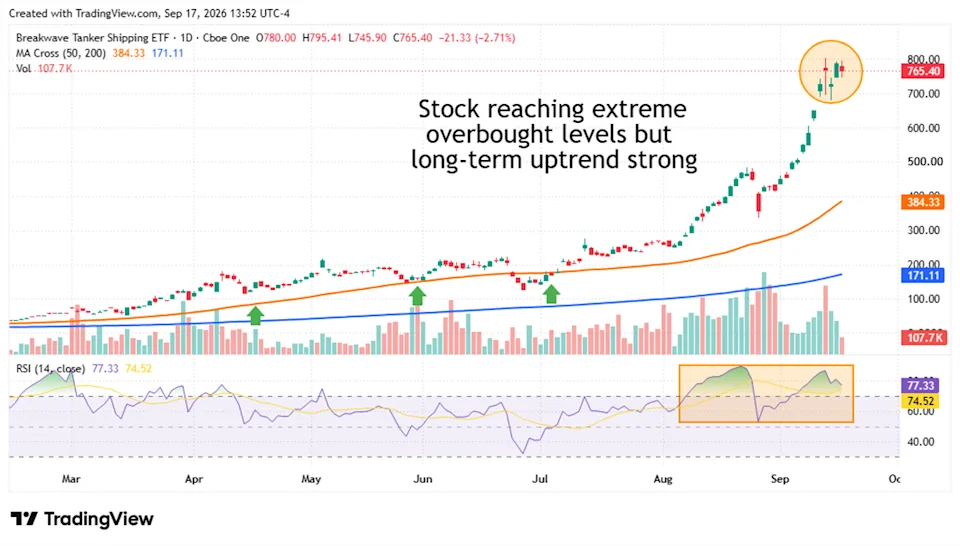
Breakwave Tanker Shipping ETF (NYSEARCA: BWET) holds tanker freight futures rather than shipping-company shares. Its performance depends on those contracts, so it can lose value even while current spot rates remain elevated.
The Risk Behind the Windfall
For tanker owners, unusually high rates can improve earnings. For oil buyers, they increase the cost of getting supplies delivered.
But a record freight rate does not automatically make a tanker stock cheap. Share prices may already anticipate strong profits, while safer routes and shorter journeys could release vessel capacity and bring rates down.
Related: Oil Trades Near Five-Week High as US-Iran Conflict Escalates.
The key question is how long the disruption lasts. Shipping companies may benefit from today’s shortages, but their investment appeal depends on what earnings look like once the exceptional rates ease.
Disclosure: This article does not represent investment advice. The content is for informational and educational purposes only.