

Donald Trump’s agreement to bring more Russian diesel onto global markets may have a limited effect on fuel prices, with the total promised supplies equivalent to roughly 10 days of US demand.
The arrangement covers up to 4.8 million metric tons, or nearly 36 million barrels, according to CNBC’s October 13 report. That is slightly more than one day of global consumption, with deliveries expected in stages rather than arriving together.
Why the numbers matter
The initial promised release is 300,000 metric tons, followed by further shipments. Larger deliveries depend partly on the condition of Russian refineries, which have suffered damage from Ukrainian attacks.
The distinction between an announced total and fuel available immediately is important. Supplies spread over time provide less immediate relief than the same volume arriving during a shortage.
Two wars have tightened supplies
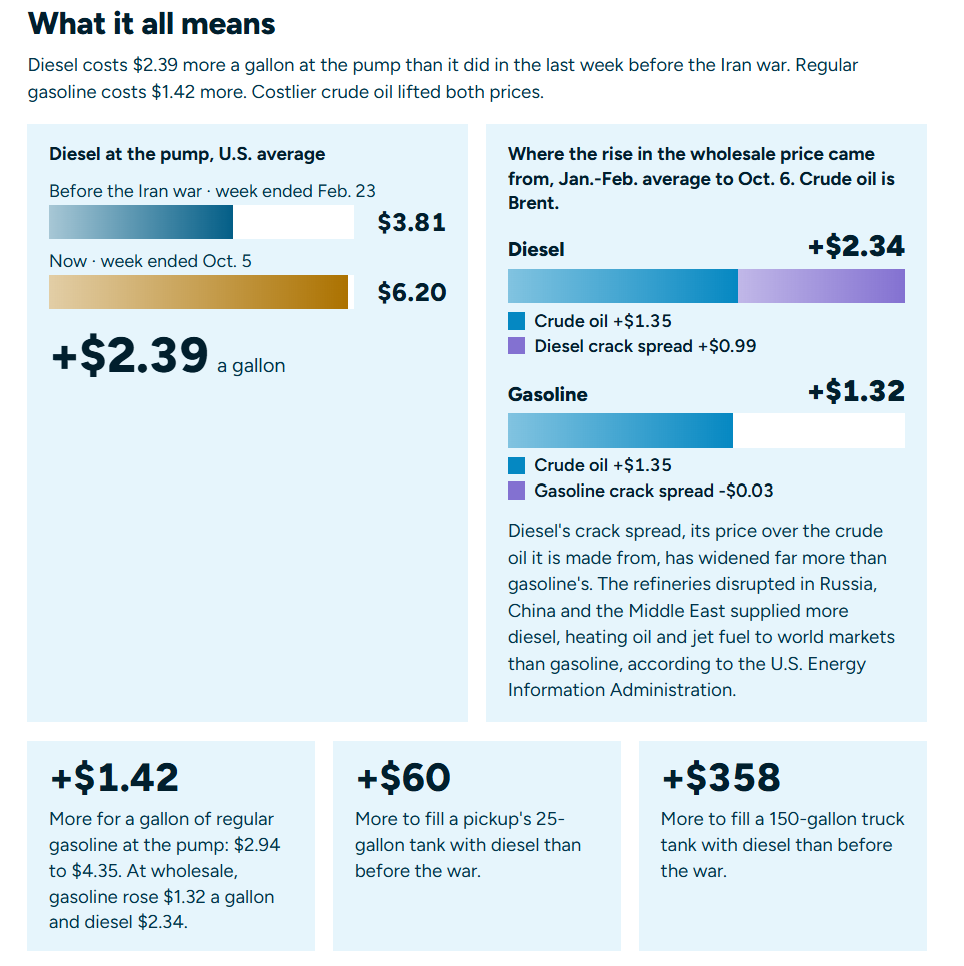
CNBC’s October 14 analysis found that wholesale diesel prices more than doubled between the beginning of 2026 and the end of September, as the wars in Iran and Ukraine disrupted supplies.
US diesel prices rose nearly 40% between July 6 and September 22. However, prices were already approximately 20% above their pre-Iran-war level when Russia imposed its July export ban.
The figures indicate that the shortage has several causes, making additional Russian exports only part of a potential solution.
US prices depend on the global market
The United States is a net diesel exporter, but domestic production does not insulate buyers from international shortages.
Additional Russian supplies could reduce competition for American exports in overseas markets, indirectly easing pressure on US prices. The size and timing of that benefit remain uncertain.
Related: Trump’s Diesel Deal Tests US Ties With Ukraine.
The agreement could add useful supplies, but its headline volume is small relative to consumption. A sustained drop in diesel prices requires broader improvements in refining output, shipping and supply reliability.
Disclosure: This article does not represent investment advice. The content is for informational and educational purposes only.