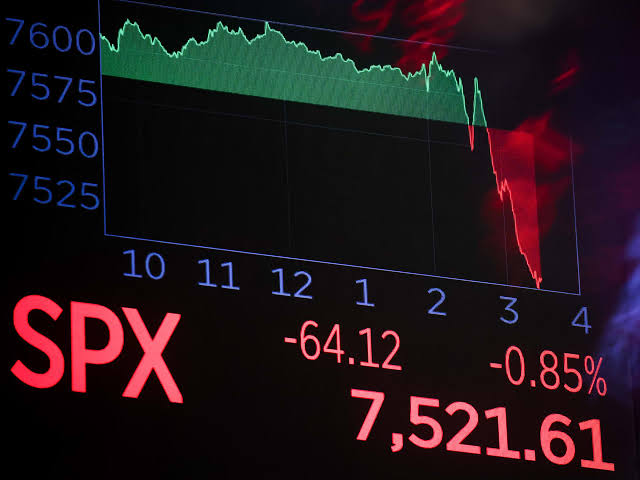

Wall Street expects S&P 500 profits to grow almost 30% in the third quarter, setting up a major test of whether corporate earnings can keep stocks climbing despite rising borrowing costs.
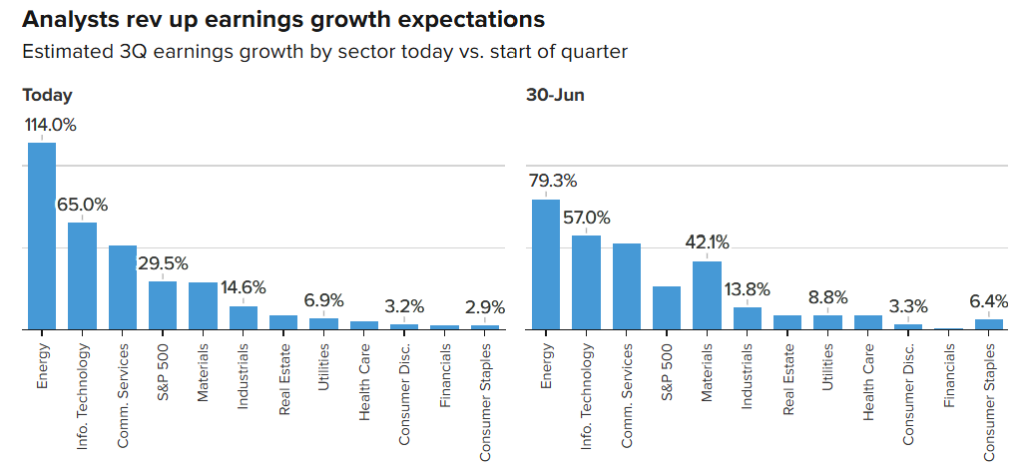
Analysts have raised their earnings-growth forecast from 26.7% on June 30, according to FactSet data cited in CNBC’s earnings-season preview.
The stronger outlook supports the case for further market gains. But with many individual stocks struggling and valuations still demanding, companies will need to deliver more than optimistic forecasts.
Technology leads, but profits could broaden
Technology remains central to the market’s performance, accounting for approximately 40% of the S&P 500.
Expected third-quarter earnings growth for the sector has climbed to 65%, from 57% at the end of June, helped by upward revisions for Nvidia and Micron. Spending on AI infrastructure continues to support demand for chips and related equipment.
However, the earnings story extends beyond the largest technology companies:
- Magnificent Seven: Russell Investments expects average year-over-year earnings growth of around 20%.
- Remaining S&P 500 companies: The same firm forecasts approximately 27% growth.
- Mid-cap companies: S&P 400 operating earnings are expected to rise 19% in 2026, according to Yardeni Research.
- Small-cap companies: S&P 600 earnings are forecast to increase 21% this year and 16% in 2027.
These estimates cover different company groups and periods, but collectively suggest that improving profits could reach more of the market.
Related: Big Tech Keeps Stocks Afloat as Rising Rates Test the Rally.
Record indexes hide weaker stocks
The market’s headline strength masks considerable weakness underneath.
Morgan Stanley’s figures showed only about 20% of stocks trading above their 50-day moving averages at the end of September, down from roughly 70% in midsummer.
Meanwhile, nearly 38% of S&P 500 constituents were at least 20% below their 52-week highs. CoStar, AppLovin, Boston Scientific, Oracle and Coinbase were among those down at least 50%.
Earnings expectations also remain uneven. Although all S&P 500 sectors are expected to report growth, eight sectors have seen their earnings-per-share estimates reduced since June 30. The largest cuts were in materials, at 10.2%, consumer staples, at 4%, and health care, at 3.3%.
That distinction matters: profits can rise from last year while still falling short of what investors previously expected.
Higher yields raise the hurdle
The 10-year Treasury yield recently climbed above 5.36%, a 24-year high, compared with approximately 4.75% in August.
Higher yields increase financing costs and make bonds more competitive with stocks. They can also reduce the value investors assign to future corporate profits.
Barclays nevertheless argues that strong earnings can provide a counterweight: “Equities are still responding to earnings.”
Related: Fed Rate Hike Could Trigger Another Painful Surge in US Treasury Yields.
Valuations leave limited room for disappointment. Despite a forward price-to-earnings ratio of approximately 19, Bank of America considers the S&P 500 expensive on 17 of 20 valuation measures.
UBS takes a more optimistic view, targeting 8,400 for the index by June 2027. That is a forecast, rather than an assured outcome.
What investors will watch next
Upcoming bank results will offer an early look at lending conditions, dealmaking and demand for new stock listings. Technology companies will face questions about the durability of AI spending and whether it is producing profitable growth.
Company guidance may matter as much as the reported results. Investors will want evidence that earnings momentum can continue despite higher rates and elevated energy costs.
Strong profits could support another market advance, but the rally needs companies to deliver on expectations and give investors reasons to trust the outlook.
Disclosure: This article does not represent investment advice. The content is for informational and educational purposes only.