
US hiring slowed sharply in September, while downward revisions to earlier months added to signs that the labour market is losing momentum.
Employers added 29,000 jobs, and unemployment edged up from 4.1% to 4.2%, according to the Bureau of Labor Statistics’ October 2 report. Wage growth also softened, complicating the Federal Reserve’s decision on whether to raise interest rates again.
Revisions weaken the picture
July’s employment change was revised from a gain of 21,000 to a loss of 10,000 jobs. August’s increase was reduced from 162,000 to 133,000.
Together, those revisions removed 60,000 jobs from the previous estimates, making the summer’s hiring performance weaker than initially reported.
Healthcare added 17,000 jobs in September, while construction gained 11,000 and manufacturing added 9,000. Losses elsewhere offset part of those increases.
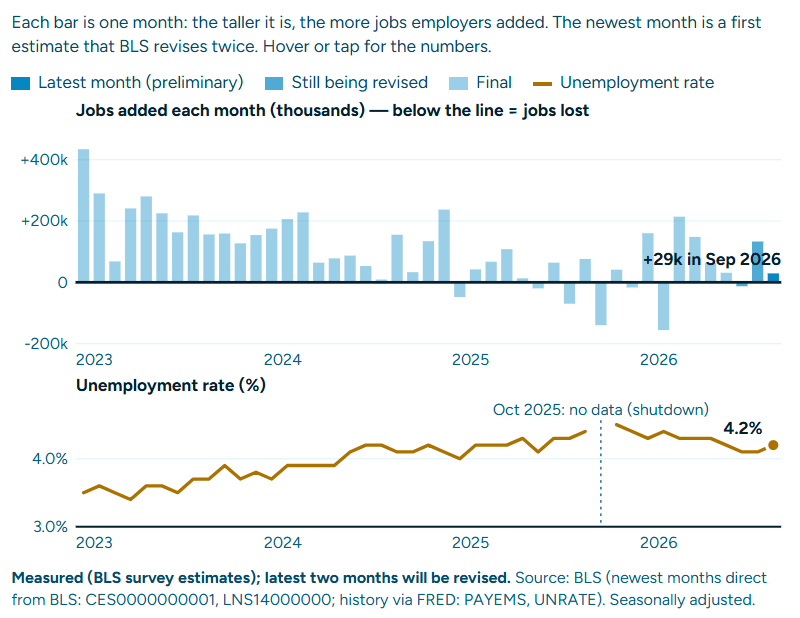
Average hourly earnings rose just 0.1% over the month and 3% over the year. Labour-force participation increased to 61.8%, suggesting the rise in unemployment also reflected more people entering the workforce.
Why stocks welcomed weaker hiring
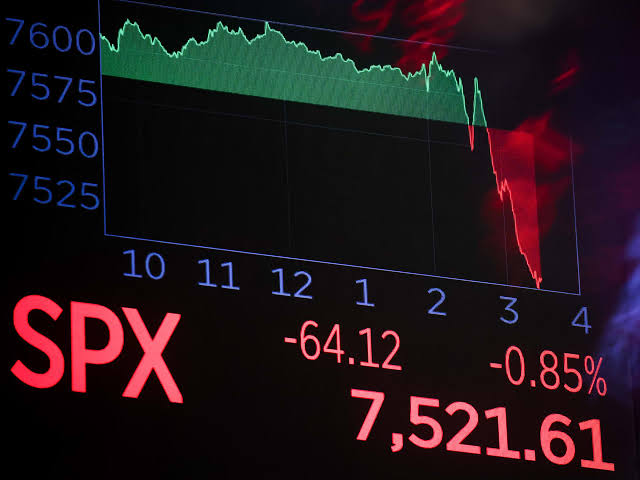
The payroll increase fell well below the 90,000 forecast in Reuters’ economist poll. Stocks rose and Treasury yields fell after the release as investors reduced expectations for an October rate increase, Reuters reported.
“October seems unlikely,” said Lindsay Rosner, head of multi-sector fixed-income investing at Goldman Sachs Asset Management, although she still expected a December hike.
The market’s reaction reflects a familiar trade-off: weaker hiring can reduce pressure for higher rates, but a prolonged slowdown could eventually hurt household spending and company earnings.
The Fed still faces a difficult balance
The report follows September’s quarter-point rate increase, which lifted the Fed’s benchmark range to 3.75%–4.00%.
Related: Fed Raises Rates for the First Time Since 2023 as Inflation Persists.
Slower wage growth strengthens the argument for waiting, but employment data alone cannot establish that inflation is under control.
September’s report gives the Fed more reason to pause, while leaving investors watching whether slower hiring becomes a broader economic slowdown.
Disclosure: This article does not represent investment advice. The content is for informational and educational purposes only.