



The fastest way to avoid lifestyle creep is to lock every raise and bonus into savings before you ever see it in your checking account. Three things you can do right now:
- Automate it today. Log into your payroll portal and increase your 401(k) contribution by the same percentage as your last raise.
- Set a savings floor. Commit to saving at least 20% of net income, and treat that number as non-negotiable regardless of what your income does.
- Run a 15-minute mini-audit. Pull up your last three months of bank and credit card statements and add up every recurring subscription charge.
Lifestyle creep, also called lifestyle inflation, is what happens when your discretionary spending rises in step with your income until yesterday’s luxuries feel like today’s necessities.
Key Takeaways
Avoiding lifestyle creep comes down to one discipline: commit new income to savings and fixed goals before spending habits have a chance to adjust.
| Point | Details |
|---|---|
| Automate raises immediately | Increase your 401(k) deferral by at least half your raise percentage before the new paycheck arrives. |
| Set a savings floor | Target 20% of net income to savings and treat it as a non-negotiable fixed expense every month. |
| Run a quarterly subscription audit | Small recurring charges are the most common invisible leak; a quarterly review typically frees cash without real sacrifice. |
| Track four KPIs monthly | Watch savings rate, discretionary spend %, subscription spend, and debt-to-income ratio to catch creep early. |
| Finblog advisory services | Book a free consultation at finblog.com to get a personalized budget setup, automation plan, and goal alignment. |
Table of Contents
- What is lifestyle creep, and how does it sneak up on you?
- Do you already have lifestyle creep? Here’s a fast way to find out
- Why this matters more than most people realize
- Core strategies to prevent and reverse lifestyle creep
- How to build a budget that keeps lifestyle creep out
- What to do the moment your income goes up
- How to track your progress without burning out
- A budget worksheet and 30-day experiment you can start today
- The honest truth about treating yourself vs. creeping upward
- Finblog can help you put this plan into action
- Sources
What is lifestyle creep, and how does it sneak up on you?
Lifestyle inflation follows a simple pattern: earnings go up, spending goes up, and the savings rate quietly falls. The tricky part is that each individual upgrade feels completely reasonable in the moment.
Three examples that play out constantly:
The first raise. You land a $10,000 salary bump. Within six months you’ve added a streaming bundle, upgraded your gym membership, and started ordering delivery three nights a week instead of one. None of those choices felt extravagant. Together they absorbed the entire raise.
The new job. A better title comes with a longer commute, so you trade in a paid-off car for a $550-a-month lease. The payment feels manageable on the new salary, but you’ve just added $6,600 in annual fixed costs.
The promotion. Weekend getaways replace staycations. A hotel that used to feel like a splurge becomes the baseline. The upgrade is real and enjoyable, but it’s now baked into your monthly burn rate.
As NPR’s reporting on lifestyle creep notes, these shifts often cluster around milestones and are accelerated by emotional rewards (“I earned this”) and identity signaling. The lifestyle change isn’t inherently bad. The problem is when it happens on autopilot.
Do you already have lifestyle creep? Here’s a fast way to find out
The clearest sign is a gap between what you earn and what you save, with no obvious explanation. Beyond that, watch for these patterns:
- Your savings rate has stayed flat or dropped even though your income has grown.
- You’ve upgraded at least two recurring categories (housing, car, subscriptions, dining) in the past 18 months.
- You feel like you “need” a higher income to feel comfortable, even though you felt fine two years ago on less.
- Subscription charges on your statement include services you forgot you signed up for.
The 15-minute mini-audit:
- Open your last three months of bank and credit card statements.
- Highlight every recurring charge, including annual subscriptions divided by 12.
- Add them up. Compare that total to what you were paying 18 months ago.
- Calculate your savings rate: monthly savings divided by monthly gross income, expressed as a percentage.
- Compare your current discretionary spending (dining, entertainment, shopping, subscriptions) as a share of net income versus 18 months ago.
If your subscription total has grown by more than $50 per month or your savings rate has dropped by more than two percentage points, lifestyle creep is already at work.
Why this matters more than most people realize
A small increase in monthly discretionary spending can add up significantly over time, reducing the amount available for emergency funds, mortgage down payments, or retirement savings, and thereby impacting your net worth.
According to Investopedia, consumer spending rose from 2022 to 2023, while just over half of American adults had adequate emergency savings. That combination is exactly the lifestyle creep trap: spending accelerating while the financial cushion stays thin.
The stakes look different depending on your goal:
- Retirement: Every dollar diverted to lifestyle spending is a dollar that won’t compound for 20 or 30 years.
- Emergency fund: Without three to six months of expenses saved, a single job loss or medical bill can force you into debt. Finblog’s guide on emergency fund importance walks through exactly how much you need and how to build it.
- Debt payoff: Carrying high-interest debt while simultaneously upgrading your lifestyle is one of the most expensive financial habits you can have.
Core strategies to prevent and reverse lifestyle creep
Investopedia identifies eight proven tactics for combating lifestyle inflation. The highest-impact ones share a common thread: they remove the decision from the moment of temptation.
- Set clear financial goals first. A specific target (“$25,000 emergency fund by December 2027”) makes trade-offs concrete. Vague intentions don’t survive a good sale or a peer’s vacation photos.
- Pay yourself first. Treat savings as a fixed expense, not what’s left over. Best Egg’s guidance on living below your means frames this as the single fastest way to create breathing room in a budget.
- Automate everything you can. Automatic transfers to savings and automatic 401(k) increases with raises are the behavioral backbone of living below your means. The less you have to decide in the moment, the better.
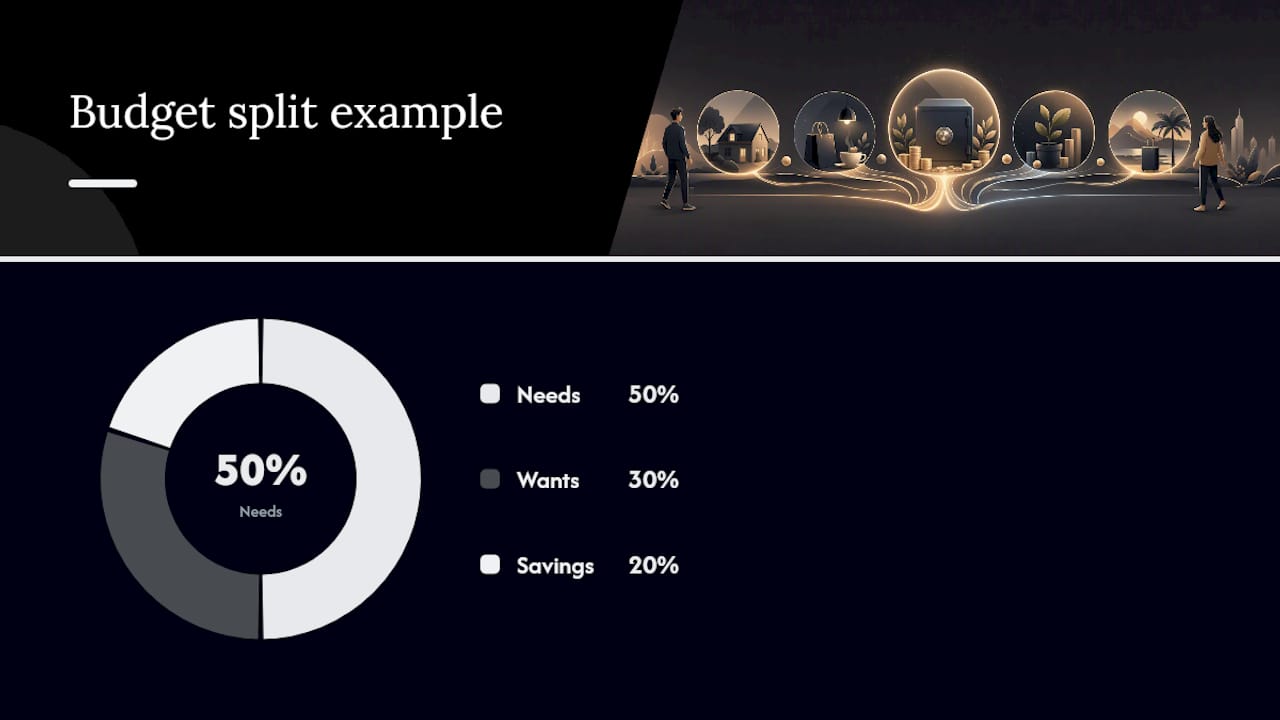
- Use a budget method that fits your life. The 50/30/20 rule (50% needs, 30% wants, 20% savings) is a solid starting point. More on this in the next section.
- Run a quarterly subscription audit. Small recurring costs are the most common invisible leak in a budget. A quarterly audit typically frees cash without any real lifestyle sacrifice.
- Prioritize high-interest debt. Carrying a credit card balance while adding lifestyle expenses is a guaranteed way to fall further behind.
- Practice mindful spending. Before any non-essential purchase over $50, wait 48 hours. Most impulse upgrades don’t survive two days of reflection. A deeper look at mindful spending tactics can help you build a decision framework that sticks.
- Schedule regular check-ins. Monthly and quarterly reviews catch creep early, before it calcifies into a new baseline.
Pro Tip: Set up a separate “lifestyle” checking account with a fixed monthly transfer. When it’s empty, spending in that category stops. This creates a hard boundary without requiring willpower at every purchase.

How to build a budget that keeps lifestyle creep out
A written monthly budget is the structural defense that makes all the other strategies work. Without one, you’re relying on memory and willpower, and both fail under stress.
Monthly budget workflow:
- List your net monthly income from all sources.
- List fixed expenses (rent/mortgage, insurance, loan payments, utilities).
- Assign savings first — move your savings percentage off the top before allocating anything else.
- Assign variable categories (groceries, dining, entertainment, clothing) with specific dollar limits.
- Run the subscription audit (see below) and cancel or downgrade anything that doesn’t earn its cost.
- Track daily for the first 30 days. Adjust next month based on what you actually spent.
For a full step-by-step walkthrough, Finblog’s guide on how to create a budget covers every line item.
Choosing a budget method:
| Method | Split | Best for |
|---|---|---|
| 50/30/20 | 50% needs / 30% wants / 20% savings | Most people starting out; simple and flexible |
| 20/10 | 20% savings / 10% debt or giving | Those with high fixed costs or student loans |
| 30/20/10 | 30% wants / 20% savings / 10% debt | Aggressive debt payoff alongside saving |
Subscription audit checklist:
- List every recurring charge with its monthly cost.
- Mark each one: use it weekly, use it monthly, or rarely use it.
- Cancel anything in the “rarely” column immediately.
- For monthly-use services, check whether a lower tier covers your actual usage.
- For annual subscriptions, set a calendar reminder 30 days before renewal to reassess.
What to do the moment your income goes up
This is where most people lose the battle. A raise hits, the bank account looks healthier, and spending adjusts upward within weeks. The fix is a pre-committed allocation rule you set before the money arrives.
A practical split for a raise or bonus:
- 50% to savings or investments (increase 401(k) contribution, fund a Roth IRA, or add to a brokerage account)
- 30% to maintain your current lifestyle (absorb any genuine cost increases like rent or insurance)
- 20% to discretionary or debt paydown (a real, bounded reward that doesn’t become permanent)
Automation steps to lock this in:
- Log into your employer’s payroll or HR portal and increase your 401(k) deferral rate by at least half the percentage of your raise.
- Set up an automatic transfer from checking to savings on the same day as your paycheck deposit. Finblog’s guide on automating your finances covers exactly how to structure these transfers. The role of automatic savings transfers is also worth reading for the behavioral case behind why automation outperforms willpower every time.
- For a windfall (bonus, tax refund, inheritance), apply the same split within 72 hours. The longer it sits in checking, the more likely it gets absorbed.
One-sentence scripts:
- To your payroll department: “I’d like to increase my 401(k) contribution rate from X% to Y% starting with my next paycheck.”
- To a partner: “Can we agree that any raise we get this year goes 50% to savings before we adjust any spending?”
How to track your progress without burning out
Tracking doesn’t have to be a daily obsession. A lightweight monthly and quarterly routine catches problems early without consuming your weekends.
Monthly review (15 minutes):
- Check actual spending against budget by category.
- Recalculate your savings rate.
- Flag any new recurring charges that appeared.
- Note one category that went over and decide whether to adjust the budget or the behavior.
Quarterly review (30 minutes):
- Run the full subscription audit.
- Review your debt-to-income ratio and net worth.
- Check retirement contribution rate and adjust if income changed.
- Set one financial goal for the next quarter.
KPIs to track:
| KPI | Definition | Target |
|---|---|---|
| Savings rate | Monthly savings ÷ gross income | 20% or higher |
| Discretionary spend % | Discretionary spending ÷ net income | Below 30% |
| Subscription spend | Total recurring charges per month | Review if above $50 |
| Debt-to-income ratio | Monthly debt payments ÷ gross income | Below the recommended maximum debt-to-income ratio |
For building the habit of regular check-ins, Finblog’s financial wellness routines guide covers how to make these reviews stick.
Partner check-in prompts:
- “Can we spend 15 minutes this weekend looking at last month’s spending together?”
- “I noticed our dining budget went over again. Want to pick two nights a week to cook at home?”
A budget worksheet and 30-day experiment you can start today
The worksheet below is a template you can copy into a spreadsheet or notebook. Fill it in once a month.
Budget worksheet skeleton:
- Net monthly income: $_____
- Fixed expenses: Rent/mortgage $_____ | Insurance $_____ | Loan payments $_____ | Utilities $_____
- Savings (off the top, 20%+): Emergency fund $_____ | Retirement $_____ | Other goals $_____
- Variable categories: Groceries $_____ | Dining $_____ | Entertainment $_____ | Clothing $_____ | Transportation $_____
- Subscription log: List each service, monthly cost, and last-used date
- End-of-month check: Actual vs. budgeted for each category
The 30-day experiment:
- Days 1–3: Complete the mini-audit, cancel unused subscriptions, set up one automatic savings transfer.
- Week 1: Track every purchase manually (use Notes on your phone or a free app like Mint or YNAB).
- Week 2: Identify the one spending category most over budget and set a specific dollar cap for the rest of the month.
- Week 3: Run the partner or household check-in conversation.
- Week 4: Calculate your savings rate for the month and compare it to your baseline.
- Day 30: Decide which changes to keep permanently and which to adjust.
Believe in a Budget’s guide to living below your means makes the case for gradual, trackable changes over dramatic austerity, and the 30-day experiment is built on exactly that principle.
Pro Tip: Don’t try to fix every category at once. Pick one spending leak in week one, fix it, then move to the next. Incremental wins compound into durable habits.
Finblog’s worksheet and advisory resources are available at Finblog for readers who want a pre-built template alongside professional guidance.
The honest truth about treating yourself vs. creeping upward
There’s a version of this conversation that turns into pure deprivation, and that version doesn’t work. White Coat Investor’s framework for living below your means makes a point worth repeating: sustainable financial discipline is not about eliminating enjoyment. It’s about spending intentionally on things that genuinely matter to you and cutting the rest.
The rule of thumb that holds up: spend freely on your top two or three genuine priorities, and be ruthless about everything else. If weekend travel is a real source of joy, keep it and cut the subscription bloat. If a nicer car actually improves your daily life, own that choice and reduce spending elsewhere to compensate.
Where people get into trouble is the identity-signaling trap. ABC News reporting on lifestyle creep points to social comparison and marketing as the main accelerants: the upgrade feels necessary because peers have it, or because an ad framed it as a reward you’ve earned. Recognizing that trigger doesn’t make you immune, but it does slow the reflex down enough to make a real choice.
If progress stalls, the recalibration is simple: go back to the mini-audit, find the one category that drifted, and reset it. One adjustment, not a full overhaul.
Finblog can help you put this plan into action
Putting all of this into practice, from setting up automation to building a budget that actually reflects your goals, is where most people stall. Finblog’s financial advisory services are built for exactly that moment: a focused consultation that covers budget setup, savings automation, and goal alignment so you leave with a concrete plan, not just a reading list.
The Finblog worksheet and consultation form are on the landing page. Book a free consultation and get the budget worksheet at the same time. It takes less than five minutes to get started, and the first conversation is free.
Sources
- Consumer
- Is Lifestyle Inflation Creeping Up on You? Here Are 8 Ways to Avoid It – Investopedia
- Lifestyle creep: What is it and how does it work? – Investopedia
- Lifestyle creep: What is it and how to avoid the seductive thrill … – NPR
- Don’t Deprive Yourself — White Coat Investor
- The Benefits of Living Below Your Means | Best Egg
- The Ultimate Guide to Living Below Your Means – Believe in a Budget
This article is general information, not a substitute for advice from a qualified financial advisor. Consult a qualified financial professional about your own circumstances before acting on anything here.