



Nearly 30% faster net worth growth over a decade separates those who live below their means from those who don’t. This isn’t about extreme frugality or giving up what you love. Living below your means is a deliberate choice to spend less than you earn while maintaining quality of life. In this guide, you’ll discover practical budgeting frameworks, psychological insights into overspending, and proven strategies to build lasting financial stability in 2026.
Table of Contents
- Understanding What It Means To Live Below Your Means
- Why Overspending Happens: Psychological And Behavioral Insights
- Practical Budgeting Frameworks And Spending Controls
- Common Misconceptions And Pitfalls To Avoid
- Real-Life Success Stories And Measurable Benefits
- Explore More Financial Tools And Resources At Finblog
- Frequently Asked Questions
Key takeaways
| Point | Details |
|---|---|
| Definition and importance | Living below your means means spending less than your income to build savings and financial resilience. |
| Psychological barriers | Lifestyle inflation, impulsive buying, and emotional triggers sabotage spending discipline. |
| Budgeting frameworks | Zero-based budgeting and the 80/20 rule offer flexible structures for controlling expenses. |
| Common myths | Living below your means doesn’t require extreme frugality or eliminating discretionary spending. |
| Real benefits | Professionals who adopt these strategies see 25-40% savings increases and reduced financial stress. |
Understanding what it means to live below your means
Living below your means is spending less than your total income to create consistent savings. This approach differs fundamentally from frugality, which often implies sacrifice. Instead, you make intentional choices about where money goes while maintaining a satisfying lifestyle.
This mindset creates long-term financial stability by building reserves for unexpected costs and future goals. When you consistently save a portion of income, you develop resilience against job loss, medical emergencies, or economic downturns. The key is balancing current enjoyment with future security.
Lifestyle inflation poses the biggest threat to this strategy. As income rises, spending typically increases proportionally, leaving no room for additional savings. Breaking this cycle requires conscious decisions about which upgrades truly improve your life and which simply drain resources.
Consider these core principles:
- Prioritize essential expenses like housing, food, and healthcare before discretionary spending
- Automate savings to remove temptation and ensure consistency
- Review spending regularly to identify areas where money doesn’t align with values
- Maintain an emergency fund covering three to six months of expenses
- Invest surplus income rather than expanding lifestyle unnecessarily
The goal isn’t deprivation. It’s creating financial breathing room that reduces stress and opens opportunities.
Why overspending happens: psychological and behavioral insights
Understanding why you overspend matters as much as knowing how to budget. Psychological mechanisms like financial self-control and spending habits strongly influence spending behaviors, often outside conscious awareness.
Lifestyle inflation accelerates when income increases. A raise becomes an excuse to upgrade your car, move to a pricier apartment, or eat out more frequently. Before long, expenses match the new income level, leaving savings unchanged despite earning more.
Impulsive buying undermines even the best budgets. You see something appealing, rationalize the purchase, and buy before considering whether it fits your financial plan. These small decisions accumulate into significant monthly drains on resources.
Financial self-efficacy, your confidence in managing money effectively, directly impacts spending control. Low self-efficacy leads to avoidance of financial planning and reactive rather than proactive money management. Building competence through education and small wins strengthens this crucial skill.
Emotional triggers drive unnecessary purchases more often than most realize. Stress, boredom, or social pressure can prompt spending as a coping mechanism. Recognizing these patterns allows you to develop healthier responses.
“The strongest predictor of financial wellbeing isn’t income level but the ability to delay gratification and maintain spending discipline over time.”
Mindfulness practices help interrupt automatic spending behaviors. Before making a purchase, pause and ask whether it serves a genuine need or aligns with your priorities. This simple step reduces impulsive decisions and strengthens financial awareness. For deeper psychological spending insights, consider how awareness transforms habits.
Key behavioral patterns to monitor:
- Social comparison spending when friends or colleagues upgrade possessions
- Reward spending after difficult workdays or achievements
- Convenience spending to save time without evaluating cost
- Status spending to project success or belonging
Practical budgeting frameworks and spending controls
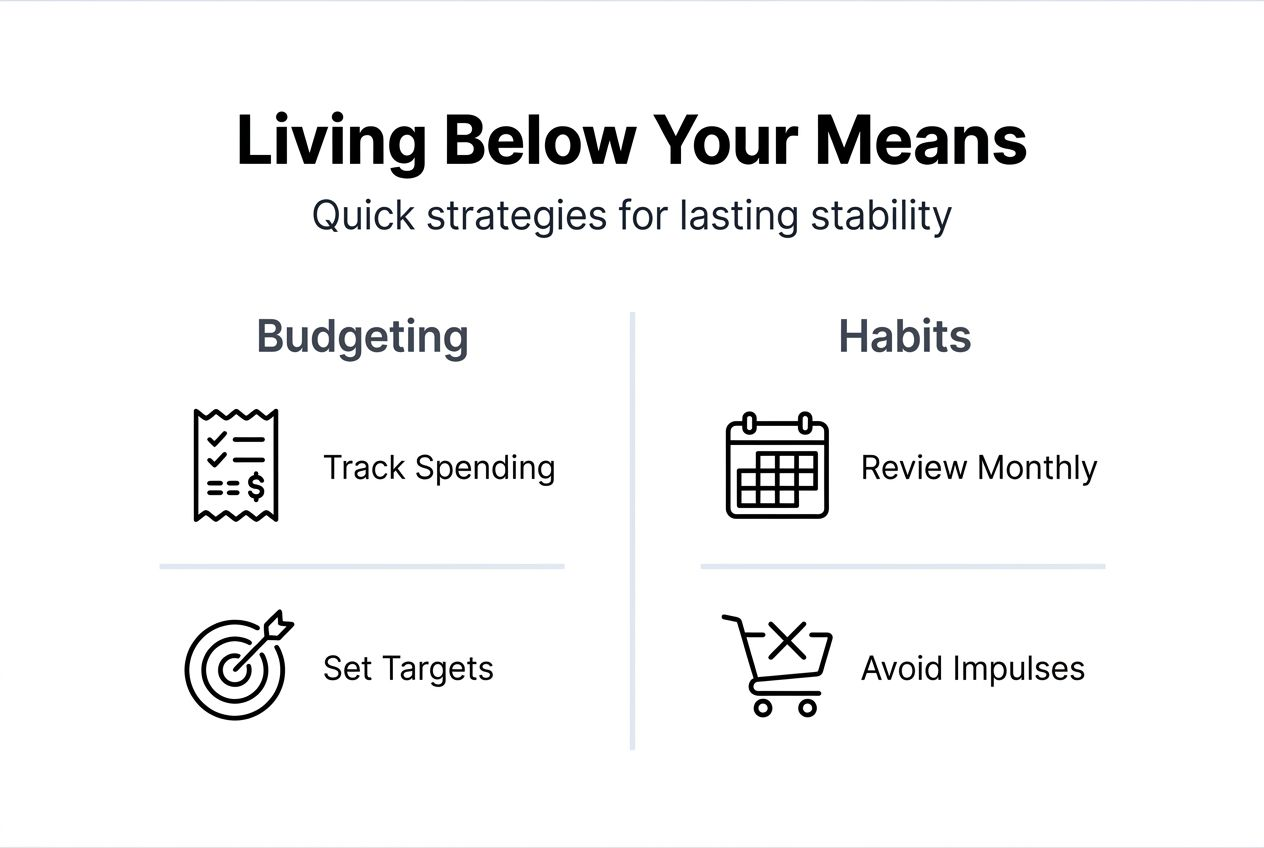
Effective budgeting starts with accurate income and expense tracking. Calculate your monthly take-home pay after taxes and deductions. Then list every expense, from fixed costs like rent to variable spending on groceries and entertainment. Most people underestimate spending by 20-30% initially, so track carefully for at least one month.
Zero-based budgeting assigns every dollar a specific purpose before the month begins. Income minus expenses should equal zero, meaning all money has a designated use, whether spending, saving, or investing. This method provides maximum control and awareness.
Follow these steps for zero-based budgeting:
- List all income sources and calculate monthly total
- Categorize expenses into fixed, variable, and discretionary groups
- Assign dollar amounts to each category based on priorities
- Adjust categories until income minus all assignments equals zero
- Track actual spending against assignments throughout the month
- Review and refine allocations monthly based on results
The 80/20 rule offers a simpler alternative: spend 80% of income on expenses and lifestyle, save or invest the remaining 20%. This approach requires less detailed tracking while ensuring consistent savings. It works well for busy professionals who struggle with complex budgets.
| Method | Pros | Cons | Best For |
|---|---|---|---|
| Zero-based budgeting | Maximum control and awareness; accounts for every dollar | Time-intensive; requires detailed tracking | Those seeking precise spending management |
| 80/20 rule | Simple and flexible; less time required | Less granular control; may not identify waste | Busy professionals wanting automatic savings |
Budgeting apps automate tracking and provide real-time feedback on spending patterns. Connect bank accounts to see where money actually goes versus where you think it goes. Many apps categorize transactions automatically and alert you when approaching budget limits.
For effective budgeting guide resources, explore comprehensive frameworks tailored to different lifestyles. If travel matters to you, budget travel strategies show how to maintain adventures without overspending. Reduce major expense categories with proven approaches like saving money on groceries.
Pro Tip: Set your savings target as a fixed dollar amount rather than a percentage. When income increases, the savings amount stays constant, forcing you to consciously decide whether to raise it. This prevents automatic lifestyle inflation.
Regularly review spending patterns every two to four weeks. Identify categories where spending exceeds value received. Small adjustments to multiple categories create significant monthly savings without major lifestyle changes.
Common misconceptions and pitfalls to avoid
Living below your means doesn’t require becoming a minimalist or eliminating all pleasures. This misconception causes many to reject the concept entirely, assuming it means perpetual sacrifice. In reality, you’re making intentional choices about what matters most while cutting waste.
Budgeting alone won’t solve overspending if emotional triggers remain unaddressed. You might create a perfect budget Monday morning, then blow it by Friday when stress or social pressure override your plan. The underlying psychology needs attention alongside the numbers.
Lifestyle inflation must be explicitly managed rather than ignored. Hoping you’ll naturally save more as income grows rarely works. Without deliberate decisions to direct raises toward savings or investments, spending expands to fill available income.
Emotional spending and burnout derail even committed individuals. Being too restrictive creates resentment and eventual rebellion against your budget. Building in reasonable discretionary spending prevents this cycle.
Common pitfalls include:
- Setting unrealistic budgets that ignore actual spending patterns
- Failing to account for irregular expenses like insurance or gifts
- Comparing your financial journey to others with different circumstances
- Skipping emergency fund building in favor of aggressive investing
- Neglecting to celebrate progress and small wins
Pro Tip: Practice mindfulness when spending urges arise. Notice the feeling, identify what triggered it, and wait 24 hours before purchasing. Most impulses fade when you pause rather than react immediately.
Balance matters more than perfection. An overly restrictive approach leads to cycles of deprivation and binge spending. Allow yourself planned indulgences within your budget to maintain motivation and prevent burnout. Understanding common finance mistakes helps you avoid traps that cost long-term stability.
Real-life success stories and measurable benefits
Sarah, a marketing manager earning $75,000 annually, increased her savings rate from 5% to 32% within 14 months by adopting zero-based budgeting. She identified $600 monthly in subscription services and convenience spending that provided minimal value. Redirecting these funds to high-yield savings and index funds accelerated her emergency fund completion.

Michael and Jennifer, a dual-income couple with $45,000 in credit card debt, used the 80/20 rule to pay off balances in three years. They automated 20% of combined income to debt repayment and lived on the remainder. Their credit scores improved by over 120 points, qualifying them for better mortgage rates.
Working professionals who consistently live below their means report significant stress reduction. Monthly financial anxiety decreases when you know expenses are covered and savings grow steadily. This peace of mind improves work performance, relationships, and overall wellbeing.
Long-term prospects include earlier retirement, financial independence, and freedom to pursue meaningful work over high-paying but unfulfilling jobs. The compound effect of consistent saving and investing creates wealth that opens opportunities unavailable to paycheck-to-paycheck earners.
| Metric | Before | After 12 Months | Improvement |
|---|---|---|---|
| Monthly savings rate | 3-8% | 25-40% | +22-32% |
| Credit card debt | $8,000-$45,000 | $2,000-$25,000 | -55-75% |
| Emergency fund | 0-1 month expenses | 3-6 months expenses | Complete |
| Financial stress level | 7-9/10 | 3-5/10 | -40-60% |
| Net worth growth | Stagnant | +15-30% annually | Accelerating |
Key takeaways from successful practitioners:
- Starting small with one or two spending categories builds momentum
- Tracking creates awareness that naturally modifies behavior
- Automation removes willpower from the equation
- Community support through accountability partners increases success rates
- Celebrating milestones maintains motivation through challenges
These outcomes demonstrate that living below your means isn’t theoretical. Real people with ordinary incomes achieve extraordinary financial progress through consistent application of these principles. For more real-world financial success stories, explore how mindset shifts create lasting change.
Explore more financial tools and resources at Finblog
Your journey to financial stability continues beyond this article. Finblog offers comprehensive guides, tools, and strategies to strengthen your financial foundation. Whether you’re refining your budget, avoiding costly mistakes, or building wealth, you’ll find actionable resources tailored to working professionals.
Discover detailed approaches through our effective budgeting guide, which expands on frameworks introduced here with step-by-step implementation instructions. Learn to sidestep traps that undermine progress by exploring common finance mistakes that cost 60% of professionals their stability.
Finblog provides ongoing support as you navigate challenges and celebrate wins on your path to financial independence. The strategies you’ve learned today work best when reinforced with continuous education and community.
Frequently asked questions
What does it really mean to live below your means?
Living below your means means consistently spending less than you earn to build savings and financial security. It’s about intentional resource allocation, not deprivation. You balance spending on needs and wants without extreme frugality, ensuring money serves your priorities rather than controlling your life. This approach creates margin for unexpected expenses and long-term goals.
How can I avoid lifestyle inflation as my income grows?
Fixed savings targets independent of income percentages help control lifestyle inflation effectively. When you receive a raise, maintain your current lifestyle temporarily while directing additional income to savings or investments. Regularly review budgets to ensure spending reflects genuine priorities rather than automatic upgrades. Use incremental saving increases, such as committing 50% of raises to savings, instead of spending increases. This balanced approach lets you enjoy some benefits of higher income while accelerating wealth building. For additional strategies, explore inflation wealth protection strategies.
What are the best budgeting methods for busy professionals?
Zero-based budgeting provides precise control if you can commit time to detailed tracking and monthly planning. The 80/20 rule offers simpler, less time-intensive budgeting by automatically directing 20% to savings while spending the rest. Most busy professionals succeed with the 80/20 approach initially, then transition to zero-based budgeting as habits strengthen. Use apps to automate tracking and reminders, eliminating manual effort while maintaining awareness. Our effective budget creation guide walks through both methods step by step.
How can I overcome emotional spending triggers?
Practice mindfulness to recognize triggers before spending occurs, noticing feelings without immediately acting on them. Delay purchases by 24-48 hours to assess true need versus emotional impulse. Keep a spending journal noting mood and circumstances around purchases to identify patterns. Develop alternative responses to common triggers, such as walking, calling a friend, or engaging in hobbies instead of shopping. Seek support through financial counseling or therapy if emotional spending persists despite self-management efforts. Building awareness through resources like mindfulness and spending provides additional tools for lasting change.
Recommended
- How to Budget Effectively: Master Your Finances in 2025 – Finblog
- 7 Smart Financial New Year Resolutions for 2025 – Finblog
- Top Steps to Financial Freedom for Lasting Independence – Finblog
- Financial Security Tips for Achieving Long-Term Stability – Finblog
- I Really Want to Eat Well… But I Don’t Have To – Mindset Over Menu