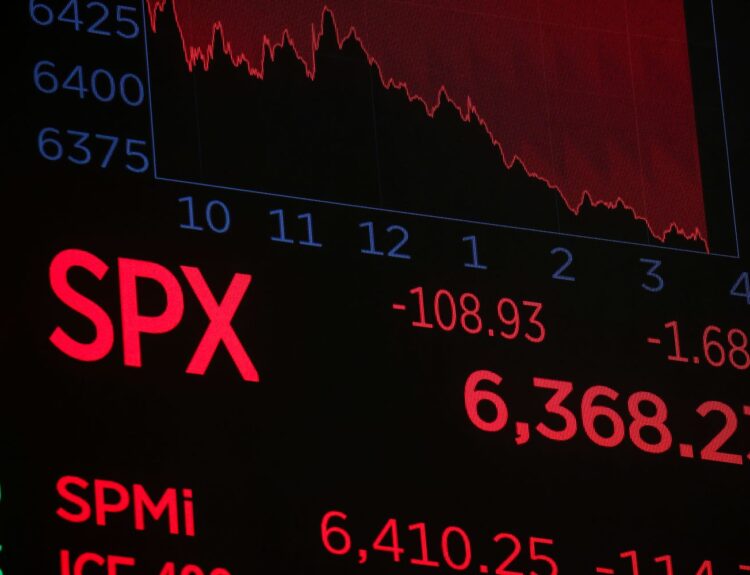

Rising interest rates in 2026 are reshaping investment returns in ways that surprise many investors. While conventional wisdom suggests higher rates hurt portfolios universally, the reality is far more nuanced. Different asset classes respond distinctly to monetary tightening, creating opportunities alongside challenges. Global economic acceleration is driving these rate increases, favoring cyclical assets and specific geographic regions. Understanding these dynamics helps you adapt your portfolio to capture gains while managing risks. This article unpacks how rising rates affect bonds, equities, and alternative investments, and reveals which markets are positioned to outperform.
Table of Contents
- Understanding The Economic Context Behind Rising Interest Rates
- How Rising Interest Rates Impact Different Asset Classes
- The Nuanced Effects Of Interest Rate Changes On Equity Markets
- Global Opportunities Amid Rising Interest Rates: Emerging Markets And Europe
- Frequently Asked Questions About Rising Interest Rates And Investing
Key takeaways
| Point | Details |
|---|---|
| Asset allocation shifts significantly | Rising rates favor credit-sensitive and floating rate assets over traditional government bonds. |
| Monetary policy surprises drive volatility | Press conferences and forward guidance influence markets more strongly than rate changes alone. |
| Geographic opportunities emerge | Emerging markets and European assets benefit from current global economic acceleration patterns. |
| Equity impacts vary by segment | Growth and small-cap stocks show different sensitivity to rate changes compared to large-cap indexes. |
| Duration management matters | Shortening bond duration and favoring high-yield options helps protect portfolios during rate increases. |
Understanding the economic context behind rising interest rates
The global economy is expected to accelerate during 2026, creating an environment where cyclical assets thrive. This acceleration drives central banks to adjust monetary policy, pushing interest rates higher to manage inflation and maintain economic stability. Federal Reserve policies directly shape inflation expectations, which in turn affect how investors value future cash flows across all asset classes.
When rates rise in response to economic growth rather than crisis, the impact interest rates investments experience differs dramatically from rate hikes during recessions. The current cycle features several key drivers:
- Economic expansion creating demand for capital and higher borrowing costs
- Central bank efforts to normalize policy after extended low-rate periods
- Inflation management through targeted monetary tightening
- Currency dynamics as dollar weakness influences global capital flows
Cyclical assets benefit because rising rates signal economic strength rather than weakness. Companies in sectors like industrials, materials, and financials typically see earnings growth accelerate during these periods. Financial institutions particularly profit from wider net interest margins as lending rates rise faster than deposit costs.
The weaker dollar environment accompanying rate increases plays a crucial role in asset allocation decisions. When the dollar declines, international investments become more attractive to US investors. Currency effects amplify returns from foreign assets, making geographic diversification particularly valuable. This dynamic explains why professional investors are rotating capital toward regions positioned to capture growth momentum.
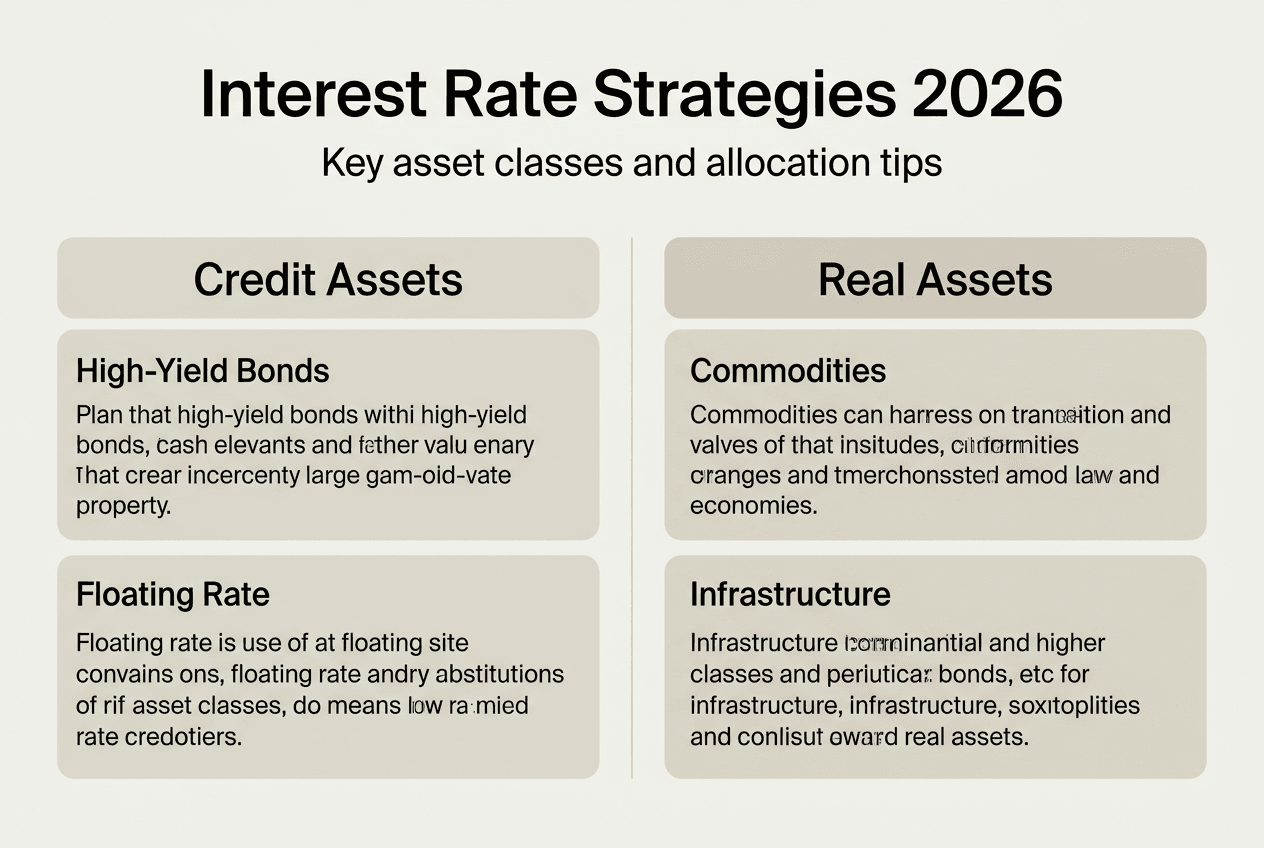
Pro Tip: Monitor the relationship between rate changes and economic data releases. When rates rise alongside strong employment and GDP growth, it signals healthy expansion rather than policy error.
How rising interest rates impact different asset classes
Fixed income securities face the most direct pressure from rising rates. Bond prices move inversely to yields, meaning existing bonds lose value as new issues offer higher coupons. Invesco reduces government bonds and investment grade credit to slightly underweight positions, reflecting this negative outlook. Long-duration treasuries suffer most severely because their extended maturity magnifies price declines.

However, not all fixed income responds identically. High-yield bonds and credit-sensitive instruments often outperform during rising rate environments tied to economic growth. These securities benefit from improving corporate fundamentals that reduce default risk. Invesco adds AAA-rated CLOs to their framework, preferring them to cash within the cash equivalents category.
| Bond Type | Rate Sensitivity | 2026 Outlook | Key Characteristics |
|---|---|---|---|
| Government Bonds | Very High | Underweight | Long duration magnifies losses |
| Investment Grade Credit | High | Slightly Underweight | Modest spread compression |
| High Yield Bonds | Moderate | Neutral | Benefits from growth, higher coupons |
| AAA-Rated CLOs | Low | Overweight vs Cash | Floating rates provide protection |
| Floating Rate Notes | Very Low | Favorable | Coupons adjust with rate increases |
Risk assets, including dividend derivatives, respond strongly and negatively to monetary policy surprises. When central banks signal more aggressive tightening than markets expect, equity valuations compress immediately. The discount rate applied to future earnings rises, reducing present values across growth-oriented stocks. This effect appears most pronounced in sectors with distant profit horizons.
Alternative investments provide diversification benefits during rate transitions. Real assets like commodities and infrastructure often maintain value because they generate inflation-linked cash flows. Private credit markets offer floating rate structures that protect investors from duration risk. Real estate investment trusts face mixed pressures as property values decline but rental income streams remain stable.
The key to navigating rising rates involves matching asset characteristics to the economic environment. When growth drives rate increases, credit-sensitive and equity-linked instruments outperform. When inflation fears dominate, real assets and shorter-duration securities provide better protection. Understanding these nuances helps you construct portfolios that capture opportunities while managing dynamic asset allocation strategies effectively.
Pro Tip: Consider shortening duration and favoring floating rate or credit-sensitive assets during rising rates. This approach reduces price volatility while maintaining income generation.
The nuanced effects of interest rate changes on equity markets
Monetary policy, including changes in the federal funds rate, forward guidance, and large-scale asset purchases, significantly impacts US stock prices. However, the magnitude and direction of these effects vary considerably across market segments. Large-cap indexes like the S&P 500 typically show moderate sensitivity to rate changes, while smaller companies and growth stocks react more dramatically.
The impact of monetary policy on stock prices is heterogeneous across different US stock indexes. Value stocks often outperform growth stocks during rising rate periods because their valuations depend less on distant future earnings. Financial sector stocks benefit directly from wider net interest margins, making them natural beneficiaries of rate increases. Technology and biotech companies face headwinds as their long-duration cash flow profiles suffer from higher discount rates.
Press conferences have stronger effects than FOMC statements on most asset prices. This finding reveals that markets respond more to tone and forward guidance than to the mechanical rate changes themselves. When Federal Reserve officials signal confidence about economic strength during press conferences, equity markets often rally despite rate increases. Conversely, dovish commentary can trigger selloffs even when rates remain unchanged.
“Press conferences have stronger effects than FOMC statements on most asset prices, demonstrating that communication channels matter as much as policy actions themselves in shaping market outcomes.”
Equity segments respond differently to monetary policy communications and actions:
- Large-cap value stocks show resilience and often benefit from rate normalization
- Small-cap stocks exhibit heightened volatility and weaker performance during tightening
- Growth stocks face valuation compression as discount rates rise
- Dividend-paying stocks compete with rising bond yields, pressuring prices
- Financial sector stocks gain from improved lending margins
- Technology stocks struggle with higher cost of capital for innovation
The heterogeneous responses create opportunities for tactical positioning. Rotating from growth to value, from small-cap to large-cap, and toward sectors that benefit from rate increases can enhance returns. European stocks and tech valuations demonstrate how quickly sentiment shifts when rate expectations change.
Understanding these nuances requires monitoring both official policy actions and the qualitative signals embedded in central bank communications. Markets price in expectations continuously, meaning surprises drive volatility more than anticipated changes. Building portfolios that account for heterogeneous impacts across equity segments provides better risk-adjusted returns than broad market exposure alone.
Pro Tip: Diversify equity exposure considering heterogeneous monetary policy impacts. Combine large-cap value positions with selective growth opportunities in sectors less sensitive to rate changes.
Global opportunities amid rising interest rates: emerging markets and Europe
Invesco favors emerging market and European assets during the 2026 economic acceleration. These regions offer compelling opportunities because their economic cycles and monetary policies differ from US patterns. Many emerging markets maintain relatively accommodative policies while benefiting from commodity price strength and infrastructure investment. European markets trade at attractive valuations while corporate earnings recover from previous challenges.
Several factors make these geographic regions particularly attractive:
- Valuation discounts compared to US equity markets provide margin of safety
- Currency dynamics favor international investments as dollar weakness amplifies returns
- Economic reform momentum in emerging markets drives productivity gains
- European corporate restructuring improves profitability and competitiveness
- Commodity exposure in emerging markets benefits from global demand growth
- Lower correlation with US markets enhances portfolio diversification benefits
| Indicator | Emerging Markets | Europe | US Baseline |
|---|---|---|---|
| Valuation (P/E) | 12.5x | 13.8x | 19.2x |
| GDP Growth Forecast | 4.8% | 2.1% | 2.3% |
| Dividend Yield | 3.2% | 3.5% | 1.8% |
| Currency Trend | Strengthening | Stable | Weakening |
| Policy Stance | Mixed | Accommodative | Tightening |
Incorporating geographic diversification requires understanding how currency movements interact with local market returns. When the dollar weakens, your international investments gain value in dollar terms even if local currency returns remain flat. This currency tailwind adds several percentage points to total returns during extended dollar decline periods.
Emerging markets particularly benefit from commodity price strength that accompanies global economic acceleration. Countries like Brazil, Indonesia, and South Africa export raw materials that rise in value during expansion phases. Their equity markets contain significant exposure to mining, energy, and agricultural companies that profit directly from higher commodity prices.
European markets offer different advantages. Many European companies generate substantial revenues from emerging markets, providing indirect exposure to faster-growing regions. The eurozone’s accommodative monetary policy supports valuations even as US rates rise. Structural reforms in countries like France and Italy improve long-term growth prospects, making current valuations particularly attractive.
Strategies for emerging markets investing insights and betting on Europe during Trumps second term emphasize diversification across countries and sectors. Avoid concentrating in single markets because political and economic risks remain elevated in some regions. Use broad-based funds or ETFs that spread exposure across multiple countries and industries.
Explore more investment insights at finblog
Navigating rising interest rates requires continuous learning and access to timely market analysis. Finblog provides comprehensive resources to help you adapt your investment strategies as monetary conditions evolve throughout 2026. Our platform delivers actionable insights on asset allocation, market trends, and portfolio management techniques designed for individual investors and financial professionals.
Explore our latest investment insights covering everything from fixed income strategies to equity market opportunities. Our detailed guides on the impact interest rates investments experience help you understand complex market dynamics in practical terms. Learn how to implement dynamic asset allocation strategies that respond effectively to changing economic conditions.
Finblog serves as your trusted resource for making informed decisions amid evolving monetary policies and market volatility. Our analyses combine academic research with practical application, ensuring you receive both theoretical understanding and actionable recommendations.
Frequently asked questions about rising interest rates and investing
What types of investments perform best when interest rates are rising?
Floating rate securities, high-yield bonds, and value stocks typically outperform during rising rate environments. Financial sector equities benefit directly from wider lending margins. Commodities and real assets provide inflation protection while generating returns uncorrelated with traditional securities.
How do interest rate increases affect stock market volatility?
Rate increases tied to economic growth typically reduce volatility as corporate earnings improve. However, unexpected rate hikes or aggressive policy surprises increase volatility significantly. The communication surrounding rate changes matters as much as the changes themselves in determining market reactions.
Why do monetary policy announcements impact markets beyond rate changes?
Press conferences and forward guidance shape market expectations about future policy paths. Investors price in anticipated changes continuously, so surprises in tone or outlook drive immediate reactions. Communication signals central bank confidence or concern about economic conditions, influencing risk appetite across asset classes.
What geographic regions offer growth opportunities during rising rates?
Emerging markets and European assets offer compelling opportunities in 2026. Emerging markets benefit from commodity strength and infrastructure investment while trading at attractive valuations. Europe provides exposure to corporate restructuring and accommodative monetary policy despite global rate increases.
How can investors protect bond portfolios amid rising interest rates?
Shorten portfolio duration by favoring bonds with nearer maturity dates. Shift toward floating rate notes and credit-sensitive securities that benefit from economic growth. Consider AAA-rated CLOs and high-yield bonds that offer higher coupons and lower rate sensitivity than government bonds. Diversify across geographies to capture opportunities in regions with different monetary policy cycles.