
New signals from Fed officials suggest rate hikes are being discussed again, but most economists still believe the central bank is unlikely to raise interest rates this year.
Recent minutes from the Federal Reserve’s January meeting show that some policymakers are increasingly focused on inflation risks, marking a shift from earlier expectations that rate cuts in 2026 were almost certain.
Fed Officials Shift Focus Back to Inflation
Inflation currently stands at about 2.9%, still above the Fed’s 2% target. Because of this, several members of the Federal Open Market Committee suggested adopting a more flexible approach to future interest rate decisions.
According to the meeting minutes, officials discussed the possibility that rates could move in either direction depending on economic conditions. That includes the potential for rate increases if inflation remains elevated.
This change in tone has been described by analysts as a “hawkish tilt,” meaning the Fed is becoming more cautious about cutting rates too quickly.
Rate Hikes Still Seen as Unlikely
Despite the discussion, most economists say an actual rate hike in 2026 is still unlikely.
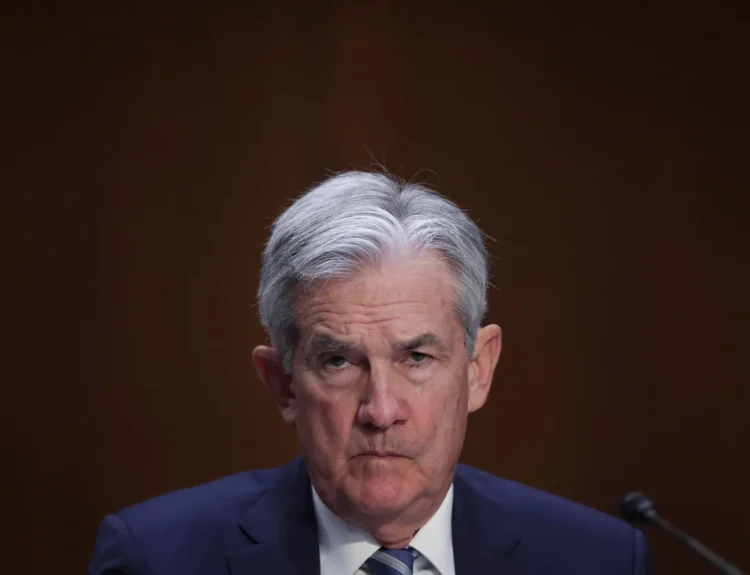
Federal Reserve Chair Jerome Powell emphasized that raising rates is not the central bank’s base scenario. Analysts say current economic conditions do not justify tighter policy.
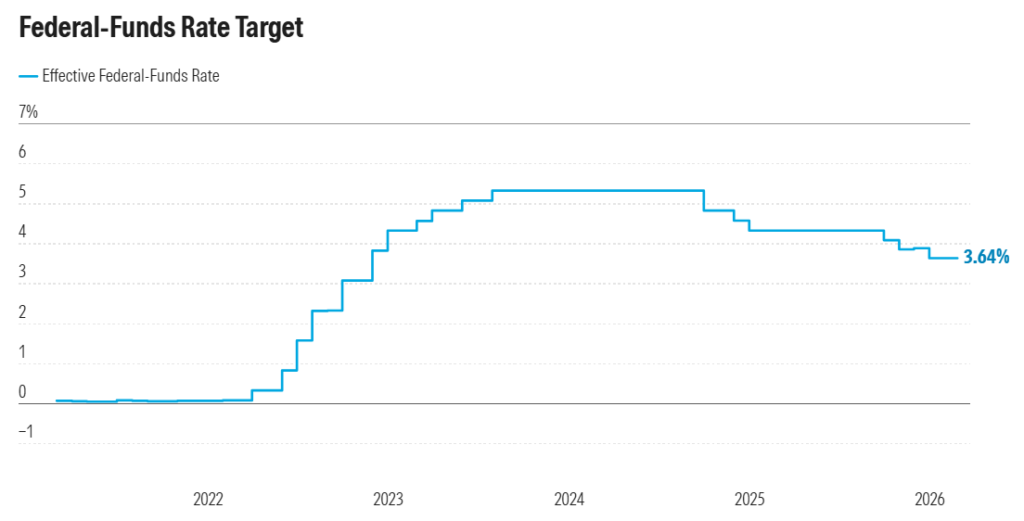
Interest rates currently sit at 3.50% to 3.75%, a level many economists consider close to neutral, meaning it neither strongly stimulates nor restricts economic growth.
Markets Still Expect Rate Cuts
Many analysts still believe the Fed will cut rates later this year.
Some economists expect two rate cuts in 2026, possibly around June and September, as inflation gradually declines. Housing costs, a major driver of inflation, are expected to slow, which could reduce price pressures.
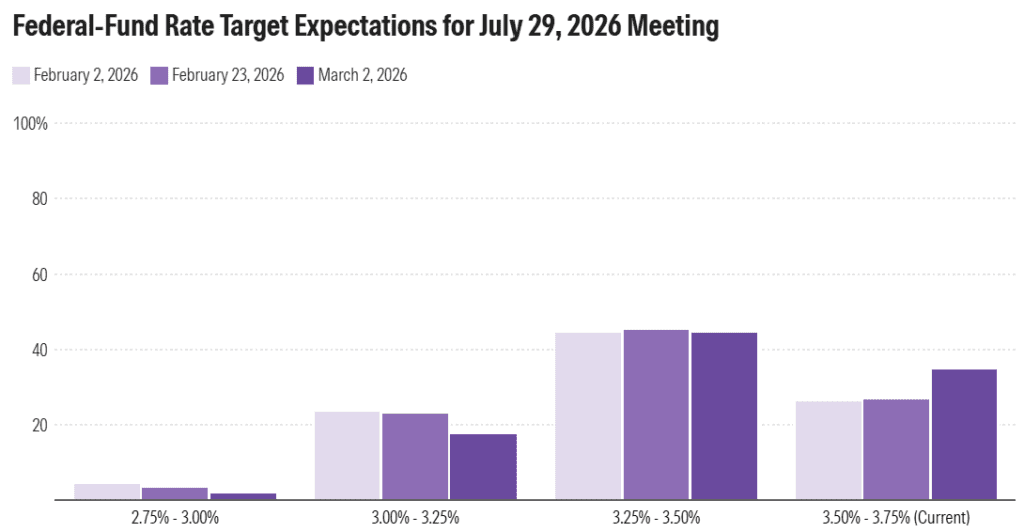
Bond markets are currently pricing in a 25 basis point rate cut around July, according to futures market data.
New Fed Leadership Adds Uncertainty
Another factor shaping expectations is the upcoming leadership change at the Fed.
President Donald Trump has chosen Kevin Warsh to succeed Jerome Powell as Fed chair when Powell’s term ends in May. Warsh has previously signaled that he favors lower interest rates, though he has also supported reducing the Fed’s balance sheet.
Some analysts believe this transition could influence the central bank’s future policy direction.
What Could Change the Outlook
While rate hikes are not expected right now, economists say the outlook could shift if inflation unexpectedly rises again.
Factors such as strong economic growth, government spending, rising energy prices, or productivity slowdowns could force the Fed to reconsider its strategy.
For now, most economists expect the Fed to hold rates steady in the near term while monitoring inflation and economic data closely.