

Investors are becoming increasingly concerned about the amount of debt carried by major developed economies, and that concern is starting to show clearly in global bond markets.
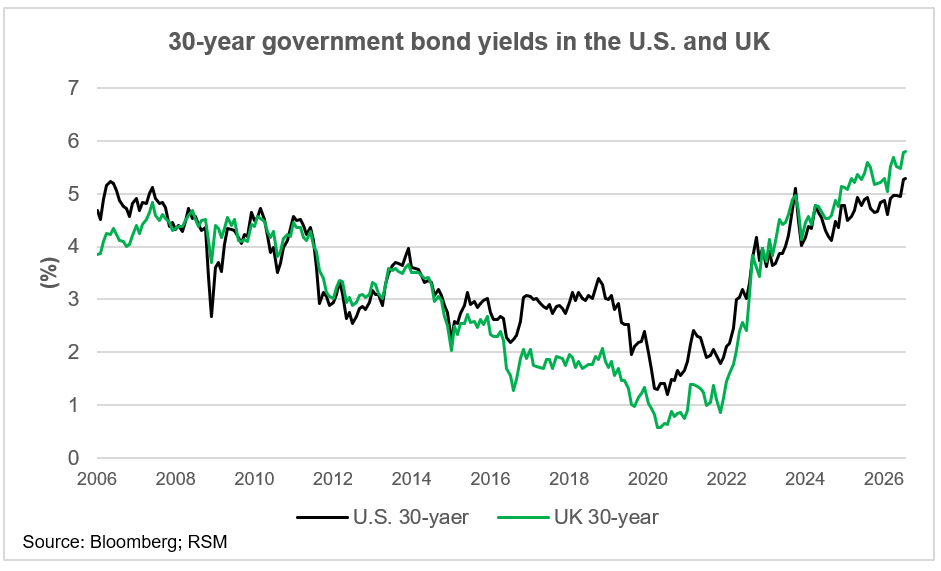
Long-term government bond yields have climbed sharply. The US 30-year Treasury yield recently reached around 5.3%, while the UK’s equivalent approached 5.8%, its highest level since 1998. Long-term yields have also risen to around 4.9% in France, 3.7% in Germany and 4.1% in Japan, according to RSM.
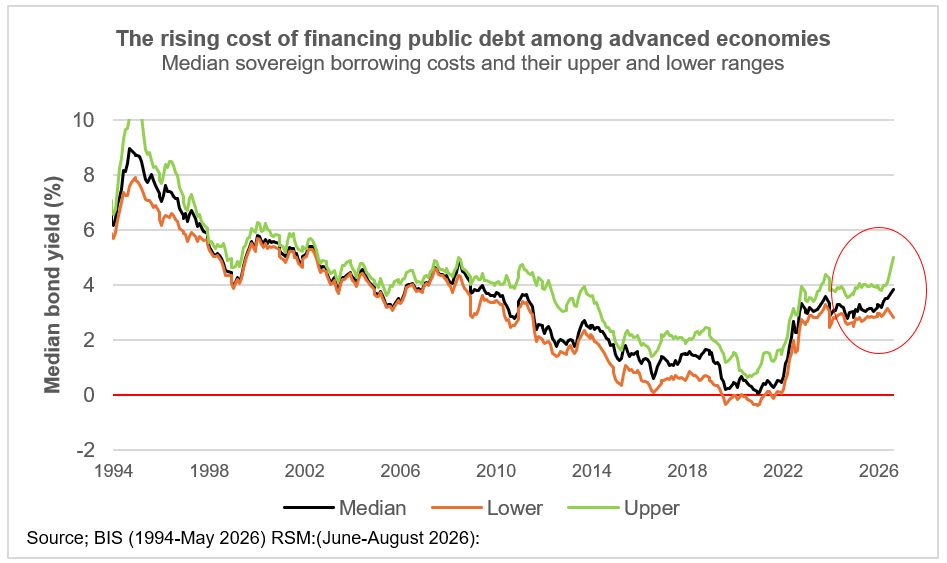
The message from investors is relatively simple: lending money to governments for decades now looks riskier, so investors want higher returns in exchange.
Several factors are behind the move:
- Governments continue to run large deficits even though borrowing costs are no longer close to zero.
- Inflation and the recent energy shock have increased uncertainty about future interest rates.
- The enormous AI infrastructure buildout is competing with governments and other businesses for capital.
- Investors are demanding more compensation for the risk of holding long-term government debt.
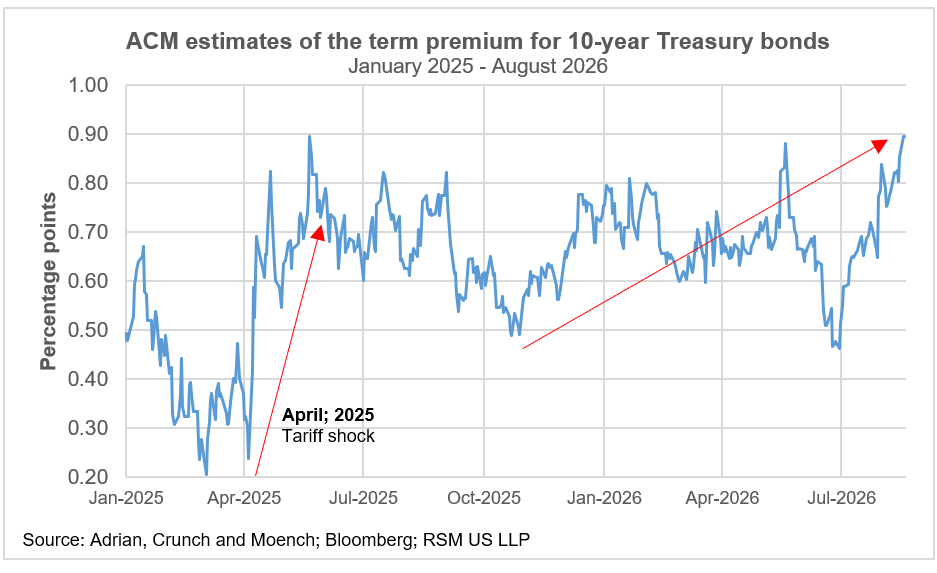
In the United States, interest payments on existing federal debt now consume around 3.3% of GDP. Meanwhile, the additional premium investors demand for holding 10-year Treasuries has risen to around 0.8 percentage points, according to a Federal Reserve model cited by RSM.
The concern is not limited to America. Government debt in both the US and UK exceeds 100% of GDP, while Japan has carried debt worth more than twice its annual economic output for years.
RSM is not arguing that a debt crisis is imminent. Instead, the important change is that investors are beginning to demand a higher price for financing governments. That can eventually affect the wider economy because government bond yields influence mortgages, corporate borrowing, private investment and other long-term interest rates.
Investor takeaway: The bond market is starting to send a warning about government spending. If investors continue demanding higher yields, borrowing will become more expensive not only for governments but also for companies and households, making rising debt an increasingly important risk for global markets.
Disclosure: This article does not represent investment advice. The content and materials featured on this page are for educational purposes only.
Related: US National Debt Passes $40 Trillion for the First Time