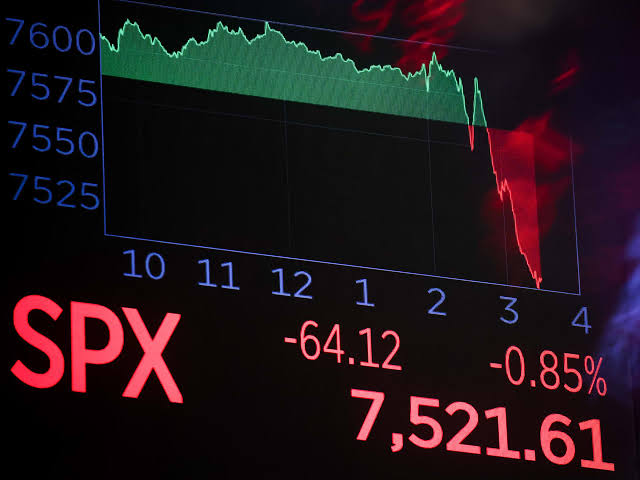

Global bond markets are under pressure again as inflation, heavy government borrowing and rising AI-related financing needs push yields higher. But according to Bloomberg, the current selloff is still far smaller than the historic bond rout of 2022.
Bond Losses Are Still Much Smaller Than 2022
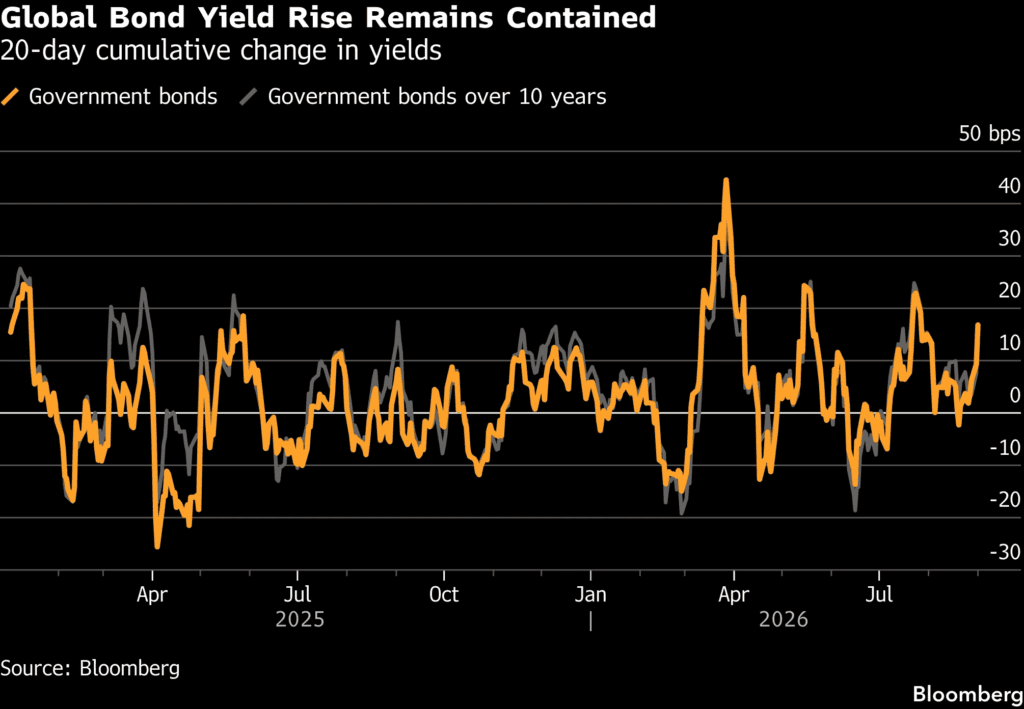
Global government bond yields have risen about 17 basis points over a rolling 20-day period, compared with a 62-basis-point increase during the 2022 selloff.
On a peak-to-trough basis, global bonds have lost around 4.2% this year, far below the 23% decline in 2022.
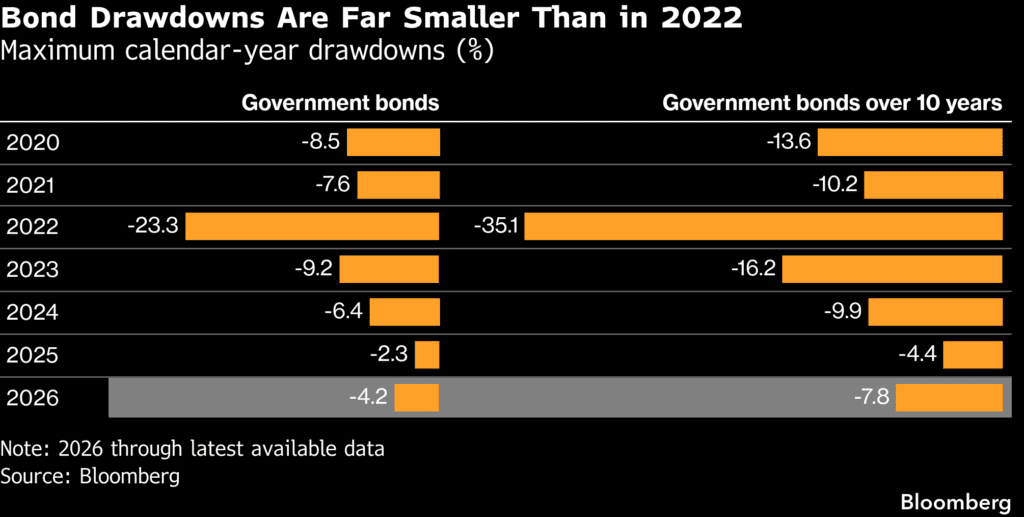
The difference is partly because investors now receive much more income from bonds. The Bloomberg Global Treasury Total Return Index carries an average coupon of 2.68% this year, compared with just 1.84% in 2022.
Higher interest payments help cushion some of the losses caused when bond prices fall.
Why Yields Are Rising
Inflation remains an important concern, particularly because the Iran war has pushed energy prices higher.
But other forces are also putting pressure on bonds.
Governments in the US, UK and Japan continue to issue large amounts of debt, forcing them to offer investors higher yields. At the same time, companies are competing for capital to finance the massive AI infrastructure buildout, adding even more demand for borrowing.
The 10-year US Treasury yield recently reached 4.81%, its highest level since late 2023, while Japan’s 10-year government bond yield touched 3% for the first time this century.
Investors Are Not Panicking Yet
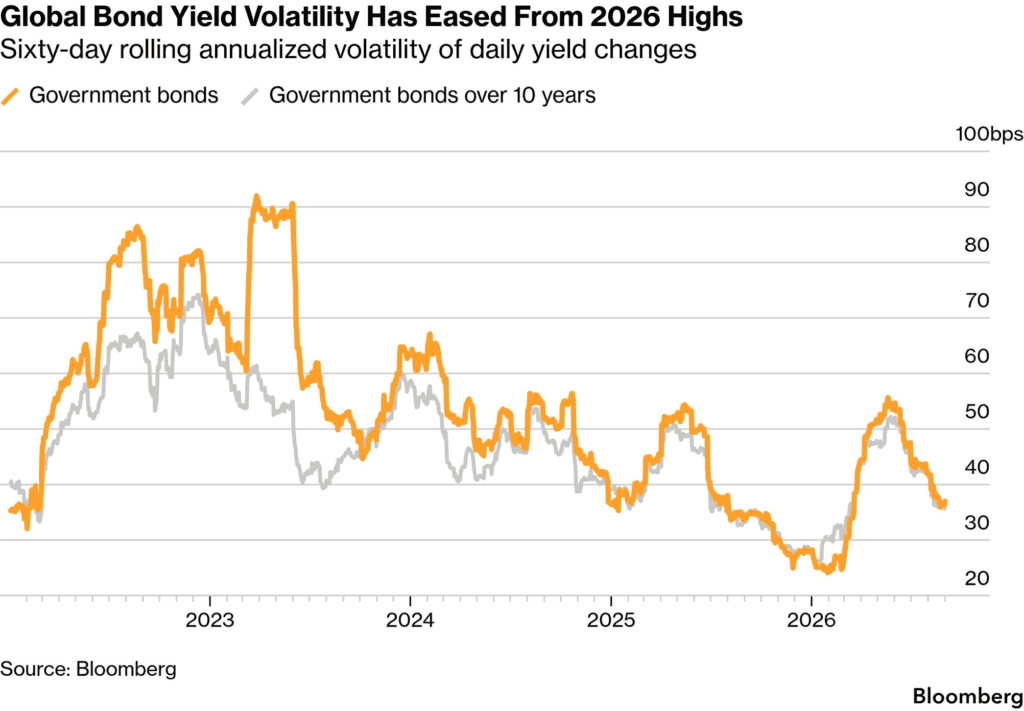
Despite the losses, bond-market volatility remains much lower than during the previous crisis.
Global government bond yield volatility has fallen to around 37 basis points, compared with a peak of 56 basis points in May and roughly 92 basis points following the 2022 rout.
That suggests investors are concerned about rising yields but are not yet treating the move as a full-scale bond crisis.
Investor takeaway: The current bond selloff is painful, but it remains far smaller than 2022. Higher starting yields also give investors more income protection. The main risks now are persistent inflation, huge government borrowing and growing competition for capital from the AI boom, which could keep long-term yields elevated.
Related: Death of the Safe Haven: How to Fix Your Bond Strategy as Yields Rise