



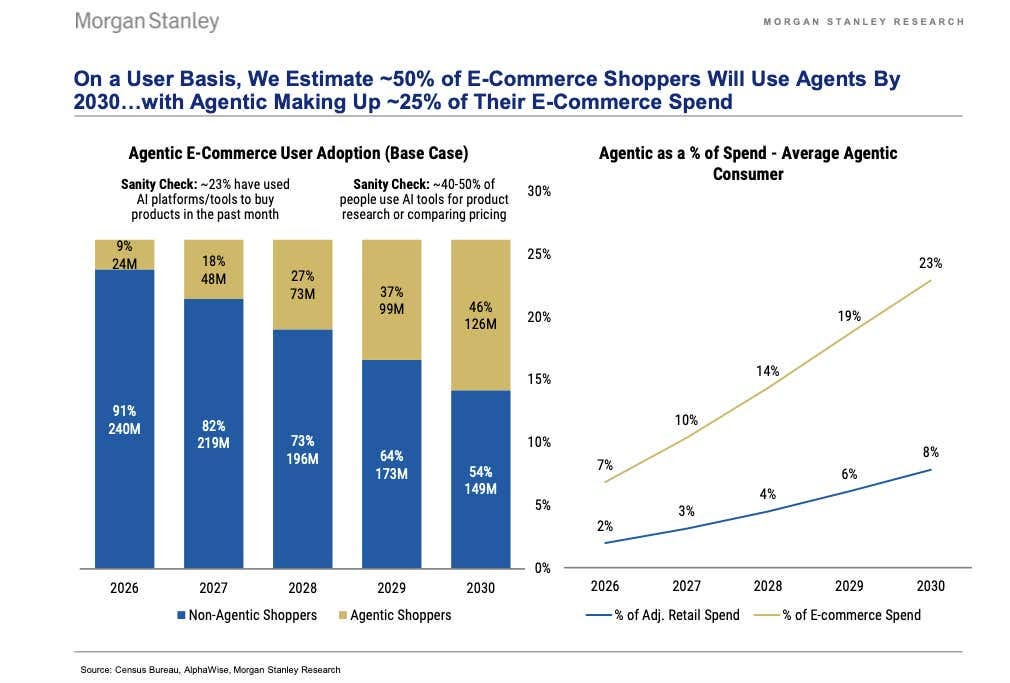
If shoppers start asking AI assistants what to buy, Shopify wants to remain part of the transaction, even when customers never browse a traditional storefront.
The opportunity is straightforward. An assistant can recommend a product, but completing the purchase still requires accurate inventory, pricing, checkout and payment processing. Those are services Shopify already provides.
Its potential advantage is connecting merchants to several AI platforms through one commerce system.
How Shopify could earn more
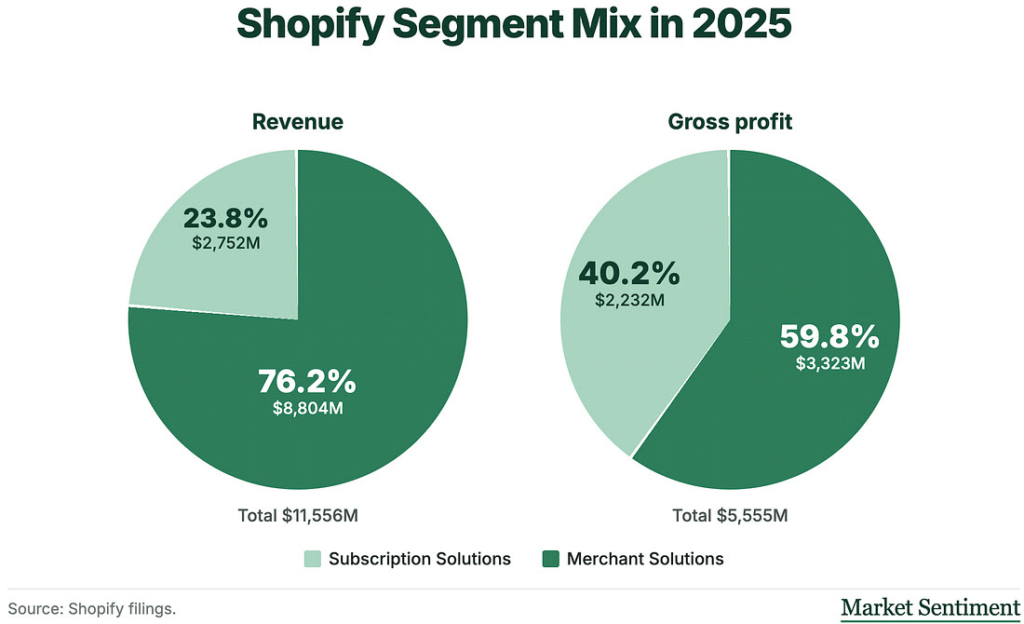
Shopify makes money through subscriptions and merchant services, including payment processing. If AI recommendations bring additional purchases to its merchants, that activity could generate more revenue.
However, an AI-assisted sale is not automatically an additional sale. A customer who would otherwise have bought through Google or a merchant’s website may simply use a different route.
The important question is whether AI expands merchants’ sales or redirects existing purchases.
Shopify’s underlying business was already growing strongly before the holiday shopping season. Its second-quarter results showed 34% revenue growth and an 18% free cash flow margin. Those figures reflect the broader business and should not be attributed entirely to AI.
The checkout experience still varies
Shopify’s Agentic Storefronts connect eligible merchants with AI shopping channels, with the feature active by default for eligible stores.
The purchasing experience differs across platforms. ChatGPT directs shoppers to the merchant’s checkout, while supported Google, Microsoft and Meta channels can offer Shopify-powered checkout within the conversation when enabled.
This competition over where shopping happens is explored in Meta Wants to Do Your Shopping. Amazon Has Other Plans.
Shoppers are interested, but trust remains a hurdle
In its October holiday-shopping update, Shopify said 65% of surveyed shoppers planned to use AI for at least one shopping task. Yet only one-third trusted an AI agent to purchase on their behalf.
That distinction matters. Comparing products is a smaller commitment than giving software permission to spend money. Survey intentions also do not establish how much spending will actually move through AI channels.
What investors should watch
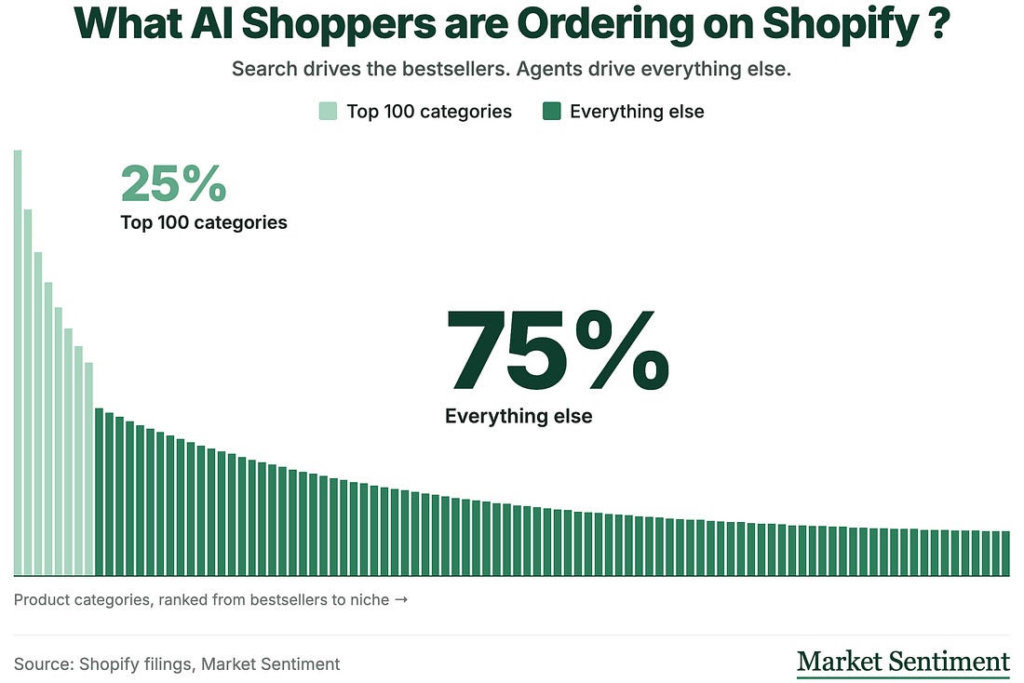
The clearest evidence would be sustained growth in AI-referred orders, stronger conversion rates and greater payment-service usage, alongside healthy margins.
There are risks. AI platforms influence which products customers see, competing commerce providers can build similar connections, and integration costs could absorb some of the benefits.
Shopify has a plausible way to benefit from AI shopping. Proving the investment case requires evidence that these new channels deliver additional profitable business.
Disclosure: This article does not represent investment advice. The content is for informational and educational purposes only.