

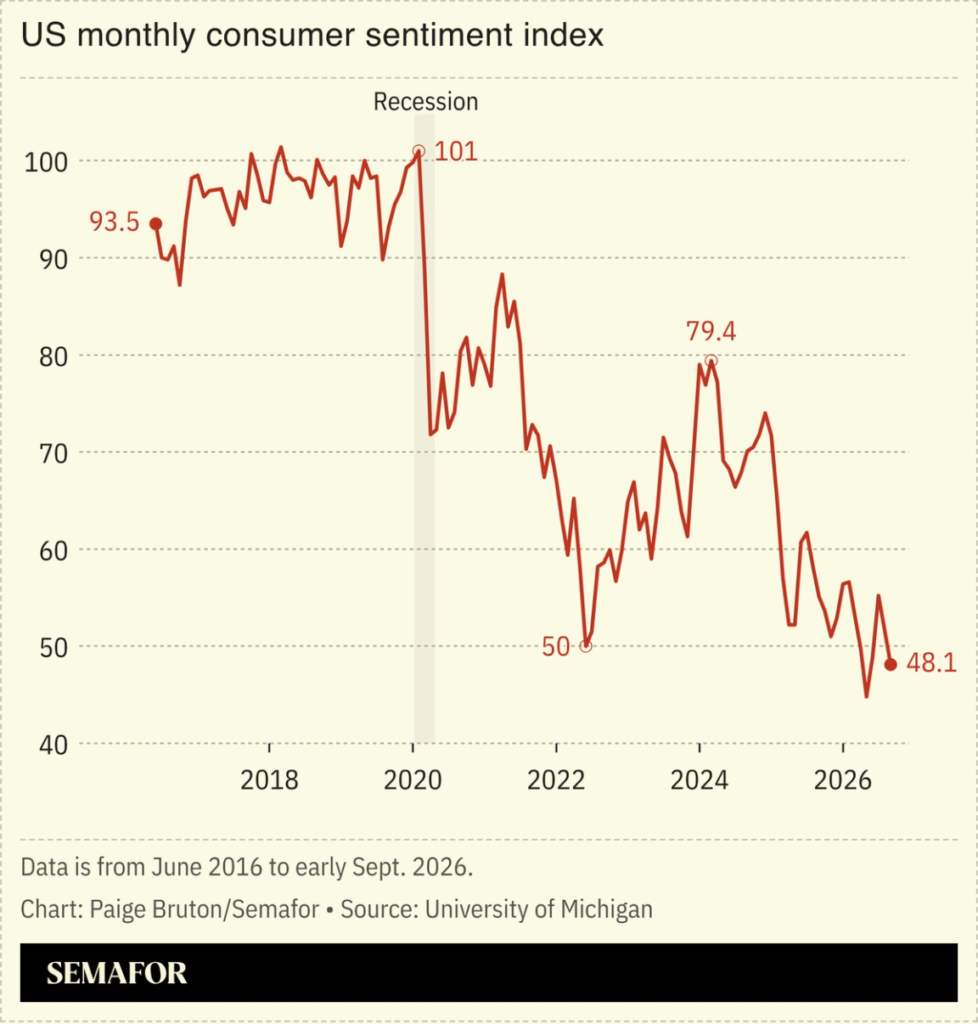
Americans became more pessimistic about the economy in September, as rising prices and concerns about household finances pushed consumer sentiment to its lowest level in four months.
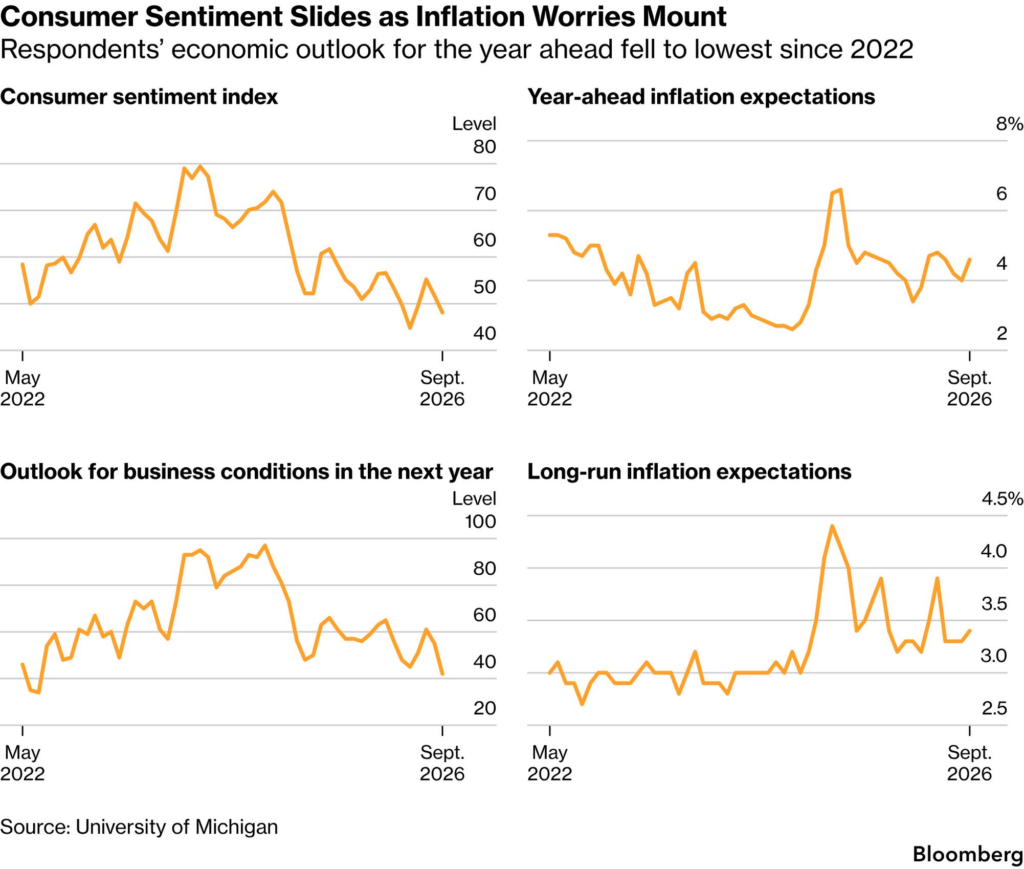
The University of Michigan’s sentiment index fell to 48.1 from 51.7 in August, according to its final September survey, released on September 25. Confidence is now 15% below January’s level.
Consumers Expect Prices to Keep Climbing
Households’ one-year inflation expectations rose to 4.6% from 4.0%, reaching their highest level since June. Longer-term expectations increased to 3.4% from 3.3%.
These figures measure what consumers expect prices to do, rather than the actual inflation rate.
Survey director Joanne Hsu said concerns stretched across party lines:
“The outlook for the economy has weakened since the beginning of the year.”
Fuel Costs Add to Household Pressure
The survey highlighted concerns that elevated fuel prices and renewed trade disputes could weaken the broader economy. Consumers’ assessments of both current and expected personal finances deteriorated by roughly 10% during the month.
Higher diesel costs can spread beyond the filling station by making farming, freight and deliveries more expensive. Businesses may absorb some of those costs or pass them on to customers.
Related: Rising Fuel Costs Reshape Politics as Voters Demand Relief.
A Difficult Backdrop for the Fed
The combination of weaker confidence and rising inflation expectations complicates the policy outlook. Households worried about their finances may become more cautious about spending, while expectations of persistent price increases could make controlling inflation harder.
The survey alone does not establish that another interest-rate increase is coming. Policymakers must also assess actual inflation, employment and spending. Similarly, rising Treasury yields reflect several influences, including inflation expectations, government borrowing and uncertainty about future rates.
Related: What the Fed’s Rate Hike Means for Your Loans and Savings.
September’s message is clear: Americans feel less secure about their finances and expect greater pressure from prices. Whether that pessimism translates into weaker spending is the next test for the economy.