

President Donald Trump has announced a new 50% tariff on Canadian cars, trucks, auto parts and steel, marking another major escalation in the trade dispute between the US and Canada.
The new tariffs are scheduled to take effect on January 1, 2027. Trump accused Canada of unfair trade practices and argued that the US does not need Canadian trade as much as Canada depends on the American market.
The announcement came after negotiations between the two countries collapsed over the weekend. Trump had already imposed a separate 50% tariff on about $20 billion of Canadian exports, including electronics and hockey equipment. Canadian Prime Minister Mark Carney rejected the proposed agreement, saying Washington had asked for too much while offering too little.
Carney has promised a “dollar-for-dollar” response and warned that American workers could also suffer from the escalating dispute. Canada is a major customer for US auto production, particularly for manufacturing states such as Michigan, Ohio, Kentucky and Alabama.
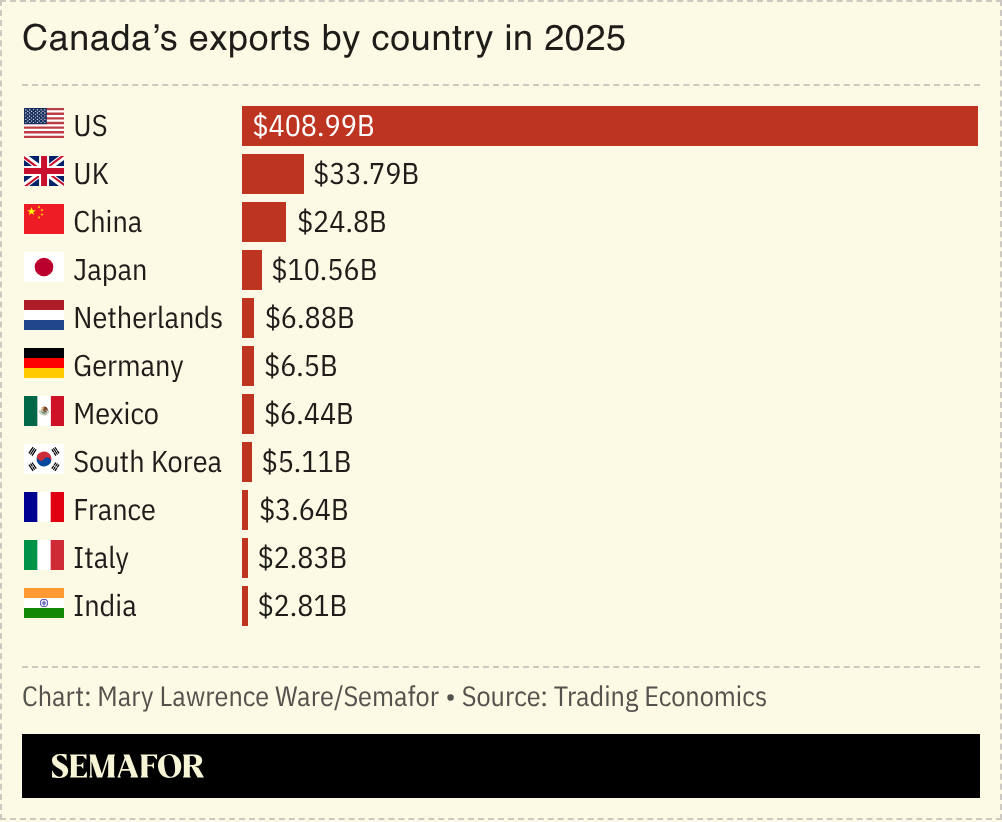
The stakes are significant because the two economies are deeply connected. Annual trade between the US and Canada totals roughly $909 billion, according to US government figures cited by The Guardian. Cars and components can also cross the border several times during production, meaning tariffs can raise costs throughout the North American automotive supply chain.
Canada has since announced retaliatory tariffs covering C$27.6 billion of US imports, targeting more than 700 products across industries including steel, dairy, agricultural equipment, appliances, wood products and paper. Most will face tariffs of 25% or 50% beginning September 8.
Related: Tariffs on Hold as Trump Claims Deal With Canada Is Near