
Netflix is shifting its focus from subscriber growth to keeping viewers engaged for longer, as the streaming giant looks for new ways to grow in an increasingly competitive entertainment market.
According to App Economy Insights, Netflix’s second-quarter results showed a solid business, but investors remain unconvinced that the company’s next phase of growth will be strong enough to justify its valuation. Shares fell about 8% after earnings as the company maintained, rather than raised, its full-year outlook.
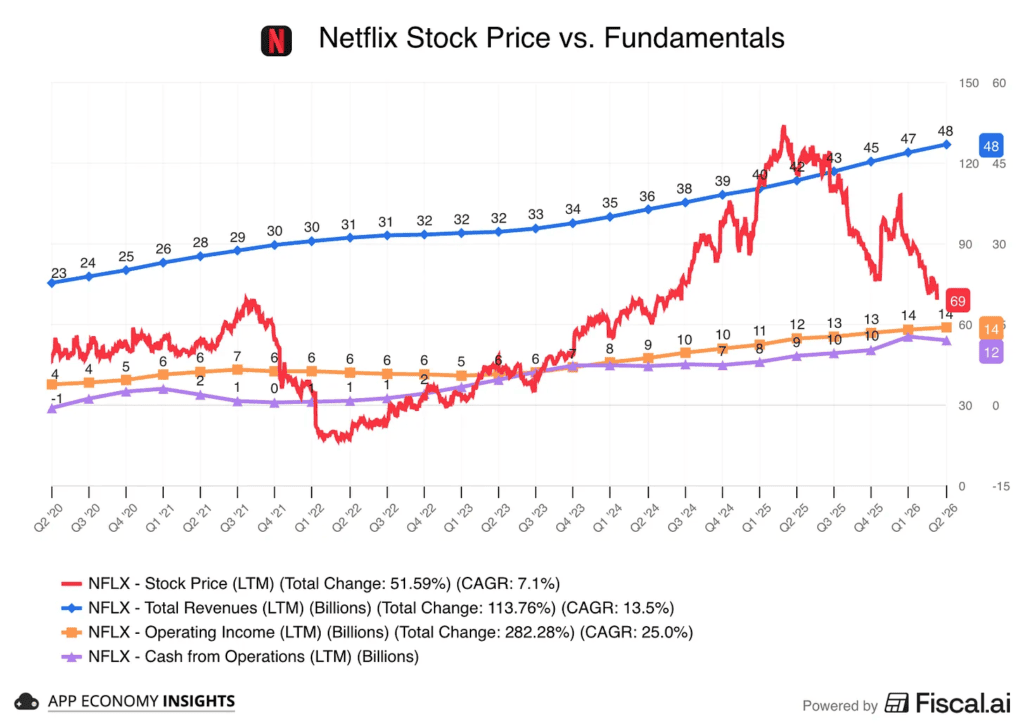
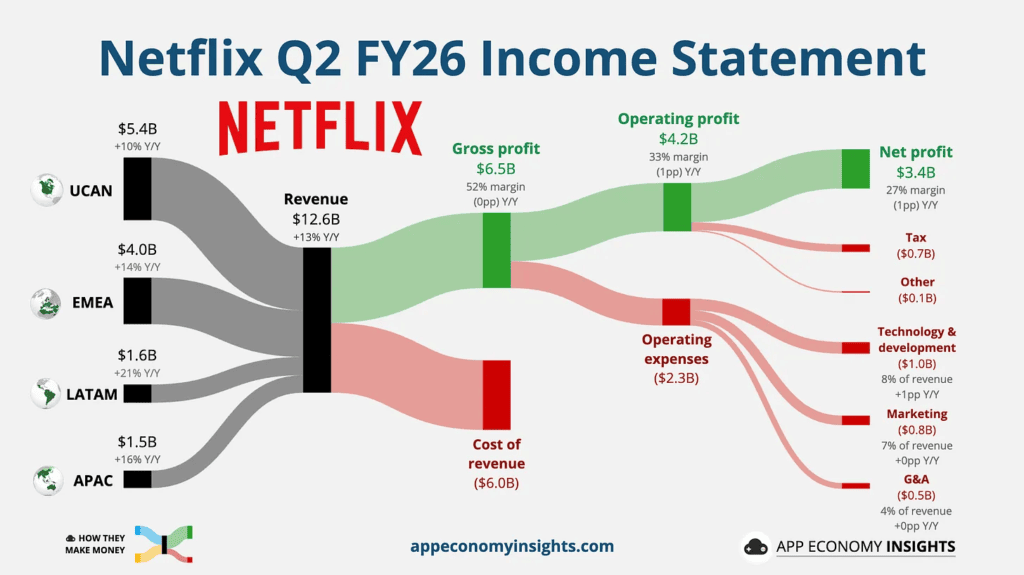
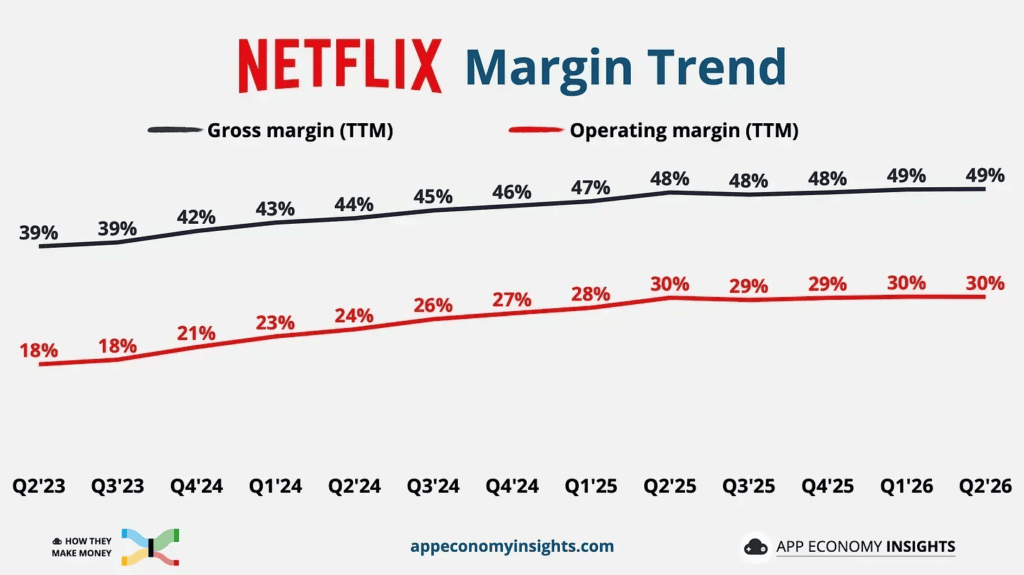
Revenue rose 13% year over year to $12.6 billion, while earnings per share increased 11% to $0.80. Netflix reaffirmed its full-year revenue forecast of around $51.2 billion and maintained its 31.5% operating margin guidance. The company ended the quarter with $9.1 billion in cash and $14.4 billion in debt.
As subscriber growth slows, Netflix is investing in several new growth drivers.
The company expects its advertising business to generate around $3 billion in revenue this year, supported by expanded programmatic advertising and new ad formats. It is also increasing its investment in live programming, which accounts for just over 5% of content spending but has produced six of Netflix’s ten biggest subscriber sign-up days over the past five years.
Artificial intelligence is becoming another important part of Netflix’s strategy. Management said GenAI tools have already been used across around 300 titles this year, helping create visual effects, larger scenes and post-production work more efficiently. Rather than replacing creative teams, Netflix said AI is allowing productions to create scenes that would have been too expensive or time-consuming using traditional methods.
Competition for viewers is also becoming more intense. YouTube continues to gain television viewing share, while free streaming platforms such as Tubi and traditional media companies are expanding their sports and live entertainment offerings. Netflix’s response is to broaden its content mix and encourage users to open the app more frequently.
One controversial decision was Netflix’s plan to publish its “What We Watched” engagement report only once a year starting in 2027, instead of twice annually. The company said it wants investors to focus more on revenue and profits than viewing hours, although some analysts argue the move makes it harder to evaluate user engagement.
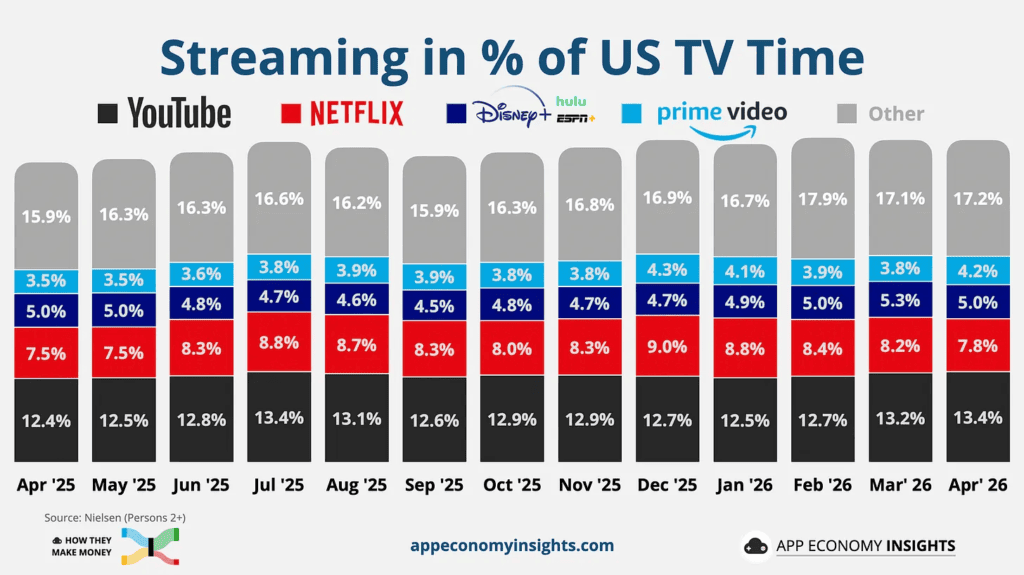
Investor takeaway: Netflix is evolving beyond a traditional streaming platform by expanding advertising, live events and AI-powered production. While the business remains profitable, investors are increasingly focused on whether these initiatives can generate enough engagement and revenue to support long-term growth as competition for viewers continues to intensify.
Disclosure: This article does not represent investment advice. The content and materials featured on this page are for educational purposes only.