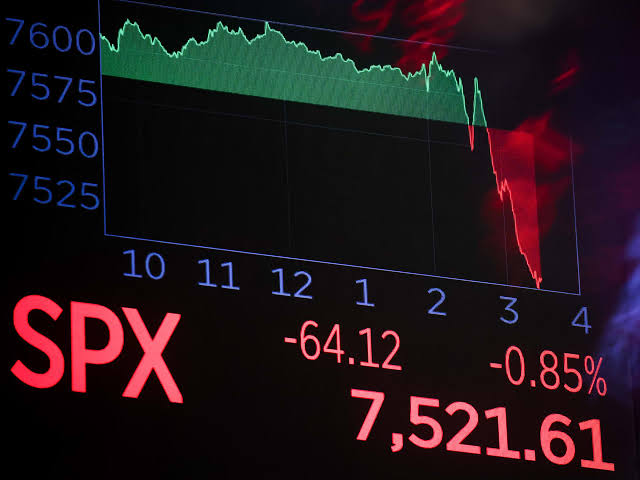

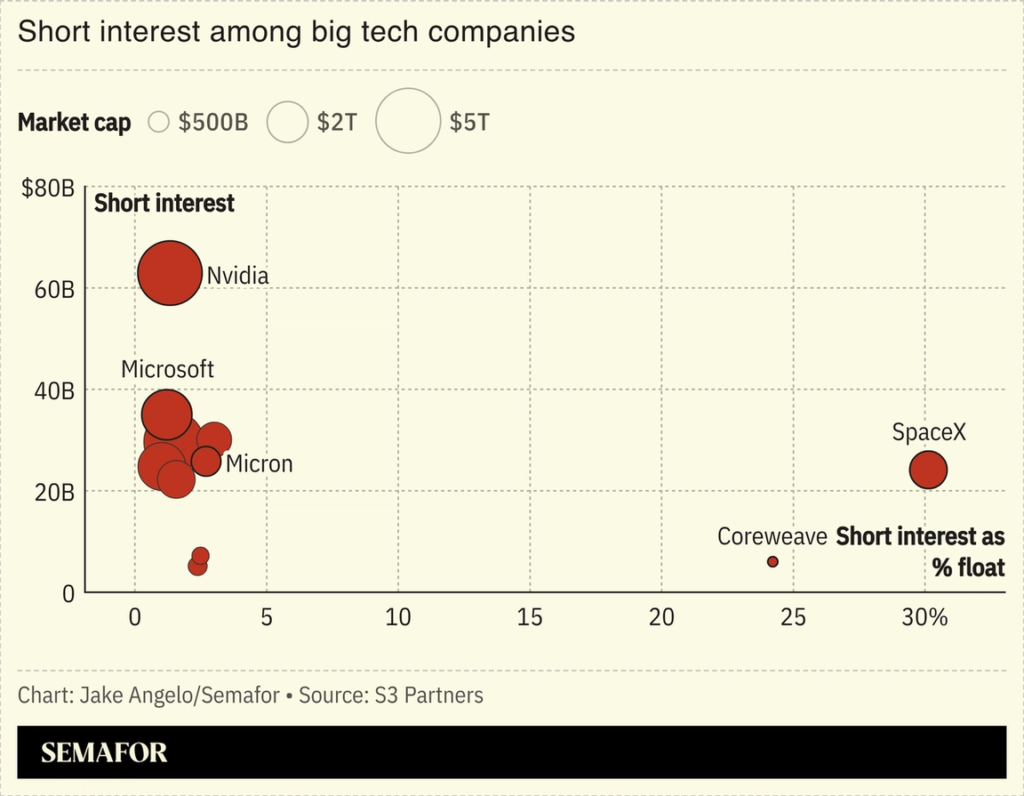
According to Semafor, short interest across S&P 500 companies has climbed to $1.4 trillion, or about 3.7% of the market’s free float, the highest level since S3 Partners began tracking the data in 2010.
AI-related companies have become a particular target for short sellers, with investors increasingly questioning whether massive capital spending on AI infrastructure will translate into meaningful profits.
The latest earnings season is expected to test that thesis.
Alphabet, which reported quarterly results on Wednesday, came under pressure after investors focused on its rising AI spending and delays to its latest Gemini model. At the same time, rapid progress in China’s open-source AI models has raised concerns that US tech giants may be overinvesting in data centres and computing capacity.
Investors are also watching hyperscalers closely as AI infrastructure costs continue to climb, putting pressure on margins despite strong revenue growth.
According to The Atlantic, AI-related companies now carry a combined valuation of roughly $27 trillion, increasing pressure on the sector to prove that heavy investment will eventually generate sustainable profits. If those expectations are not met, analysts warn the market could face a significant correction.
Investor takeaway: AI remains one of the market’s biggest long-term growth themes, but investors are becoming less willing to reward spending alone. Upcoming earnings from major technology companies will be closely watched for evidence that AI investment is translating into stronger profits rather than simply higher capital expenditures.
Disclosure: This article does not represent investment advice. The content and materials featured on this page are for educational purposes only.