

TL;DR:
- Many Americans have surplus cash but lack strategies to manage it effectively.
- Cash flow tracks actual money movement, not just profit or income, crucial for financial health.
- Regular cash flow reviews help prevent financial fragility and support smarter investment decisions.
Over half of Americans report spending less than they earn each month, yet most lack formal strategies to actually manage that surplus. That gap between having positive cash flow and knowing what to do with it is where most financial plans quietly fall apart. Cash flow is one of the most misunderstood concepts in personal finance, often confused with profit, income, or net worth. In this guide, you’ll get a clear foundation, practical frameworks, and actionable steps to analyze and improve your cash flow, whether you’re building personal wealth or evaluating investment opportunities.
Table of Contents
- What is cash flow and why does it matter?
- How to analyze cash flow: Methods and interpretation
- Practical frameworks for managing personal cash flow
- Applying cash flow analysis for smarter investment decisions
- Why cash flow management is the real game changer
- Take your cash flow mastery further with Finblog
- Frequently asked questions
Key Takeaways
| Point | Details |
|---|---|
| Cash flow matters | Managing cash flow provides a clearer picture of your financial health than budgeting alone. |
| Direct vs indirect methods | Most companies use the indirect method, but understanding both improves your financial analysis. |
| Frameworks enhance control | Using budgeting rules like the 50/30/20 method helps organize finances and identify surplus. |
| Benchmarks guide progress | Compare yourself to US benchmarks—aim for positive monthly surplus and cover emergencies with cash. |
| Review, adjust, repeat | Regular reviews and adaptive strategies make cash flow management sustainable and effective. |
What is cash flow and why does it matter?
At its core, cash flow is simply the movement of money coming in and going out of your finances over a given period. Sounds basic. But most people conflate it with net income, which is a costly mistake.
Net income is what’s left after accounting deductions and adjustments. Cash flow tells you what’s actually moving through your accounts. A business, or a household, can show strong net income on paper while running dangerously low on actual cash. That’s how companies go bankrupt while reporting profits.
The three pillars of cash flow
Whether you’re reviewing a company or your own finances, cash flow statements consist of three main sections: operating, investing, and financing activities. Here’s how they translate to personal finance:
- Operating cash flow: Your salary, freelance income, and everyday expenses like rent, groceries, and utilities.
- Investing cash flow: Money going into or coming from assets like stocks, real estate, or retirement accounts.
- Financing cash flow: Loan repayments, credit card payments, or cash received from borrowing.
For individuals, the operating section carries the most weight. Prioritize positive operating cash flow to build emergency funds and create a financial cushion before expanding into investing or debt management.
Stat callout: 51% of US adults reported spending less than they earned last month. But reporting a surplus and actively managing it are two very different things.
A common misconception is that earning more automatically fixes cash flow problems. It doesn’t. Lifestyle inflation, meaning the tendency to increase spending as income rises, erodes any gains quickly. Building a solid cash flow management guide habit matters far more than chasing a bigger paycheck.
Positive cash flow enables three critical financial moves: building emergency savings, funding investments, and reducing debt faster. Without it, even high earners find themselves financially fragile when an unexpected expense or income disruption hits.
How to analyze cash flow: Methods and interpretation
Once you understand what cash flow is, the next step is knowing how to read and interpret it. For investors evaluating companies, this means understanding how cash flow statements are prepared. Two methods exist, and they produce the same end result through very different paths.
Two methods exist to prepare cash flow statements: the direct method and the indirect method. Here’s a side-by-side comparison:
| Feature | Direct method | Indirect method |
|---|---|---|
| Approach | Lists actual cash receipts and payments | Starts with net income, adjusts for non-cash items |
| Clarity | High, easy to understand | Moderate, requires accounting knowledge |
| Usage | Rare in practice | Used by the vast majority of companies |
| Best for | Transparency and simplicity | Accrual-based accounting systems |
The direct method is preferred for clarity, but the indirect method dominates real-world usage because most companies use accrual accounting. As an investor, you’ll almost always be reading indirect method statements.
Steps to interpret a cash flow statement:
- Start with operating cash flow. Is it positive? Negative operating cash flow is a red flag, even if net income looks healthy.
- Check the trend over time. One bad quarter is noise. Three consecutive quarters of declining operating cash is a signal.
- Review investing activities. Heavy capital expenditures can signal growth or overspending, context matters.
- Look at financing activities. Regular borrowing to fund operations is a warning sign.
- Compare cash flow to net income. A large and growing gap can indicate aggressive accounting.
For analyzing cash flow at the personal level, the same logic applies. Review your monthly inflows and outflows, separate necessary spending from discretionary, and track whether your surplus is growing or shrinking. Consider pairing this with annual financial reviews to spot patterns across longer timeframes.

Pro Tip: Never judge a company or your own finances by net income alone. A sudden drop in operating cash, even with stable income on paper, often signals a problem brewing beneath the surface.
Practical frameworks for managing personal cash flow
Knowing what cash flow is doesn’t pay the bills. Applying a framework does. The most widely used starting point for working professionals is the 50/30/20 rule.
The 50/30/20 rule divides your after-tax income into three buckets:
- 50% for needs: Rent, groceries, utilities, insurance, minimum debt payments.
- 30% for wants: Dining out, subscriptions, travel, entertainment.
- 20% for savings and debt repayment: Emergency fund, retirement contributions, extra loan payments.
It’s not perfect for everyone. High cost-of-living cities may push the “needs” bucket above 50%. But it gives you a starting point and, more importantly, a way to spot where money is quietly leaking.
Cash flow benchmarks to measure yourself against:
| Benchmark | Target | Current US average |
|---|---|---|
| Monthly surplus | Positive every month | 51% of adults report surplus |
| Emergency fund coverage | 3 months of expenses | 63% can cover a $400 emergency |
| Savings rate | 20% of after-tax income | Varies widely by income level |
Lifestyle inflation is the silent killer of good cash flow. Every raise, bonus, or income spike carries the temptation to upgrade spending immediately. The smarter move is to automate a portion of any income increase directly into savings or investments before it touches your checking account.
Actionable steps to improve your personal cash flow:
- Run a monthly cash flow review the first weekend of each month.
- Set a savings target before allocating fun money.
- Build creating financial habits around automation, not willpower.
- Start emergency fund planning before focusing on investment growth.
- Revisit your budget strategies quarterly, not just when something feels wrong.
Pro Tip: Use a budgeting app like YNAB or Monarch Money to automate cash flow tracking. Seeing real-time data removes the mental friction of manual tracking and makes volatile months impossible to ignore.
Applying cash flow analysis for smarter investment decisions
Cash flow analysis isn’t just a personal finance tool. For investors, it’s one of the most reliable ways to separate financially strong companies from ones propped up by accounting tricks.
The metric to prioritize is free cash flow yield (FCF yield). This is calculated by dividing a company’s free cash flow (operating cash flow minus capital expenditures) by its market capitalization. A higher FCF yield suggests the company generates real cash relative to its size, a strong signal of financial health.
How to evaluate a company’s cash flow health:
- Find the operating cash flow in the annual report or financial filings.
- Subtract capital expenditures to get free cash flow.
- Divide free cash flow by market cap to calculate FCF yield.
- Compare FCF yield across competitors in the same industry.
- Check if free cash flow has grown consistently over three to five years.
“For investors, focusing on free cash flow yield provides a cleaner picture of valuation than earnings per share alone. For individuals, monthly reviews catch volatility early before it becomes a crisis.”
The same discipline applies to your personal finances. A monthly cash flow review isn’t just about knowing your balance. It’s about catching spending creep, identifying months where your surplus shrinks, and adjusting before a pattern sets in.
Quick-reference tips for both investors and individuals:
- Track FCF yield for every stock you hold, not just P/E ratio.
- Review personal cash flow monthly, not quarterly.
- Compare your surplus trend over six months to spot drift.
- Use investment consistency tips to build regular review habits.
- Align your savings with smart wealth priorities based on your current cash flow stage.
The investors who outperform over long periods aren’t always the ones with the best stock picks. They’re often the ones who understood cash flow deeply enough to avoid the landmines.
Why cash flow management is the real game changer
Most financial advice stops at budgeting. Track your spending, stick to a category limit, repeat. That’s useful, but it misses the dynamic nature of real cash flow.
Budgeting is a snapshot. Cash flow management is a film. It captures movement, trend, and direction. A household that budgets perfectly but never reviews how their surplus is deployed is leaving serious wealth on the table.
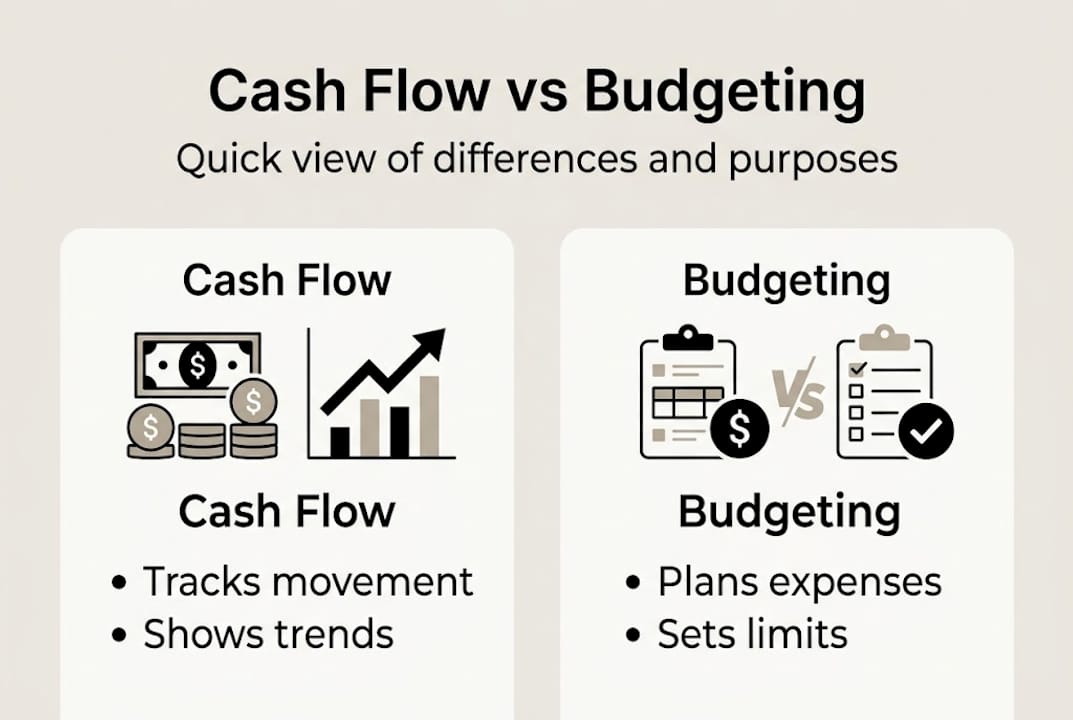
Here’s the uncomfortable truth: discipline and consistency in cash flow reviews outperform clever investment strategies in the long run. Market volatility can erase gains, but a strong surplus cushion protects your ability to stay invested. The flexibility to absorb shocks, fund opportunities, and avoid forced selling comes from managing cash flow well, not from picking the right stocks.
Behavior matters as much as strategy. Two people with identical incomes and budgets can have wildly different financial outcomes based on how often they review and adjust their cash allocation. Building financial security starts with the monthly habit of asking: where did the money go, and is that where I wanted it to go?
Pro Tip: Set up an automatic transfer to your emergency fund on the day you get paid. Remove the decision entirely. Automating the behavior bypasses the willpower trap.
Take your cash flow mastery further with Finblog
If this guide sparked ideas but you want to go deeper, Finblog has you covered. Our library of practical guides covers everything from setting up your first emergency fund to evaluating stock cash flow for long-term investment decisions. Whether you’re just starting to track your monthly surplus or ready to apply FCF yield analysis to your portfolio, there’s a resource built for your next step. Start with the cash flow management guide for a structured deep dive, or explore the full Finblog homepage to find tools and articles matched to where you are in your financial journey.
Frequently asked questions
What is the difference between cash flow and net income?
Cash flow tracks the actual movement of money in and out, while net income includes non-cash items and accounting adjustments that may not reflect real liquidity. You can have strong net income and still run out of cash.
Why do most companies use the indirect method for cash flow statements?
The indirect method dominates because it integrates easily with accrual accounting systems used by the vast majority of firms, even though the direct method offers greater clarity.
How much should I keep in an emergency fund?
Aim for at least three months of living expenses; building emergency reserves through positive operating cash flow is the most reliable path to hitting that target without disrupting other financial goals.
What benchmarks can I use to assess my cash flow health?
A monthly surplus and the ability to cover a $400 emergency without borrowing are solid starting points; 51% of US adults currently meet the surplus benchmark, giving you a realistic comparison point.
How does cash flow analysis help when investing?
Reviewing free cash flow yield alongside your monthly personal surplus helps you identify both strong investment candidates and the right timing to deploy capital without stretching your finances.
Recommended
- Financial literacy 2026: master investing and wealth management – Finblog
- Complete Guide to Cash Flow Management – Finblog
- Steps to financial independence in 2026: practical guide – Finblog
- How to Budget Effectively: Master Your Finances in 2025 – Finblog
- How to Set Financial Goals for 2026 (Free Personolised Plan)