


Demand for AI computing power is growing faster than major cloud providers can supply it, creating an opening for specialized neoclouds such as CoreWeave, Nebius and Cerebras. But their latest results show that capturing this demand requires enormous spending before the revenue arrives.
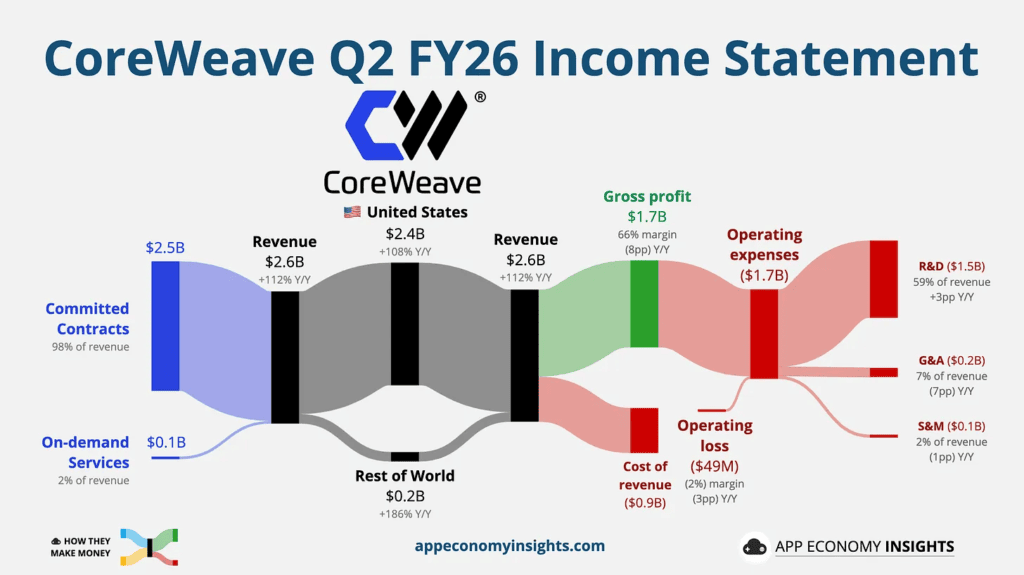
CoreWeave remains one of the clearest examples. Q2 revenue jumped 112% to $2.6 billion, with committed contracts accounting for 98% of revenue. Its backlog reached $104 billion, up 246%, even before another $25 billion in customer commitments signed early in Q3.
But that growth is expensive. CoreWeave spent $9.4 billion on CapEx in Q2 and recorded a $626 million net loss, including $640 million in interest expense. It has now raised its 2026 CapEx forecast to $35 billion to $39 billion as it works toward more than 1.85 GW of active power by year-end.
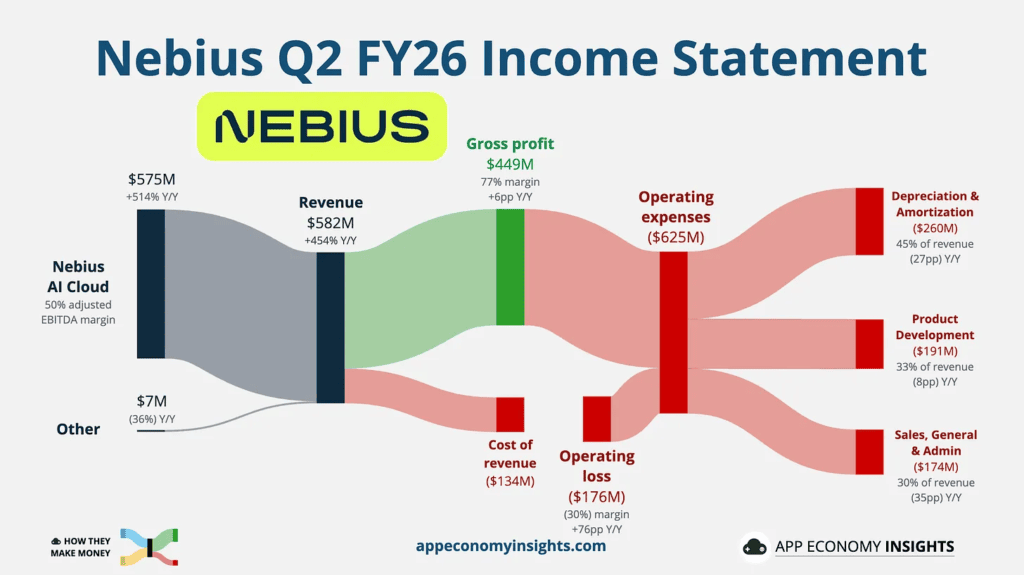
Nebius is growing even faster. Revenue surged 454% to $582 million, with its AI Cloud generating $575 million, or 98% of total revenue. Gross margin reached 77%, while adjusted EBITDA came in at $236 million, a 41% margin.
Its Q2 CapEx, however, reached $5.7 billion, almost ten times quarterly revenue. Nebius expects to spend $20 billion to $25 billion this year, although customers are helping fund the expansion. More than $9 billion in customer prepayments are expected in 2026, covering roughly 50% to 60% of related CapEx. New contracts are also becoming more profitable, with estimated payback periods falling to around 22 months.
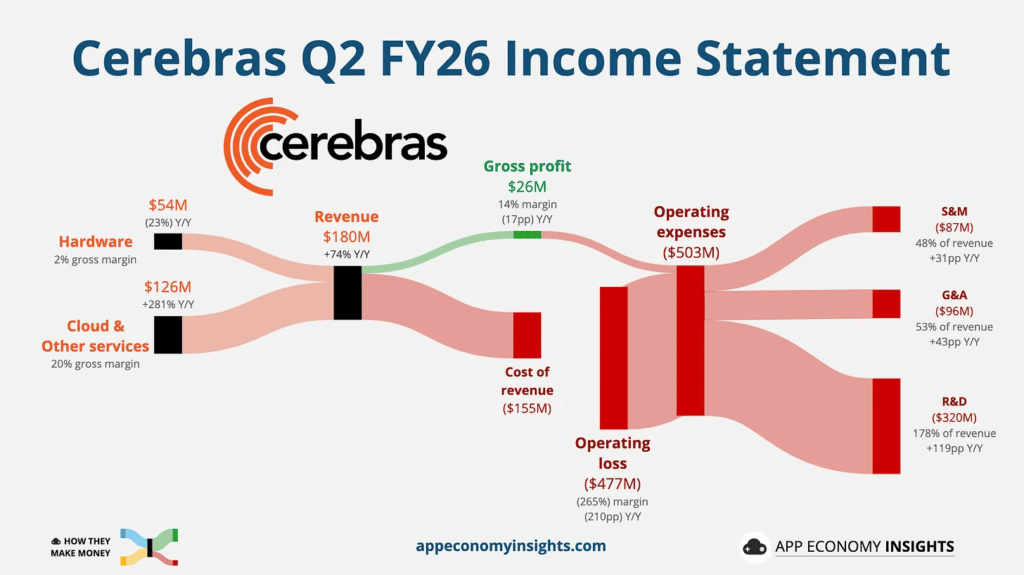
Cerebras is taking a different route by using its own AI processors rather than relying on Nvidia GPUs. Q2 revenue rose 74% to $180 million, while Cloud & Other Services jumped 281% to $126 million. Its remaining performance obligations reached $25.4 billion, showing that demand is running well ahead of current revenue.
The common challenge is clear: AI demand is not the problem. Funding the infrastructure needed to meet that demand is.
Investor takeaway: Neoclouds are benefiting from a genuine shortage of AI computing capacity, but revenue growth alone will not determine the winners. The companies that can build capacity quickly while controlling debt, improving margins and generating better returns on each new data center are likely to have the strongest long-term position.
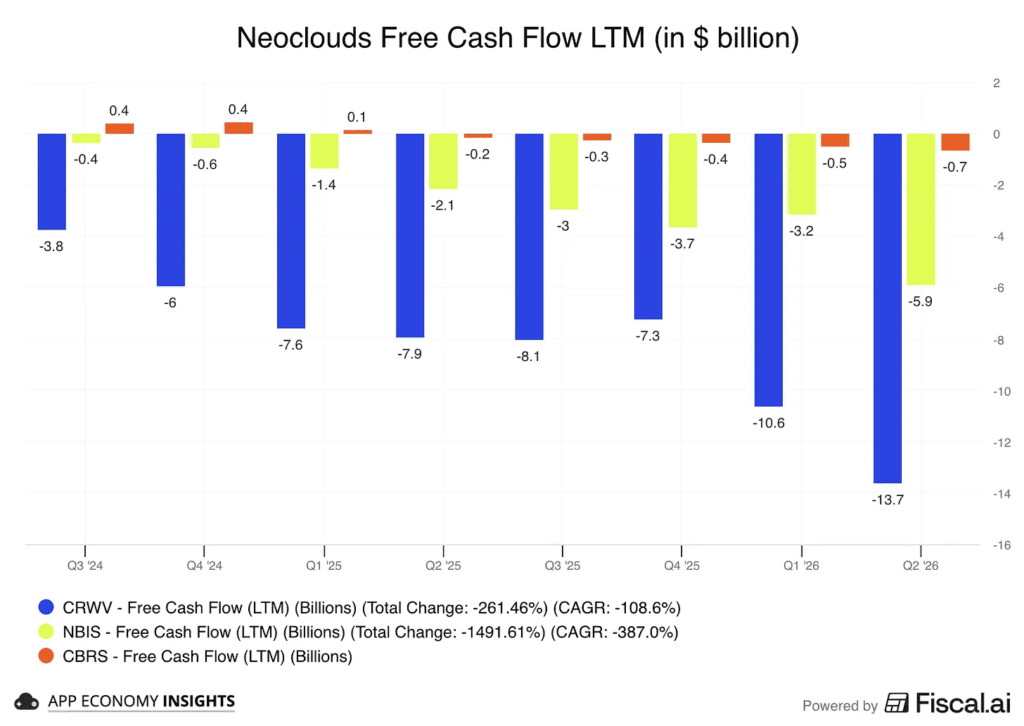
Source: App Economy Insights
Disclosure: This article does not represent investment advice. The content and materials featured on this page are for educational purposes only.