

With the US midterm elections approaching, Donald Trump has returned to a familiar claim: Canada should become America’s 51st state. The timing brings trade tensions and Canadian sovereignty back into a campaign increasingly shaped by economic frustration.
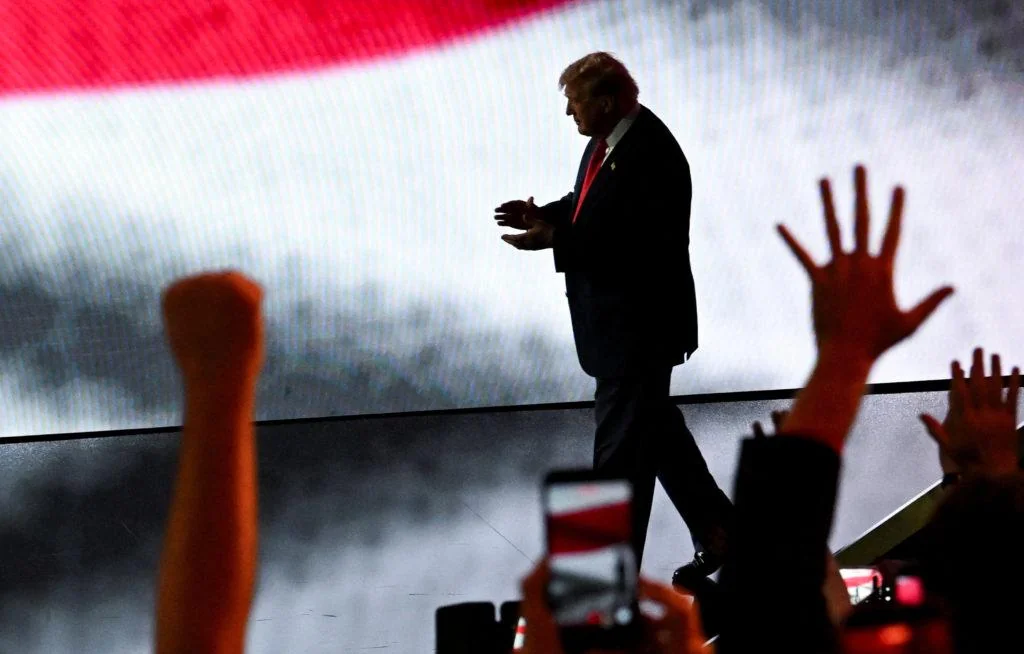
At an Arizona rally on October 14, Trump said Canada would eventually join the United States because “that’s the only way it works.”
The words were familiar. Their return, less than three weeks before the November 3 elections, gives them a new political setting.
Why bring Canada back into the campaign?
Analysts interviewed by Global News suggest the rhetoric could rally supporters, but risks alienating voters in border states.
The economic relationship makes that a delicate calculation. Businesses and communities on both sides of the border depend on trade, tourism and integrated supply chains. Escalating political tension can complicate the predictability they want from Washington and Ottawa.
The latest remarks also coincided with US Ambassador Pete Hoekstra warning Canadian politicians against interfering in American politics. Industry Minister Mélanie Joly rejected that accusation, saying her activities in the US focused on attracting investment.
Related: Trump Says Canada Will Become the 51st State.
Seven moments that brought the claim back
A retrospective by Ellie Hutchings, published on Yahoo News, traces seven occasions when Trump raised the idea:
- October 2026: The Arizona rally. Trump repeated the statehood claim while criticising Canada’s treatment of the US and discussing trade grievances.
- June 2026: Canada’s technical recession. He posted “51st state!” alongside an economic report. Hoekstra shared the post shortly before Canadian and American trade officials were due to meet.
- September 2025: Missile defence. Addressing military officials in Virginia, Trump suggested Canada could receive access to the proposed Golden Dome defence system for free by joining the US.
- April 2025: Canada’s election day. Trump urged Canadians to elect someone willing to pursue statehood, promising lower taxes and expanded industry. In a separate TIME interview, he denied that the idea was merely a joke.
- February 2025: The Super Bowl interview. Asked whether annexation was a serious proposition, Trump answered yes and linked it to his claims about the cost of trading with Canada.
- January 2025: “Economic force.” Before his inauguration, Trump suggested economic pressure could bring the countries together and described their border as artificially drawn. Then-Prime Minister Justin Trudeau rejected the prospect.
- November–December 2024: The Trudeau dinner. Trump first floated the idea during dinner at Mar-a-Lago, then publicly referred to Trudeau as Canada’s “governor.”
The recurring theme is economic pressure
Across those episodes, Trump has connected statehood to trade, defence costs, tariffs and economic weakness. That pattern helps explain why the claim keeps returning during disputes with Ottawa.
It does not establish that a formal annexation process is underway, or prove a single motive behind the latest speech.
The immediate question is whether reviving the claim helps Trump’s campaign or makes an already difficult trading relationship harder to repair. For businesses, actual tariff decisions will matter more than another declaration from the rally stage.
Disclosure: This article does not represent investment advice. The content is for informational and educational purposes only.