
The dollar is trading near an 18-month high as Europe’s debt pressures and energy costs weaken the euro, while elevated US interest rates keep American assets attractive.
The dollar index rose to around 102.40 on October 8, while the euro traded near $1.1174, according to Reuters. Federal Reserve minutes reinforced concerns about inflation, supporting expectations that another rate increase remains possible.
Europe’s problems strengthen the dollar’s appeal
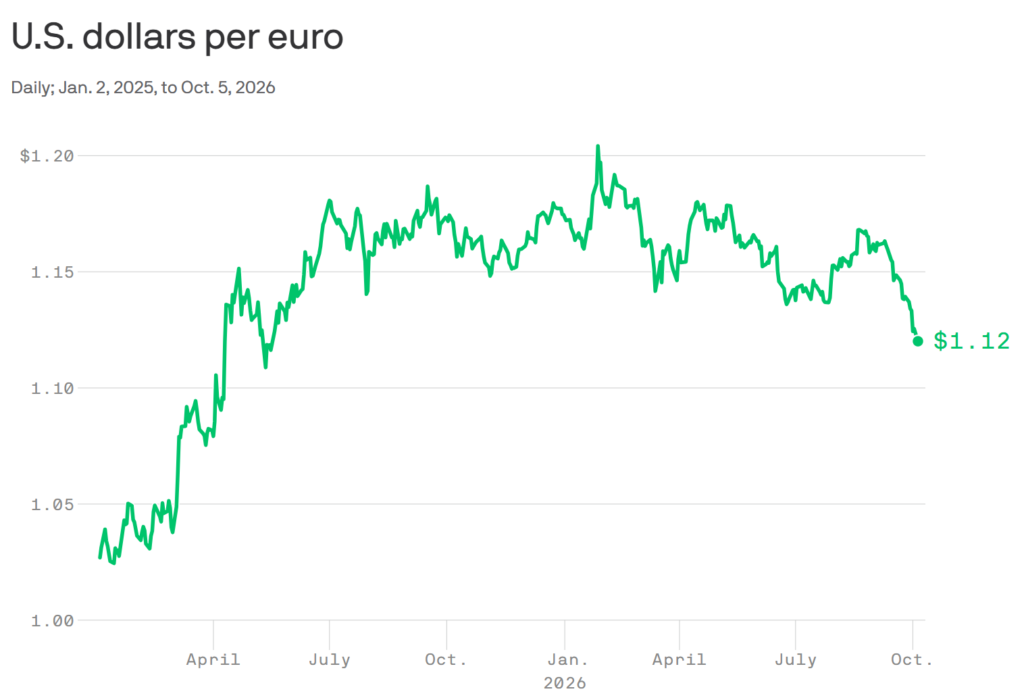
Axios reported that the euro had fallen approximately 4% since September 8 by October 5, amid French fiscal concerns and Spanish political uncertainty.
The currency pressure extends beyond France. Europe’s dependence on imported energy leaves businesses and households exposed to rising fuel costs, complicating efforts to control inflation without weakening growth.
“The euro remains under pressure, limiting one of the dollar’s main alternatives,” Mesirow Currency Management strategist Uto Shinohara told Reuters in its analysis of the dollar’s rally.
Higher European rates are not enough
Higher interest rates can attract investors to a currency. But that support can fade when rising yields reflect concern about government finances or damage to economic growth.
The ECB’s September rate increase failed to lift the euro as investors focused on those risks. Meanwhile, expectations of further Fed tightening continue to support the dollar.
Macro Hive researcher Benjamin Ford forecast a move toward $1.10 within a month. That remains an analyst projection, rather than an assured destination for the exchange rate.
Related: Fed Rate Hike Could Trigger Another Painful Surge in US Treasury Yields.
What a weaker euro changes
For European households and companies, a weaker euro raises the local-currency cost of dollar-priced purchases, including energy. Exporters may benefit from more competitive prices abroad, although imported production costs can offset that advantage.
For euro-based investors holding unhedged US assets, dollar appreciation can increase returns when converted home. A reversal would work in the opposite direction.
The dollar’s strength reflects both US rate support and Europe’s difficulties. Its next move will depend on whether those differences widen or begin to narrow.
Disclosure: This article does not represent investment advice. The content is for informational and educational purposes only.