

Sudden drops in your investment portfolio can test even the most carefully crafted financial plans. For adult professionals and individual investors, understanding risk tolerance is more than just a buzzword—it is the critical factor that determines whether you stay calm or make costly decisions when markets are volatile. By learning what truly shapes your comfort with risk and how it interacts with your personal and financial situation, you lay the groundwork for smarter investment strategies that fit your real-world needs and emotions.
Table of Contents
- Core Meaning of Risk Tolerance Explained
- Types of Risk Tolerance: Conservative to Aggressive
- Key Influences: Age, Goals, Income, and Experience
- Assessing Your Risk Tolerance Accurately
- Practical Impact on Portfolio Choices
- Common Pitfalls and Mistakes to Avoid
Key Takeaways
| Point | Details |
|---|---|
| Understanding Risk Tolerance | Risk tolerance reflects your capacity and emotional comfort with investment fluctuations and varies based on individual temperament and financial circumstances. |
| Impact of Personal Circumstances | Age, income stability, and life goals significantly influence one’s risk tolerance and should be assessed regularly. |
| Categories of Risk Tolerance | Investors can be categorized as conservative, moderate, or aggressive, each requiring different asset allocations and strategies aligned with their risk comfort. |
| Continuous Self-Assessment | Regularly reassessing your risk tolerance is crucial, as personal situations and market conditions change over time. |
Core Meaning of Risk Tolerance Explained
Risk tolerance is your personal capacity and willingness to endure fluctuations in your investment portfolio without losing sleep or making panic-driven decisions. It’s not just about how much money you can afford to lose. Rather, it reflects your emotional ability to watch your investments rise and fall, and your psychological comfort with uncertainty. Think of it as the bridge between what you theoretically understand about market volatility and what you can actually stomach in practice. Someone with high risk tolerance can remain calm when their portfolio drops 20% in a month. Someone with low risk tolerance might feel genuine anxiety at even a 5% dip. The difference isn’t always about age or income. It’s about your individual temperament, past experiences with money, and how you’re wired psychologically.
Research on risk tolerance in financial decision making reveals that people often behave differently than their initial feelings suggest. You might think you’re comfortable with market swings, but when actual losses happen, your actions tell a different story. This gap between what people say they want and what they actually do reveals the complexity underlying risk tolerance. It encompasses rationality, emotion, and cognitive factors working together. An investor with excellent analytical skills might freeze when faced with real losses. Conversely, someone emotionally stable might panic-sell despite understanding investment principles. This is why determining your actual risk tolerance requires honest self-reflection, not just theoretical calculation.
Beyond emotions, risk tolerance ties directly to your financial circumstances and life stage. A 28-year-old earning $95,000 annually with no dependents faces entirely different pressures than a 55-year-old approaching retirement with college tuition bills looming. Your household situation, income stability, existing debts, and timeline until you need the money all shape how much volatility you can reasonably handle. The role of risk tolerance in balancing risk and reward strategies shows how these personal factors influence investment decisions. Someone with emergency savings covering twelve months of expenses can weather market downturns differently than someone with only two months set aside. Your job security matters too. A tenured university professor has different risk capacity than a freelance consultant with irregular income. Risk tolerance also connects to your broader financial goals. If you need your portfolio to fund your lifestyle in five years, your risk tolerance is naturally lower than if you’re investing for a goal thirty years away.
Understanding your risk tolerance means recognizing both dimensions: your financial capacity to take risks and your emotional bandwidth to handle them. Financial capacity depends on factors you can measure like income, savings rate, and time horizon. Emotional capacity depends on your personality, your money history, and how you respond under pressure. You might have substantial financial capacity but limited emotional capacity, or vice versa. The goal isn’t to force yourself into an uncomfortable mold. Instead, it’s building an investment strategy that aligns with where you actually stand today, not where you think you should stand.
Pro tip: Write down how you felt during the last significant market correction you experienced, then honestly assess whether your portfolio allocation matched your actual comfort level, not your theoretical comfort level.
Types of Risk Tolerance: Conservative to Aggressive
Investor risk tolerance exists on a spectrum, ranging from conservative investors who prioritize capital preservation to aggressive investors willing to accept significant volatility for growth potential. Understanding where you fall on this spectrum shapes every investment decision you make. The categories aren’t arbitrary divisions. They reflect real differences in how people approach uncertainty, what keeps them awake at night, and what gives them confidence in their financial future. A conservative investor might allocate 80% of their portfolio to bonds and stable assets, accepting lower returns in exchange for predictability. An aggressive investor might have 80% in stocks, willing to ride out market swings for the possibility of stronger long-term gains. Most people fall somewhere in the middle, which is where moderate or balanced risk tolerance comes in.
Conservative investors prioritize stability and predictable income over growth. These are often people nearing or in retirement, those with short time horizons for their money, or individuals with genuinely low emotional tolerance for watching investments fluctuate. A conservative portfolio typically includes a high proportion of bonds, dividend-paying stocks, and cash equivalents. When the market drops 15%, a conservative portfolio might only decline 7 or 8%, which feels manageable rather than terrifying. The trade-off is real though. Over a 30-year period, a conservative portfolio might grow your wealth by 4 or 5% annually, while a more aggressive approach could deliver 7 or 8% annually. That difference compounds significantly. Moderate or balanced risk tolerance sits in the middle ground, mixing growth-oriented investments with stability. This typically looks like 50-60% stocks and 40-50% bonds, adjusted based on individual circumstances. Moderate investors understand they need growth to reach long-term goals, but they also need to sleep at night. Aggressive investors, on the other hand, can tolerate and even expect significant portfolio swings. These are often younger investors with decades until retirement, those with stable high incomes and substantial emergency savings, or people whose financial security doesn’t depend on their investment portfolio. Different investor risk tolerance levels influence portfolio management decisions in distinct ways, requiring tailored approaches to asset allocation. An aggressive portfolio might be 90% stocks, 10% bonds, accepting 20-30% annual swings to pursue higher long-term returns.

What makes this classification useful is recognizing that your type isn’t fixed. Life changes reshape your risk tolerance. A 35-year-old who was comfortable with aggressive investing might shift toward moderate or balanced strategies after getting married and having children. Someone who inherited significant assets might have more financial capacity for risk even if their emotional tolerance remains conservative. The key is matching your actual portfolio to your actual risk tolerance, not the one you think you should have. Many investors make the mistake of building a portfolio during calm market conditions when they feel confident, only to panic-sell during downturns when reality hits. This is why determining your true category matters more than trying to force yourself into an ambitious one.
Think of risk tolerance categories as frameworks for decision-making rather than permanent labels. A conservative investor might temporarily take on moderate risk for a specific goal with a defined timeline. An aggressive investor might move money to a stable account before a major life purchase. The sophistication comes from understanding your baseline, recognizing how circumstances shift that baseline, and making intentional adjustments rather than reactive ones. Your portfolio should reflect who you actually are today, with flexibility built in as life evolves.
Here’s a structured comparison of investor risk tolerance categories and their typical portfolio strategies:
| Category | Asset Allocation | Typical Investor Profile | Expected Long-Term Return |
|---|---|---|---|
| Conservative | 20-40% stocks, 60-80% bonds | Nearing retirement, seeks stability | 4-5% annually |
| Moderate | 50-60% stocks, 40-50% bonds | Middle-aged, balanced goals | 6-7% annually |
| Aggressive | 80-90% stocks, 10-20% bonds | Young, high income, long horizon | 7-9% annually |
Pro tip: Assess your risk tolerance by asking yourself how you actually behaved during the last major market correction, then compare that to your current portfolio to see if they match, rather than answering hypothetical questions about how you think you’d react.
Key Influences: Age, Goals, Income, and Experience
Your risk tolerance isn’t determined by a single factor. Instead, it’s shaped by a combination of interconnected life circumstances that work together. Age matters, but not in the way many people assume. A 25-year-old working retail doesn’t automatically have the same risk capacity as a 25-year-old lawyer earning $150,000 annually. Income level, financial goals, work stability, and past investment experiences all weave together to create your unique risk profile. Understanding how these factors interact helps you build a strategy that actually works for your life, not for some theoretical investor in a textbook.
Age influences risk tolerance primarily through your time horizon. A 28-year-old has 35 or 40 years until retirement, which provides a lengthy recovery period if investments tank. Market downturns that feel catastrophic at 58 feel manageable at 28, simply because time is on your side. But age alone tells an incomplete story. Demographic factors including age, income, and marital status shape financial risk tolerance in complex, nonlinear ways. Someone in their early 60s might have aggressive risk tolerance if they have substantial wealth, strong income, and no major obligations. Conversely, a 35-year-old with significant debt, unstable employment, and family dependents might lean conservative despite having decades of earning ahead. Income and wealth accumulation play major roles here. Higher income doesn’t just give you more money to invest. It provides breathing room to weather downturns without panic. Someone earning $250,000 annually can handle a 30% portfolio drop more psychologically than someone earning $50,000, simply because the financial impact feels less existential. Wealth also creates risk capacity. If you have $500,000 in liquid assets and lose $100,000 in a market correction, you still have $400,000. If you have $30,000 in savings and lose $6,000, the percentage hit is identical, but the emotional impact differs dramatically.
Your specific financial goals directly shape how much risk you can tolerate. Someone investing for a goal 30 years away can afford to be aggressive, accepting volatility as the price of higher long-term returns. Someone investing to fund their child’s college education starting in 5 years needs much more stability. Think about a freelance consultant earning inconsistent income versus a tenured university professor with rock-solid paychecks. The consultant has greater financial vulnerability, which naturally lowers appropriate risk tolerance regardless of age or income level. Previous investment experience matters too, though not always in obvious ways. Someone who lived through the 2008 financial crisis and watched their portfolio drop 40% learned something irreplaceable about their actual emotional tolerance. That experience often creates more realistic assessments than someone who’s only experienced bull markets. Conversely, someone with genuinely no investment experience might overestimate their tolerance, imagining they can handle volatility until they actually experience it.
Marital status and family obligations reshape your risk calculation entirely. A single person with no dependents can take risks a person supporting three children simply cannot. Not just because of different financial responsibilities, but because the psychological weight differs. When you’re responsible only for yourself, you can recover from investment mistakes. When you’re responsible for others, that same mistake feels catastrophic. Work stability matters too. A stable, permanent position with steady income allows for more aggressive investing than contract work or seasonal employment. Your situation today may differ from your situation in five years, which is why reassessing these influences periodically matters. The person you are at 35 with a secure job, no kids, and significant savings might be completely different from the person you are at 37 with two kids, a mortgage, and a partner who changed careers. That shift isn’t weakness. It’s reality.
Pro tip: List your current age, annual income, major financial goals with timelines, and job stability rating, then honestly assess whether your investment risk level matches these concrete factors or if you’re taking more or less risk than your actual situation supports.
Key influences on risk tolerance interact in unique ways for every investor:
| Influence | How It Impacts Tolerance | Situations Where It Dominates | Typical Effect |
|---|---|---|---|
| Age | Longer horizon increases risk-taking | Early career or near retirement | More risk when younger |
| Income | Stable/high income supports capacity | High salary or self-employment | Enables higher risk |
| Life Goals | Short timelines reduce risk level | Funding tuition, buying home | Pushes to conservatism |
| Past Experience | Shapes emotional responses | Previous market crashes, major gains | May limit future risks |
Assessing Your Risk Tolerance Accurately
Accurate self-assessment beats guesswork every single time. The difference between your perceived risk tolerance and your actual risk tolerance can derail your entire investment strategy. Many investors take a quick online quiz, get a result suggesting they’re “moderate,” and build a portfolio based on that assumption. Then the first significant market correction hits, and they realize they can’t actually tolerate that level of volatility. The problem isn’t the investor. It’s the assessment method. Generic questionnaires don’t capture the complexity of how you really respond under pressure. Accurate assessment requires honest reflection about your past behavior, your current circumstances, and your emotional reactions to specific scenarios. It means looking at what you actually did during stressful market periods, not imagining what you think you would do.
Start by examining your historical reactions to market downturns. If you lived through 2020 when markets dropped 30% in weeks, did you panic-sell, hold steady, or buy more? If you weren’t investing then, look at other high-stress financial moments. Did you make rational decisions or emotional ones? How did you feel watching your savings fluctuate? This isn’t theoretical. Risk tolerance assessment involves understanding your emotional and financial responses to market volatility in concrete situations, not hypothetical ones. Someone might confidently say they can handle a 30% portfolio drop until they actually experience one and realize losing $30,000 keeps them awake at night. Real assessment requires moving beyond questionnaires to genuine self-knowledge. Ask yourself specific questions. If your portfolio dropped 20% tomorrow, would you want to check it daily or avoid looking at statements entirely? Would you feel compelled to rebalance or would you ignore it? Would you see it as a buying opportunity or a warning sign? Your instinctive answers reveal more than carefully considered ones. Your body’s response matters too. Does volatility create physical anxiety like tension or sleep disruption? That signals lower emotional tolerance regardless of what logic suggests.
Your financial circumstances deserve equal attention. Document your actual situation with specificity. Write down your monthly expenses, your emergency fund balance in months, your income stability rating, your major upcoming expenses, and your investment timeline for different goals. This isn’t optional. Vague financial awareness leads to vague risk assessments. Someone with two months of emergency savings has different risk capacity than someone with twelve months, period. Someone with variable quarterly income cannot tolerate the same portfolio volatility as someone with guaranteed steady paychecks. Someone needing funds in three years cannot pursue the same strategy as someone investing for thirty years. These aren’t opinions. They’re constraints. Once you have this foundation, stress-test your comfort level with concrete numbers. Don’t ask “Can I tolerate volatility?” Instead ask “If my $100,000 portfolio dropped to $75,000 next quarter, could I still sleep at night and hold without selling?” The specificity matters. Some people can psychologically handle a 5% drop but panic at 15%. Others have a higher threshold. Understanding your personal breaking point matters more than knowing what category you fit into.
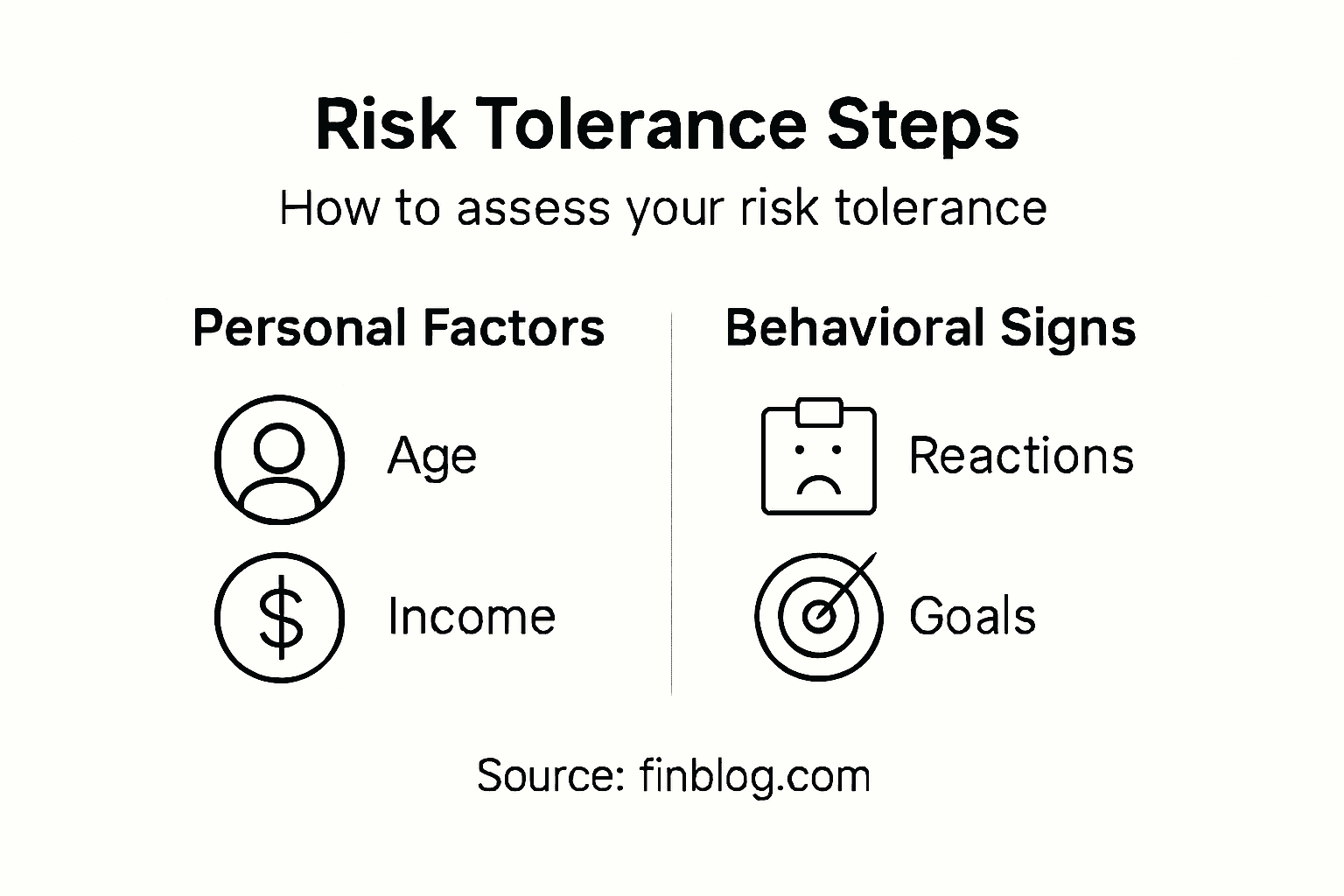
Consider getting a formal assessment rather than relying on intuition alone. Structured approaches help identify blind spots that self-assessment misses. You might discover that your risk tolerance varies by investment type. Some people can tolerate stock volatility but feel intense anxiety about options trading. Others accept portfolio swings but panic about individual stock concentration. These distinctions matter for building a strategy that actually works. Finally, reassess periodically. Your risk tolerance isn’t static. Major life changes alter your capacity and comfort level. A job loss, inheritance, divorce, or health issue shifts your risk profile. Promotions, bonuses, and debt payoffs shift it differently. What worked at 35 might not work at 45. What you could handle single might feel different married with kids. Build in annual reviews of your risk tolerance against your current reality. This ensures your portfolio continues matching who you actually are, not who you were.
Pro tip: Write down the exact portfolio value that would trigger panic selling for you, then work backward to determine what asset allocation keeps you below that threshold, rather than starting with an allocation and hoping it fits your comfort level.
Practical Impact on Portfolio Choices
Risk tolerance isn’t abstract. It directly determines what goes into your portfolio. Understanding this connection transforms how you invest. A conservative investor’s portfolio looks radically different from an aggressive investor’s portfolio, not because one is right and one is wrong, but because they have different capacities and comfort levels. This isn’t theoretical discussion. These choices affect your actual returns, your stress levels, and your ability to stay the course during market turbulence. Getting this alignment right means you build a portfolio you can actually live with, rather than one that looks good in theory but causes panic during volatility.
Consider asset allocation first. This is your biggest decision lever. Asset allocation means the percentage breakdown between stocks, bonds, real estate, and cash in your portfolio. A conservative investor might use 30% stocks and 70% bonds. An aggressive investor might use 90% stocks and 10% bonds. The difference is substantial. Over 30 years, that allocation decision likely determines more of your returns than any other choice you make. Stock market returns fluctuate wildly. A stock-heavy portfolio might gain 25% one year and lose 15% the next. A bond-heavy portfolio might gain 6% and lose 2%. If you’re conservative by nature, the wild swings of the aggressive portfolio will push you toward panic-selling at exactly the wrong moments. If you’re aggressive, a conservative portfolio won’t deliver the growth you need, and you’ll become frustrated watching safer investments creep upward. Asset allocation decisions in portfolio management are fundamentally shaped by investor risk tolerance levels rather than by guessing about what might work. The right allocation is the one you can actually hold through multiple market cycles without emotional capitulation.
Risk tolerance also influences your security selection within each asset class. A conservative investor choosing stocks might gravitate toward large, established companies with consistent dividend payments. Blue chip stocks from companies like Johnson and Johnson or Procter and Gamble, which raise dividends regularly and rarely disappear, provide stability. An aggressive investor might choose small-cap growth stocks or emerging market companies with higher volatility but greater upside potential. Both own stocks, but the character differs significantly. The conservative investor accepts lower growth for lower volatility. The aggressive investor accepts volatility as the price of potential higher returns. Similarly, in bonds, conservatives might focus on government bonds and investment-grade corporate bonds. Aggressives might accept higher-risk bonds like high-yield corporates to boost returns. Your risk tolerance shapes these micro-decisions cascading through your entire portfolio. Diversification strategy changes too. A conservative portfolio needs more diversification across sectors and geographies to reduce single-point failures. An aggressive portfolio might concentrate more heavily in sectors you believe will outperform, accepting higher volatility from less diversification.
Rebalancing frequency and behavior also flow from risk tolerance understanding. Conservative investors often rebalance quarterly or semi-annually, maintaining their target allocations consistently. This disciplined approach prevents drift toward excessive risk. Aggressive investors might rebalance annually or only when significantly off-target, allowing winning positions to run and compounding their gains. The frequency itself reflects comfort with fluctuation. Your risk tolerance also determines whether you add to losing positions during downturns or pull back. An aggressive investor with high conviction and strong emergency reserves might buy more stocks when prices plummet. A conservative investor facing the same situation might hold steady or reduce exposure, protecting accumulated gains. Neither approach is wrong. They’re simply expressions of different risk tolerances operating according to their own logic. Finally, your chosen investment vehicles change. Conservative investors might use target-date funds or balanced funds with built-in allocation. Aggressive investors might build custom portfolios using individual stocks and sector ETFs. Conservatives might avoid leverage entirely. Aggressives might use margin or options for greater exposure. Understanding your risk tolerance prevents you from adopting strategies that sound appealing but create stress incompatible with your actual temperament.
Pro tip: Before choosing specific investments, write down your target allocation percentages by asset class, then imagine that allocation dropping 20% in value and ask yourself honestly if you could hold it or would feel compelled to sell, adjusting allocations upward only if you pass that emotional test.
Common Pitfalls and Mistakes to Avoid
Most investors make mistakes with risk tolerance not from ignorance but from predictable psychological patterns. Understanding these pitfalls helps you sidestep the traps that derail countless otherwise thoughtful investors. The mistakes fall into distinct categories: overestimating your actual tolerance, ignoring how tolerance changes over time, letting emotions override your assessment, and confusing risk tolerance with risk capacity. Each one feels reasonable in the moment. Each one creates real damage to your long-term strategy.
Overconfidence bias distorts how investors assess their own risk tolerance. During bull markets when stocks rise consistently, investors feel invincible and overestimate their ability to handle volatility. A rising market makes you feel like a sophisticated investor who can handle anything. Then the market corrects and suddenly that same investor who thought they could tolerate 30% swings panic at a 10% drop. Cognitive biases like overconfidence and availability heuristics significantly affect how investors misjudge their actual risk tolerance, leading to misaligned portfolios. The mistake compounds because you build a portfolio based on your inflated sense of tolerance, then feel forced to sell at the worst time when reality hits. Another common error is assuming your risk tolerance is static. Life changes reshape your capacity and comfort level, but many investors set their allocation once and ignore it for years. Someone who was comfortable with aggressive investing at 35 with no dependents might have very different tolerance at 40 with two kids and a mortgage. Job loss, inheritance, health issues, relationship changes, and market cycles all shift your baseline. The investor who doesn’t reassess annually ends up holding portfolios that no longer match their actual situation.
Emotional overreach creates another major pitfall. You see a friend’s investment success and decide to adopt their strategy without honestly assessing whether your emotional tolerance matches theirs. You read about some hot growth stock and convince yourself to add it despite knowing it conflicts with your risk profile. You chase performance, buying high after strong years, then panic-selling low after declines. These emotional decisions consistently underperform disciplined approaches aligned with actual risk tolerance. The mistake happens because investment decisions feel personal. Your friend’s success feels achievable until you discover you don’t actually have their stomach for volatility. Confusing risk capacity with risk tolerance creates a different but equally damaging problem. Risk capacity is what you can financially afford to lose. Risk tolerance is what you can emotionally handle losing. You might have substantial financial capacity for risk because you earn well and have emergency savings, but low emotional tolerance because volatility creates genuine anxiety. The opposite also occurs: someone might feel emotionally calm about market swings but lack financial capacity to recover from major losses. Building a portfolio based purely on capacity while ignoring tolerance leads to panic selling. Building a portfolio based purely on tolerance while ignoring capacity leads to insufficient growth for your goals.
Missing the reassessment window creates ongoing problems. Your risk tolerance isn’t assessed once then forgotten. Risk tolerance assessment requires continuous evaluation because both macroeconomic factors and personal circumstances change over time, making static profiles ineffective. Someone who took on aggressive risk in 2019 might need moderate risk by 2025 due to life changes. Someone in moderate risk might shift toward aggressive if they received an inheritance. The investor who fails to reassess annually finds their portfolio increasingly misaligned with their actual situation. This often leads to either taking excessive risk they can no longer tolerate or holding insufficient risk that won’t meet their goals. Finally, many investors mistake temporary emotions for permanent tolerance. A market correction creates genuine fear and you decide you can’t handle volatility. This might be your actual tolerance showing itself. Or it might be temporary panic you’ll regret acting on. The trick is distinguishing between your real tolerance being revealed versus a temporary emotional spike. This requires stepping back, examining historical behavior, and waiting at least several months before making major allocation changes.
Pro tip: Set a calendar reminder for your annual financial review where you assess current life circumstances against your portfolio allocation, explicitly checking whether major life changes happened and honestly evaluating your emotional responses during the past year’s market movements.
Align Your Investment Strategy with True Risk Tolerance
Understanding your real risk tolerance is key to building an investment portfolio you can confidently hold through market ups and downs. This article highlights common pitfalls like overestimating tolerance or ignoring how your financial situation and emotions evolve over time. If you find yourself uneasy about how your portfolio matches your comfort level or are unsure about adjusting your asset allocation based on your unique financial goals and personal circumstances, you are not alone.
Take control today by exploring tailored strategies that balance your emotional comfort with financial capacity. At finblog.com, you can access expert advice and practical tools designed to help you assess your true risk tolerance honestly and make informed decisions aligned with your life stage and goals. Don’t wait for the next market correction to realize your portfolio needs adjustment. Start with our insights on balancing risk and reward strategies and learn how to create an investment approach that fits who you really are now.
Visit finblog.com to get personalized guidance and take the first step toward smarter investment decisions that reduce anxiety and increase confidence.
Frequently Asked Questions
What is risk tolerance in investing?
Risk tolerance refers to an individual’s capacity and willingness to endure fluctuations in their investment portfolio without feeling anxious or making impulsive decisions. It reflects both emotional comfort with uncertainty and financial capability to handle potential losses.
How does risk tolerance affect my investment strategy?
Risk tolerance directly influences your asset allocation and investment choices. Conservative investors may prioritize stability and low volatility, while aggressive investors may seek higher returns despite substantial fluctuations. Understanding your risk tolerance helps build a portfolio that aligns with your comfort level and financial goals.
What factors influence risk tolerance?
Risk tolerance is shaped by several interconnected factors, including age, income, financial goals, past investment experiences, and current financial circumstances. Each of these elements contributes to how much volatility an individual can realistically handle without distress.
How can I assess my risk tolerance accurately?
To assess your risk tolerance accurately, reflect on your past reactions to market downturns, document your financial situation, and consider your emotional responses to hypothetical scenarios involving portfolio fluctuations. Avoid generic questionnaires and strive for honest self-reflection about how you truly feel during market stress.