

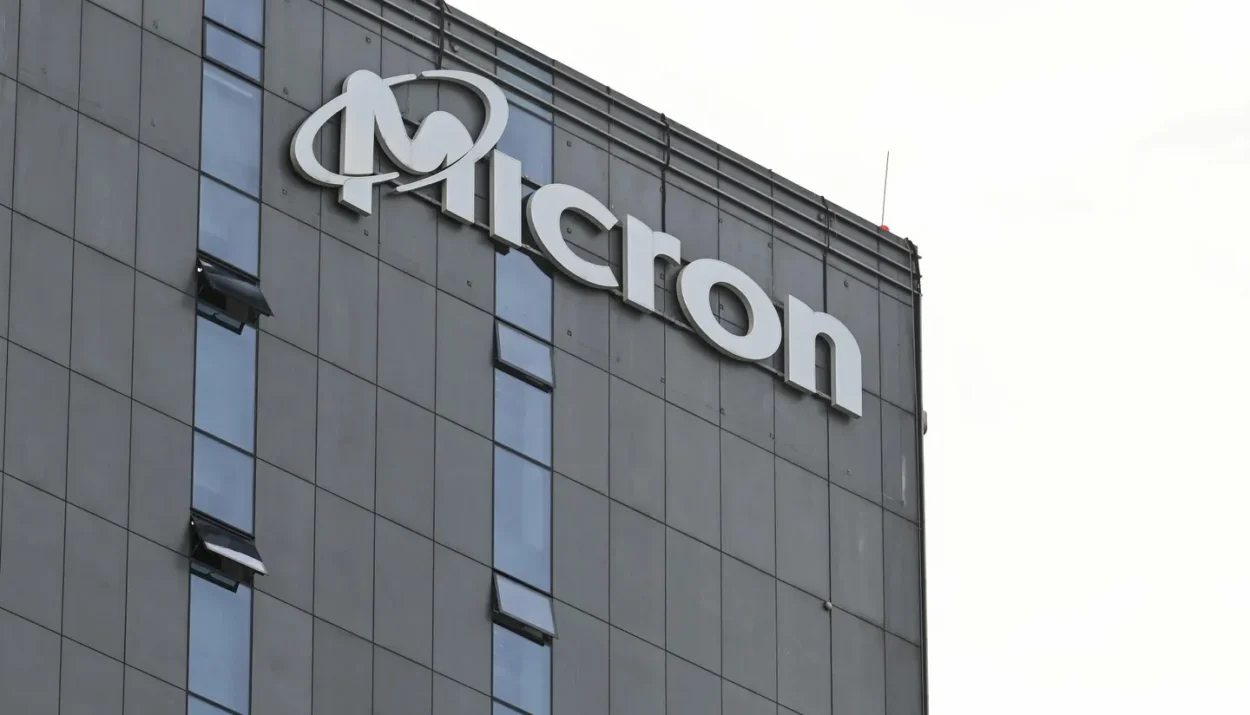

A year ago, Micron was rarely mentioned alongside the world’s most valuable technology companies. Today, the memory-chip maker has become one of the biggest beneficiaries of the AI boom, crossing a $1 trillion market value after one of the fastest rallies Wall Street has ever seen. The stock doubled in just 48 days and has surged roughly 14-fold over the past year as demand for AI memory continues to outpace supply.
The move has left investors asking a difficult question: Has Micron already had its moment, or could there still be meaningful upside ahead?
The company’s rise is being driven by a part of the AI ecosystem that often receives less attention than GPUs. While Nvidia powers AI models, Micron supplies the memory needed to keep those systems running efficiently. Its High Bandwidth Memory (HBM) products have become increasingly important as hyperscalers and cloud companies race to build larger AI infrastructure.
That demand is showing up directly in Micron’s results. The company recently reported nearly $24 billion in quarterly revenue, almost three times higher than a year earlier, while earnings and guidance comfortably beat Wall Street expectations. Investors are not simply buying into an AI story. They are seeing real revenue growth, improving margins, and a market where demand continues to exceed supply.
Several factors continue supporting the bull case:
- HBM demand remains extremely strong
- AI server deployments continue accelerating
- Memory inventories remain unusually low
- Production is largely committed through upcoming quarters
The supply picture may be one of the most important reasons analysts remain optimistic. Industry inventories have fallen sharply, while AI servers require significantly more memory than traditional systems. As a result, pricing power has improved across much of the memory market, creating conditions that few investors expected just a few years ago.
Another reason investors remain interested is valuation. Despite the stock’s extraordinary run, Micron still trades at a lower earnings multiple than many AI-related peers. Some analysts believe that gap could narrow if AI spending remains strong through 2027 and beyond, especially as cloud providers continue pouring billions into new infrastructure.
Of course, risks remain. Memory has historically been one of the semiconductor industry’s most cyclical businesses. If manufacturers add too much capacity or hyperscaler spending slows in future years, today’s shortage could eventually become tomorrow’s oversupply problem.
Still, that scenario appears distant for now. AI infrastructure spending continues rising, memory demand keeps growing, and Micron remains one of the clearest ways for investors to gain exposure to the broader AI buildout beyond GPUs.
The stock is no longer the overlooked AI play it once was.
But as long as AI companies need more memory, data-center expansion continues, and supply remains tight, Micron may still have room to benefit from one of the most powerful technology trends in decades.
The question is no longer whether Micron is participating in the AI boom.
The question is whether investors are underestimating how long that boom can last.
Disclosure: This article does not represent investment advice. The content and materials featured on this page are for educational purposes only.