


Wall Street’s biggest banks delivered stronger-than-expected second-quarter earnings, with market volatility driven by Middle East tensions and the ongoing AI investment boom fueling a surge in equity trading.
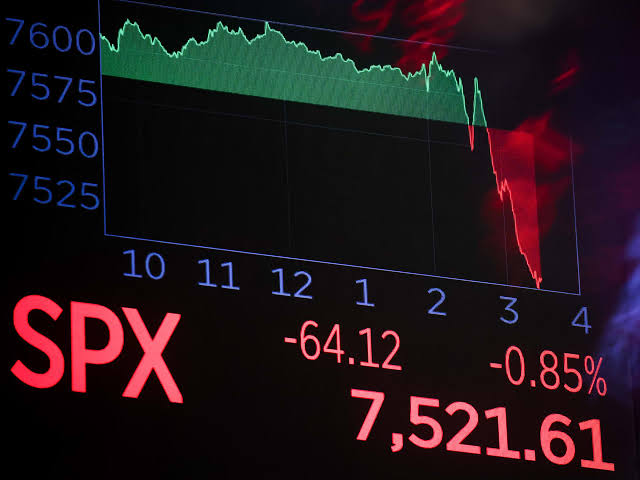
According to Bloomberg, sharp swings across global markets encouraged investors to trade more actively, helping major US banks outperform analysts’ expectations.
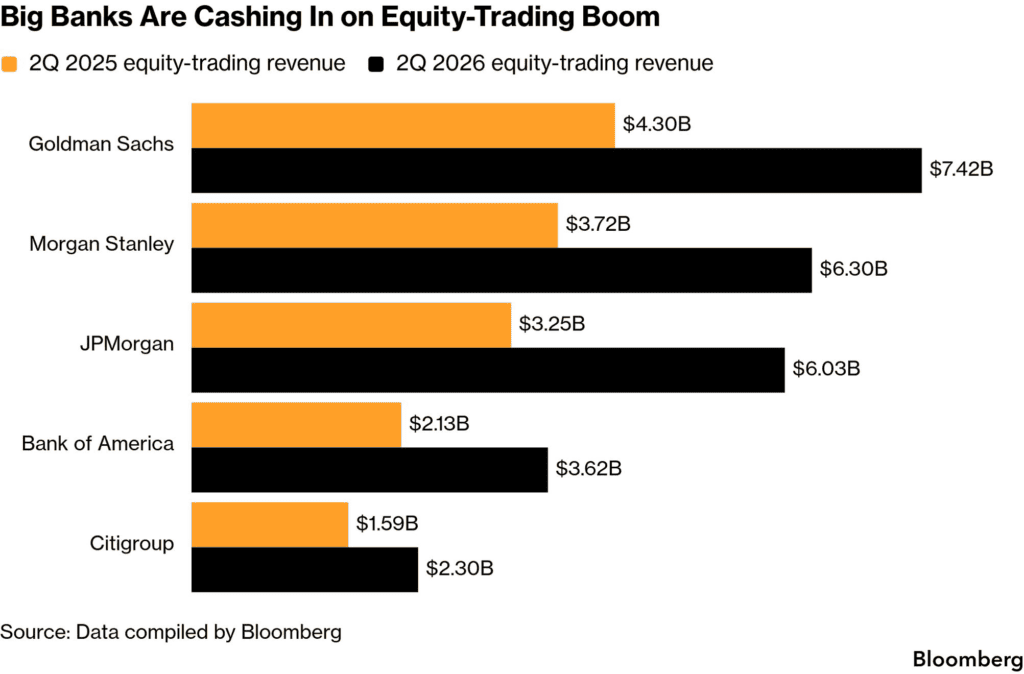
The trading boom came as geopolitical uncertainty intensified following the US-Israel conflict with Iran, while heavy investment in artificial intelligence continued to reshape financial markets. Increased volatility typically benefits banks’ trading businesses by generating higher client activity.
Strong equity trading offset weaker performance in other areas, with banks also benefiting from resilient dealmaking and capital markets activity linked to AI-driven investment.
Several major lenders reported robust results this month, including JPMorgan Chase, Goldman Sachs, Morgan Stanley, Bank of America and Citigroup, as trading desks capitalised on volatile stock markets and increased investor demand for AI-related assets.
However, analysts caution that the favourable environment may not last. If geopolitical tensions ease or AI investment slows, trading activity could moderate, reducing one of the banking sector’s strongest earnings drivers.
Investor takeaway: Market volatility has become a major profit engine for Wall Street banks. Investors will be watching whether geopolitical risks and AI-driven market activity remain strong enough to support trading revenues in the second half of the year.
Disclosure: This article does not represent investment advice. The content and materials featured on this page are for educational purposes only.