
Europe may have “maybe six weeks of jet fuel left”, according to the International Energy Agency, as the Iran conflict continues to disrupt critical energy flows.
The warning comes as the Strait of Hormuz remains effectively closed, cutting off a major supply route and sending fuel prices sharply higher.
The crisis has been building since the start of the war, when energy shipments from the Middle East slowed or stopped entirely. Europe, which relies on the region for around 75% of its jet fuel imports, is now scrambling to find alternatives.
Supplies from countries like the US and Nigeria have increased, but they are only expected to replace just over half of the lost volumes at best.
Why this is becoming serious
The concern is not just higher prices, but actual shortages.
If Europe cannot replace at least 50% of lost supply, the IEA warns that “physical shortages may emerge”, potentially leading to flight cancellations and reduced travel demand.
Even in a more optimistic scenario, shortages could still appear later in the summer.
Prices are already reacting
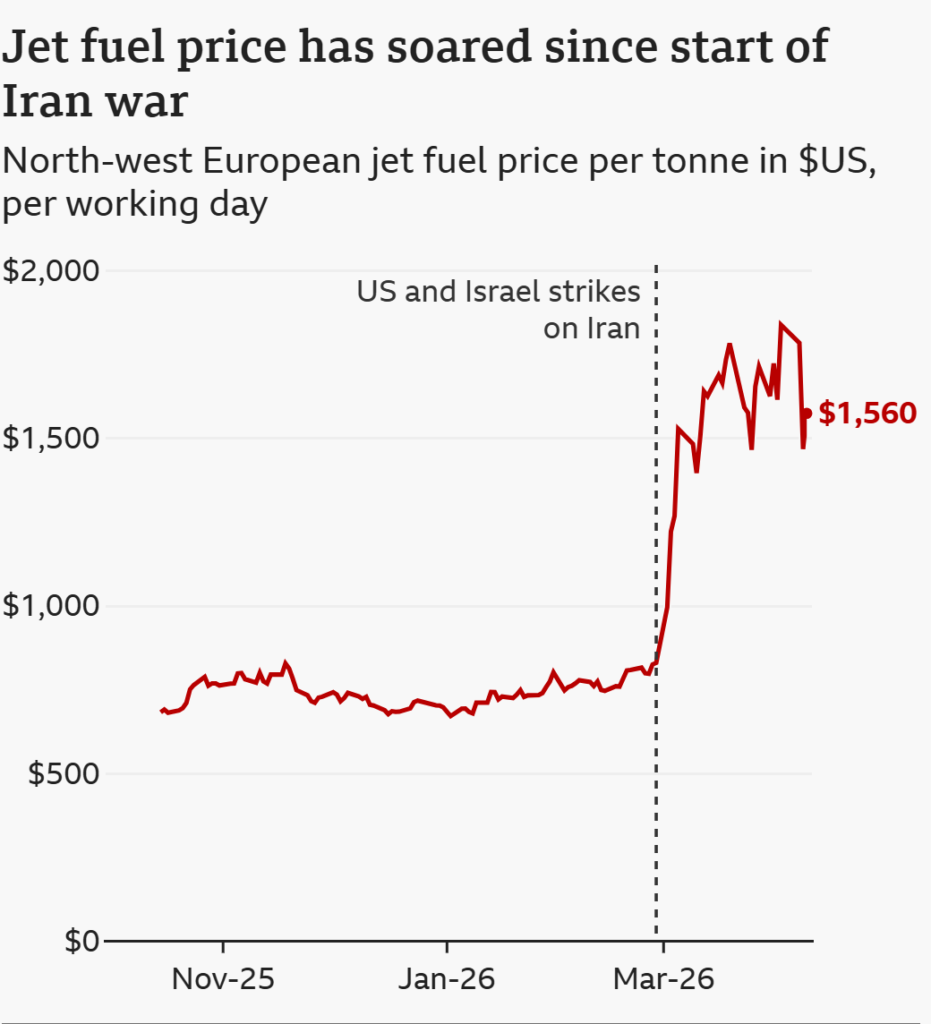
The impact is visible in the market. European jet fuel prices have surged to around $1,838 per tonne, more than double pre-war levels of $831.
Fuel is one of the biggest costs for airlines, typically making up 20% to 40% of operating expenses, meaning higher prices quickly hit profitability.
Some airlines are already taking action.
- One major carrier has announced 160 flight cancellations in Europe
- Others are warning about rising costs and uncertainty in demand
Even airlines that hedged fuel costs in advance are now feeling pressure as the situation drags on.
What happens next
For now, there is no immediate shortage, and officials say supply remains stable. But the timeline is tight.
Even if supply routes reopen soon, it could take five to six weeks for fuel flows to normalize, meaning disruption risks remain heading into the busy summer travel season.
Europe is not out of fuel yet, but it’s getting close to a tipping point. As long as the Strait of Hormuz stays restricted, the aviation sector faces a clear risk:
Higher costs, tighter supply, and potential disruption across flights in the coming weeks.
Related: What’s happening to UK petrol and diesel prices?
Disclosure: This article does not represent investment advice. The content and materials featured on this page are for educational purposes only.