
France’s rising borrowing costs are putting pressure on its government to deliver a credible budget, while reviving concerns about financial stability across the eurozone.
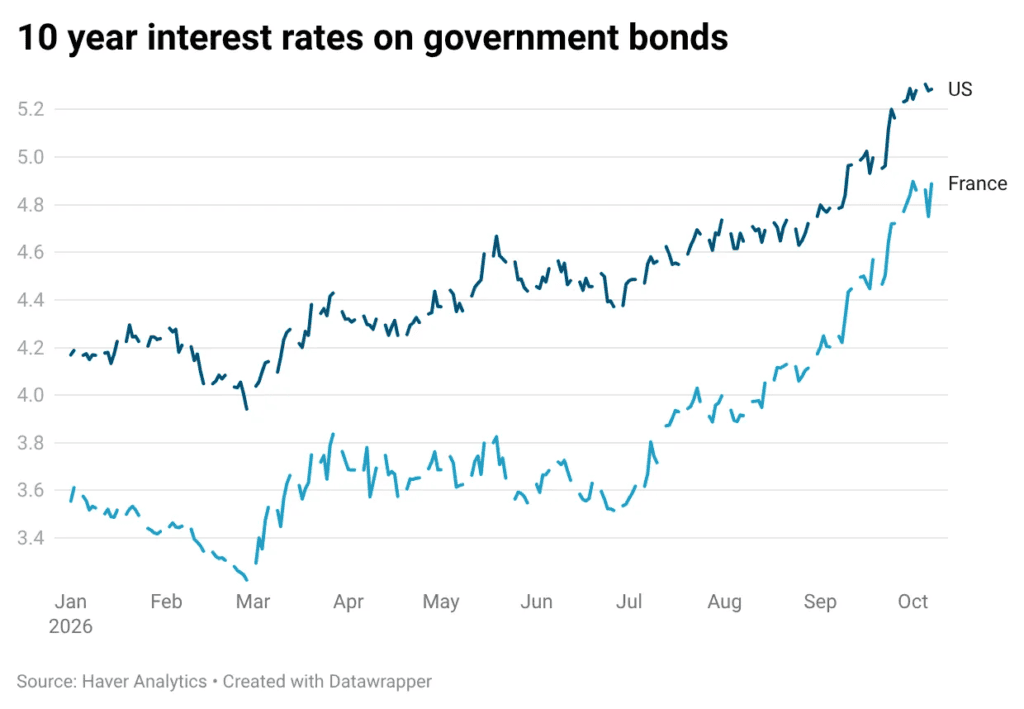
French 10-year government bond yields have approached 5%, climbing nearly 0.8 percentage points since early September. Reuters reported on October 8 that eurozone officials were urging Paris to approve its 2027 budget to calm markets. France expects to exceed its 5% deficit target this year and plans €340 billion in bond issuance next year.
Why investors are worried
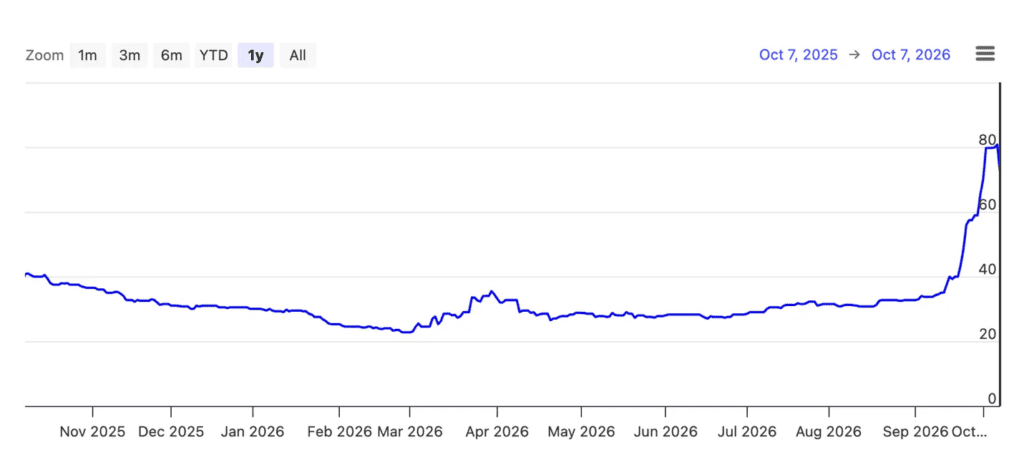
Axios reported that France’s borrowing premium over Germany reached 1.55 percentage points on October 2, highlighting investors’ growing caution.
In his October 8 analysis, economist Paul Krugman argues that persistent deficits, an aging population and political resistance to pension changes are weakening confidence in France’s finances.
The pressure comes ahead of the 2027 presidential election, making agreement on spending and taxation especially difficult. Krugman’s warning is about the risk of a worsening crisis, rather than a prediction that France will default.
Why the euro matters
France cannot independently create euros to meet its obligations. That makes confidence in its ability to refinance debt particularly important.
A damaging cycle can develop when investors demand higher interest rates, raising borrowing costs and making the government’s finances look less sustainable. Further selling can then intensify the pressure.
Krugman questions whether a rescue of the eurozone’s second-largest economy would command sufficient political support. His concern is that France’s size would make intervention both expensive and divisive.
Related: Global Spending Boom Could Keep Bond Yields Climbing.
Higher yields do not mean immediate default
Rising market yields do not instantly reset the interest rate on every outstanding bond. The cost builds as governments issue new debt and refinance maturing obligations.
That makes the budget’s credibility important before the full financing burden arrives.
France’s immediate test is whether it can convince investors that its debt is manageable and that its political system can deliver the necessary decisions.
Disclosure: This article does not represent investment advice. The content is for informational and educational purposes only.