
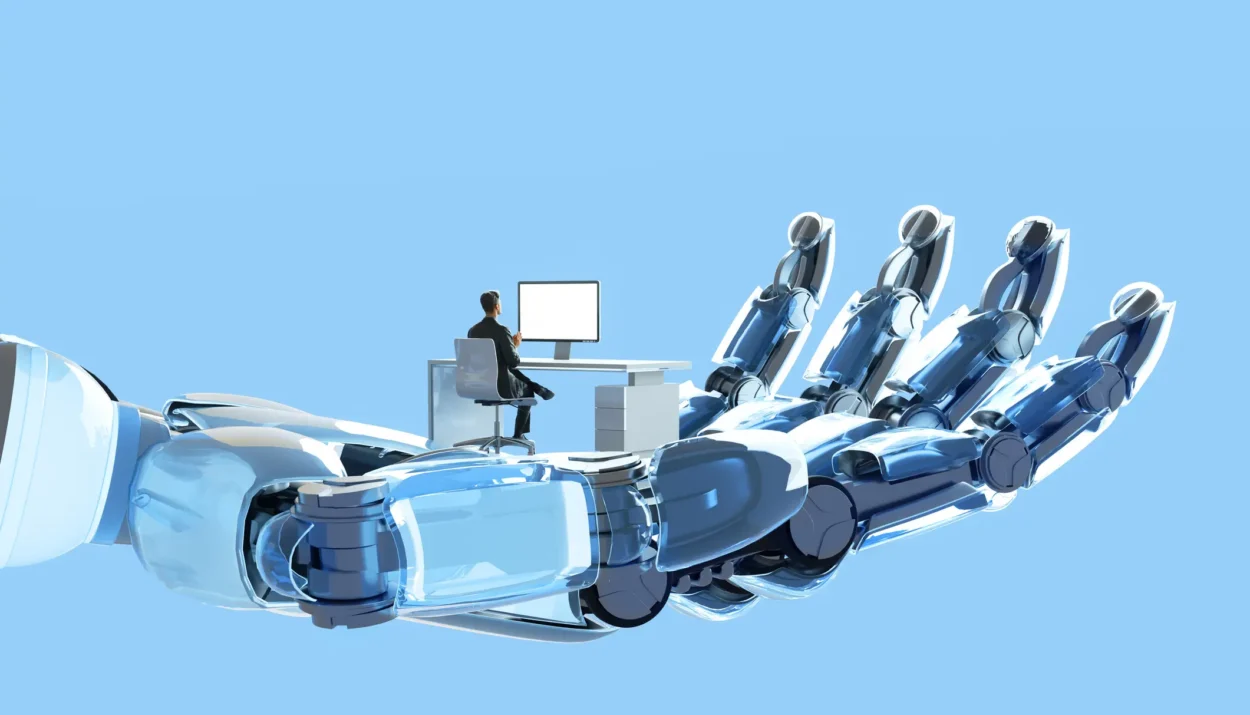

AI and robots could affect tasks representing 81% of US working time, according to Anthropic. That does not mean they can replace 81% of workers.
The company’s September 30 study measures task exposure, including work AI could accelerate and physical tasks robots can perform under limited conditions.
Its five main findings are:
- A new exposure measure: Researchers used Claude to assess existing robots’ capabilities.
- Physical work is already exposed: Robots can perform 74% of physical tasks, representing 34% of working hours, mostly in controlled settings.
- AI broadens the reach: Combined exposure reaches 81% of working time.
- Cost remains a major barrier: Robots are competitive with human labor for just 0.3% of work. Under historical price trends, reaching 10% could take 40 years.
- Past exposure mattered: Over five decades, more exposed occupations experienced greater subsequent wage and employment declines.
The combined figure also joins different measurements: AI exposure includes potentially halving a task’s completion time, while robot exposure concerns physical capability. It is not a direct forecast of unemployment.
Related: AI Is Driving Markets Higher, But Pressure on Consumers Is Growing.
For investors, the distinction matters when assessing automation companies. A demonstration shows technical progress; a customer still needs reliable performance and savings that justify the purchase.
The business opportunity depends on making automation economical, not simply showing that a machine can perform a task.
Disclosure: This article does not represent investment advice. The content is for informational and educational purposes only.