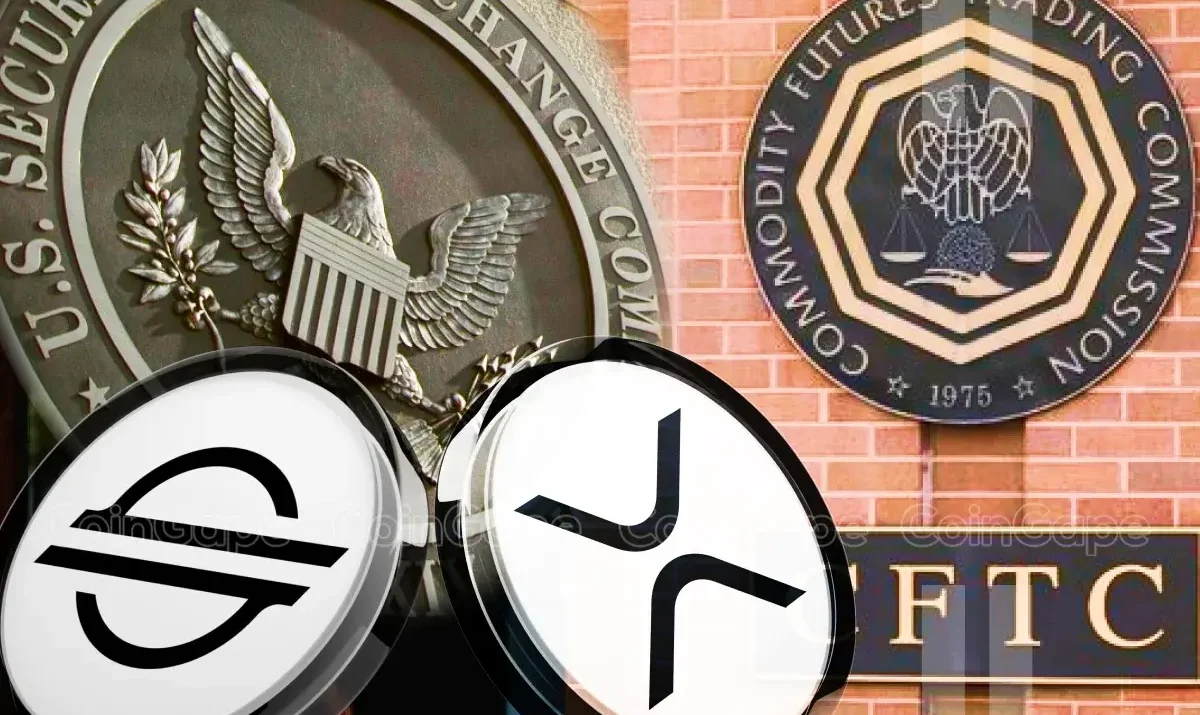

CFTC Chairman Michael Selig has highlighted XRP, Stellar and other major tokens as digital commodities while outlining a federal regulatory option for crypto exchanges offering leveraged retail trading.
Speaking on October 5, Selig cited Bitcoin, Ether, Solana, Stellar, Tezos and XRP as examples under the existing SEC-CFTC classification framework.
The comments reaffirm earlier guidance. They are not a new October designation of XRP or Stellar.
What the classification means
The SEC’s guidance lists these tokens among digital commodities that are not themselves securities. Its examples extend beyond the six assets highlighted by Selig.
However, classifying a token does not settle every legal question about products or transactions involving it. The agencies’ framework distinguishes the underlying asset from arrangements that may constitute investment contracts.
It also does not automatically place all ordinary spot trading under exclusive CFTC supervision.
A federal option for exchanges
The CFTC’s October 5 announcement opened public consultation on Regulation Crypto Asset Transactions and Regulation Crypto Asset Markets, known as CTX and CAM.
The initiative focuses on retail crypto transactions involving margin, leverage or financing. It considers a dedicated category of registered trading venue called a “crypto asset market.”
This is an advance notice seeking input, not a final rule already in force.
Selig’s stated priorities include:
- Anti-fraud and anti-manipulation protections.
- Safeguarding customer assets and separating brokerage, exchange and clearing functions.
- A federal registration option, rather than a blanket requirement covering every crypto exchange.
In his Fordham Law remarks, Selig said: “Only Congress has the authority to mandate that all crypto asset exchanges register with the Commission.” Existing requirements for covered leveraged retail transactions remain relevant.
Related: SEC Cancels Vote on New Crypto Rules at Last Minute.
The initiative could give exchanges a clearer federal route, but it does not eliminate every legal uncertainty or complete Washington’s crypto rulebook.
Disclosure: This article does not represent investment advice. The content is for informational and educational purposes only.