

Meta’s Muse AI assistant could change how people shop online, putting an agent between customers and the businesses competing for their money.
That is the central argument in App Economy Insights’ Meta Wants the Interface, which explores four shifts in online commerce. Muse reportedly surpassed 3.4 million downloads following its September 8 launch.
1. Meta wants to become your everyday assistant
Muse can work across services, helping users research purchases and arrange travel. Meta is also bringing it to AI glasses.
In its launch announcement, Meta says users can communicate with Muse through its app or WhatsApp. It can browse websites, complete forms and continue working after the app closes.
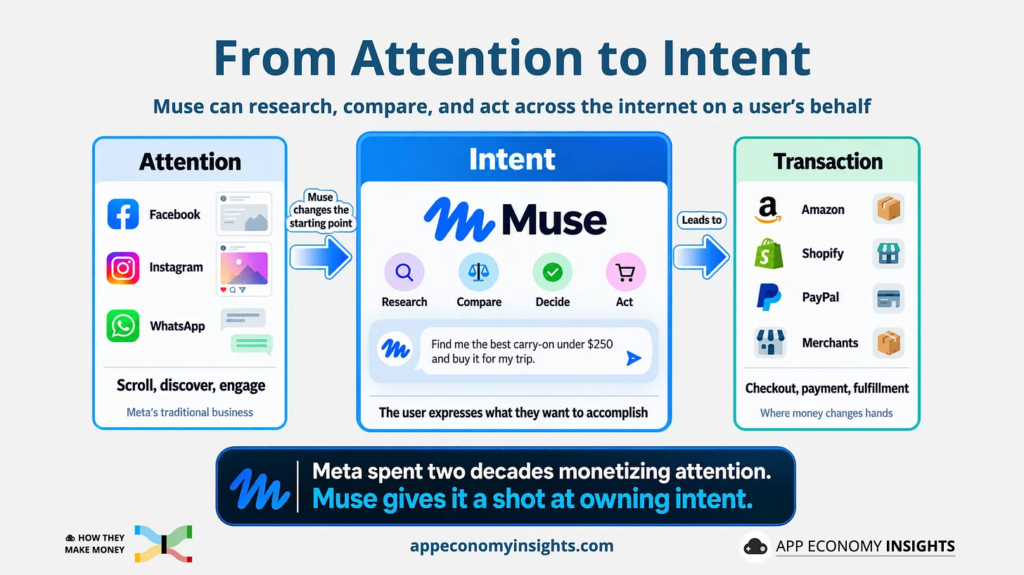
Users choose which services it can access, and Muse requests approval before actions such as purchases or sending emails. Meta says conversations and information stored in its dedicated virtual machine are not shared with its advertising systems. These are company assurances, rather than an independent assessment of its protections.
2. Amazon wants to protect the shopping journey
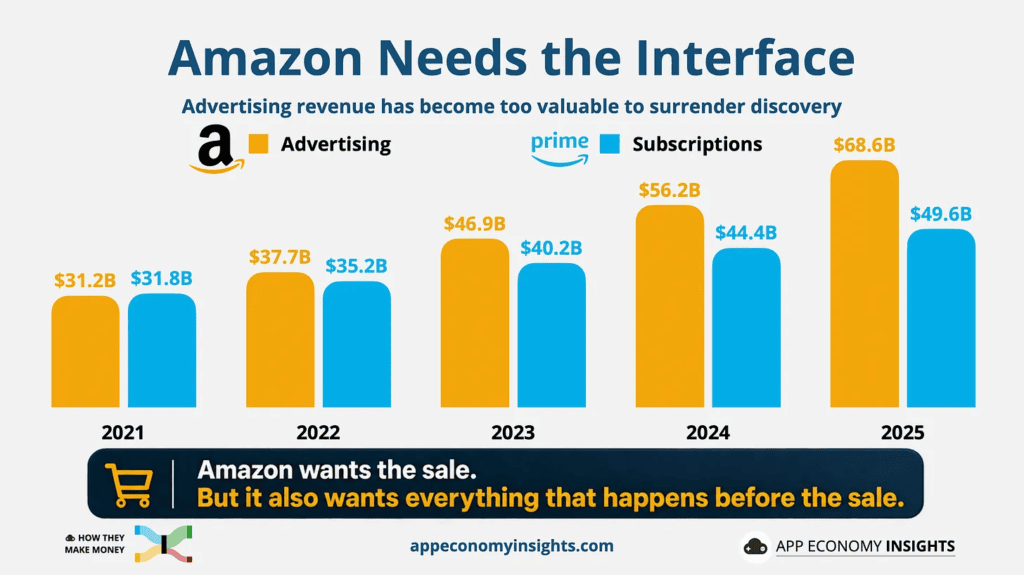
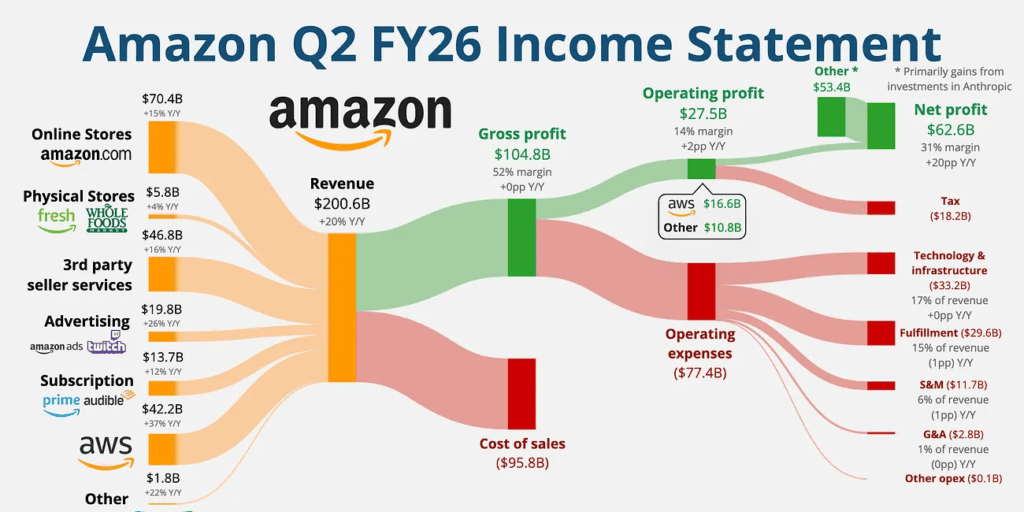
Amazon has blocked Muse from shopping on its website. The commercial tension is clear: an outside agent could recommend products before customers encounter Amazon’s sponsored listings.
Amazon’s delivery network remains valuable, but control over product discovery could become more contested.
Related: Meta’s $18 Billion Settlement Could Be a Win for Investors.
3. Payment and merchant platforms could benefit
Shopify and PayPal have different incentives: transactions can benefit their businesses even when another company controls the customer experience.
Advertising could shift toward influencing agents’ recommendations. Banking and insurance businesses could also face pressure if agents make switching providers easier.
4. Easier shopping could require more computing
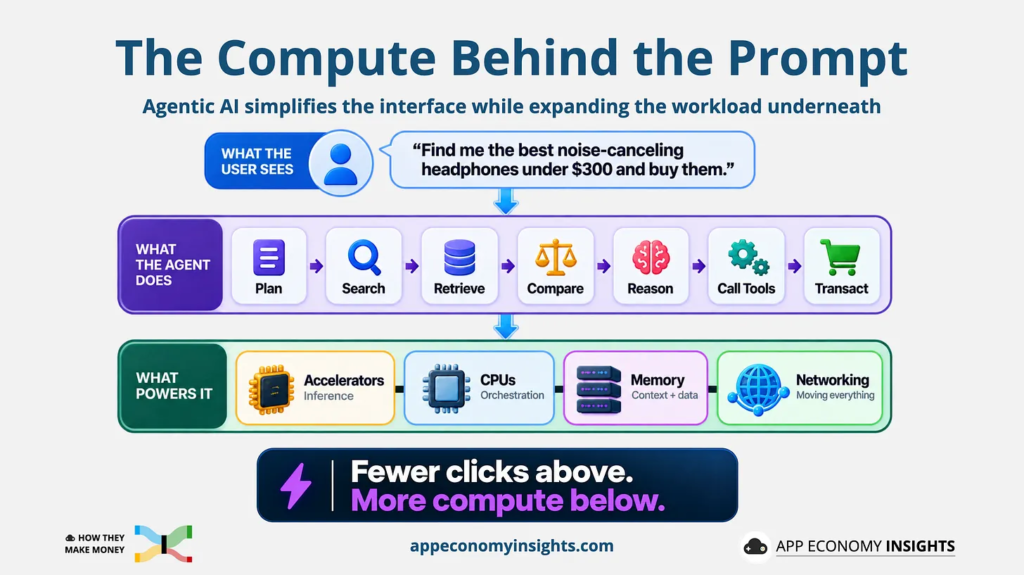
Fewer clicks for customers may mean more work for computers. Agents must search, compare, check and execute, potentially increasing demand for processors, memory and networking.
Related: The AI Boom Is Increasingly Being Financed by Debt.
For Meta, the commercial test is whether that convenience generates sustainable revenue. Muse offers free access alongside $20 and $100 monthly subscription tiers, but early enthusiasm alone cannot establish its long-term profitability.
Disclosure: This article does not represent investment advice. The content is for informational and educational purposes only.