

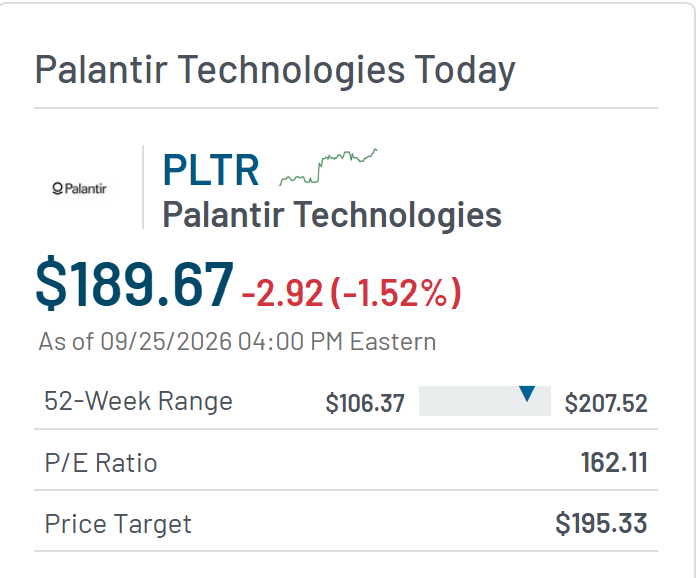
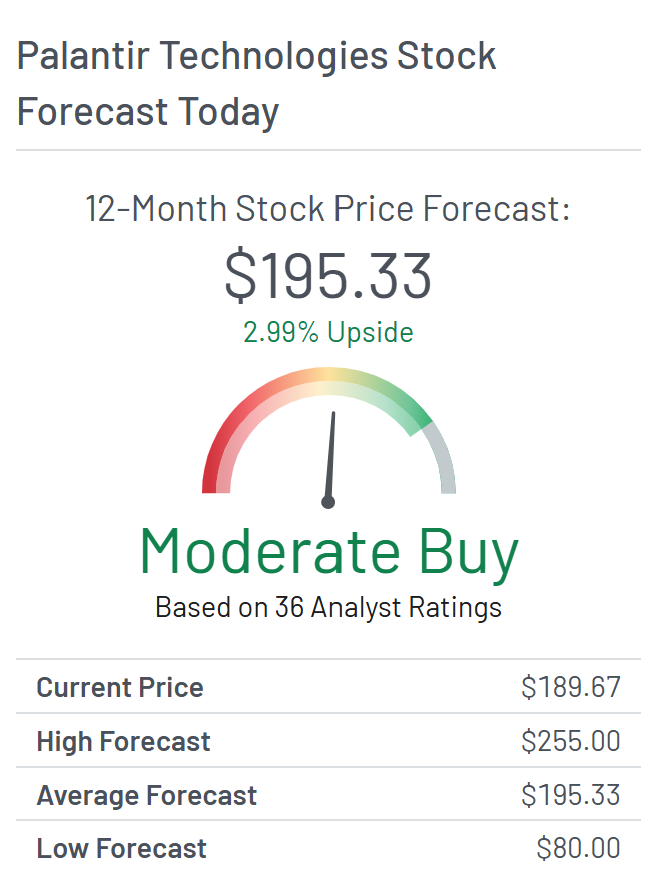
Palantir has attracted two $250 price targets, while Michael Burry argues its long-term intrinsic value is below $1 per share. The extraordinary gap reflects competing views of how much its AI business can ultimately earn.
Why Analysts See $250
UBS raised its target from $220 to $250 on September 15, following DA Davidson’s increase from $200 to $250 on September 11. Both maintained Buy ratings.
According to MarketBeat’s analysis, the bullish argument centres on AI sovereignty: companies want to use powerful models while retaining control over their data and technology choices.
Palantir’s opportunity is to provide the software connecting those systems. MarketBeat cites 92.8% second-quarter revenue growth and $3.4 billion in bookings as evidence supporting demand.
Related: Palantir Q1 2025 Earnings Report: Why the Stock Popped, Then Dropped.
Why Burry Remains Bearish
Burry questions whether Palantir deserves a software company’s valuation when its deployments can resemble consulting work. MarketBeat reports that his concerns include rising receivables, cloud commitments and stock-based compensation.
However, the article also highlights $1.22 billion in quarterly adjusted free cash flow, a significant counterpoint to his criticism.
Receivables represent money customers owe. Their growth deserves attention, but does not by itself establish collection problems. Likewise, paying employees in shares conserves cash while potentially diluting existing shareholders.
Burry’s sub-$1 assessment concerns long-term intrinsic value. It should not be read as a prediction that shares will reach that level within the same period as an analyst’s price target.
What Would Resolve the Debate?
The useful questions are more concrete than either headline valuation:
- Customer spending: Do clients keep expanding their use of Palantir?
- Cash collection: Are payments keeping pace with reported sales?
- Shareholder returns: How much growth remains per share after dilution?
- Profitability: Can expansion continue without deployment costs consuming the benefits?
Related: Palantir’s Alex Karp on the Company’s Products and Growth Ambitions.
Palantir can grow rapidly and still disappoint investors if its price assumes too much. Equally, an expensive valuation alone does not prove Burry’s extreme downside case. Sustained earnings and cash generation per share will matter more than either target.
Disclosure: This article does not represent investment advice. The content is for informational and educational purposes only.