


TL;DR:
- Most Americans lack a complete estate plan, which can lead to legal and financial risks. Essential documents include a will, trust, power of attorney, healthcare directive, letter of instruction, and beneficiary designations. Regular updates and professional guidance are crucial to ensure your estate plan reflects your current circumstances and goals.
Estate planning is the process of arranging how your assets will be managed during your lifetime and distributed after your death. Most people assume it applies only to the wealthy. It does not. Only 31% of Americans have a last will and testament, which means the majority of families face real legal and financial exposure when a loved one dies without a plan. This estate planning guide walks you through every document you need, a step-by-step process to build your plan, the 2026 federal tax rules that affect your decisions, and the most common mistakes that derail even well-intentioned plans.
What are the essential estate planning documents?
A complete estate plan is built on six core documents. Each one serves a specific function. Missing even one can leave your family exposed to delays, court intervention, or outcomes you never intended.
- Last will and testament. This document names who receives your assets, who raises your minor children, and who manages your estate as executor. Without one, state intestacy laws decide all of this for you, and those defaults rarely match what you would have chosen.
- Living trust. A living trust avoids probate and holds your assets during your lifetime for distribution after death. It offers privacy, because unlike a will, a trust does not become public record. It also gives you flexibility to set conditions on how and when beneficiaries receive assets.
- Durable power of attorney. A durable power of attorney grants a person you choose authority over your financial decisions if you become incapacitated. Without this document, your family may need a court-appointed conservator to manage your accounts, which is slow and expensive.
- Advance healthcare directive. Also called a living will, this document specifies your medical care wishes and names a healthcare proxy to make decisions if you cannot. It removes the burden of guessing from your family during an already difficult time.
- Letter of instruction. This is not a legal document, but it is one of the most practical. It tells your survivors where to find accounts, passwords, insurance policies, and important contacts. Think of it as the operating manual for your estate.
- Beneficiary designations. Life insurance policies, retirement accounts like 401(k)s and IRAs, and payable-on-death bank accounts pass directly to named beneficiaries. These designations override your will entirely, so keeping them current is non-negotiable.
Pro Tip: Review your beneficiary designations every two to three years and immediately after any major life event. An outdated designation on a $500,000 IRA can send that money to an ex-spouse regardless of what your will says.
How do you create an effective estate plan?
Building a solid estate plan follows a logical sequence. Skipping steps creates gaps that surface at the worst possible moment.
- Take a full asset inventory. Creating an inventory of your assets, including digital assets like cryptocurrency, online accounts, and intellectual property, is the critical first step. List everything: real estate, investment accounts, retirement funds, business interests, vehicles, and valuable personal property.
- Clarify your goals. Decide who you want to receive your assets, in what proportions, and under what conditions. Consider whether you want to provide for a surviving spouse first, set aside funds for a child’s education, or support a charitable cause.
- Choose your fiduciaries carefully. Your executor, trustee, and healthcare proxy carry real responsibility. Choose people who are organized, trustworthy, and willing to serve. Name alternates in case your first choice cannot act.
- Decide when to involve professionals. Simple estates can sometimes use online tools like those offered through FreeWill or Nolo for basic documents. Complex situations involving business ownership, blended families, significant assets, or special needs beneficiaries require an estate planning attorney and often a financial advisor. Working with qualified professionals like attorneys, financial advisors, and tax experts produces a plan tailored to your actual situation.
- Execute your documents properly. Signing requirements vary by state. Most wills require two witnesses. Many states require notarization for powers of attorney. A document signed incorrectly may be invalid.
- Fund your trust. Creating a trust without transferring assets into it is one of the most common and costly errors in estate planning. Your home, investment accounts, and other major assets must be retitled in the trust’s name for the trust to control them.
- Update your plan after life changes. Estate planning requires updates after marriage, divorce, the birth of a child, the death of a beneficiary, or a major shift in your financial picture.
| Step | Action | Who to Involve |
|---|---|---|
| Asset inventory | List all assets including digital | You, financial advisor |
| Goal setting | Define beneficiaries and conditions | You, spouse or partner |
| Document drafting | Create will, trust, directives | Estate planning attorney |
| Execution | Sign with witnesses and notary | Attorney, witnesses |
| Trust funding | Retitle assets into trust | Attorney, financial institution |
| Ongoing review | Update after life events | Attorney, financial advisor |
Pro Tip: Set a calendar reminder every three years to review your estate plan. Life changes faster than most people realize, and an outdated plan can be as harmful as no plan at all.
How do 2026 federal estate tax rules affect your plan?
The 2026 federal estate tax exemption is $15 million per individual. That means estates valued below this threshold owe no federal estate tax at all. Estates above it face tax rates between 18% and 40%. That top rate applies to the largest taxable estates, and even moderate excess above the exemption can trigger a significant bill.

For most Americans, the federal exemption means estate taxes are not an immediate concern. But state-level estate taxes are a different story. States like Massachusetts and Oregon impose estate taxes with exemptions as low as $1 million. Knowing your state’s rules is not optional if you own real estate or have accumulated retirement savings over decades.
Stepped-up basis is one of the most valuable tax benefits available to heirs. When you inherit an asset, your cost basis resets to the asset’s fair market value at the date of death. This means heirs who sell inherited property shortly after receiving it often owe little or no capital gains tax. Proper planning can preserve this benefit for your family.
| Tax Consideration | 2026 Rule | Planning Implication |
|---|---|---|
| Federal exemption | $15 million per individual | Most estates owe no federal tax |
| Top tax rate | 40% above exemption | Large estates need tax strategies |
| Stepped-up basis | Resets to date-of-death value | Reduces capital gains for heirs |
| State estate taxes | Varies widely by state | Check your state’s exemption threshold |
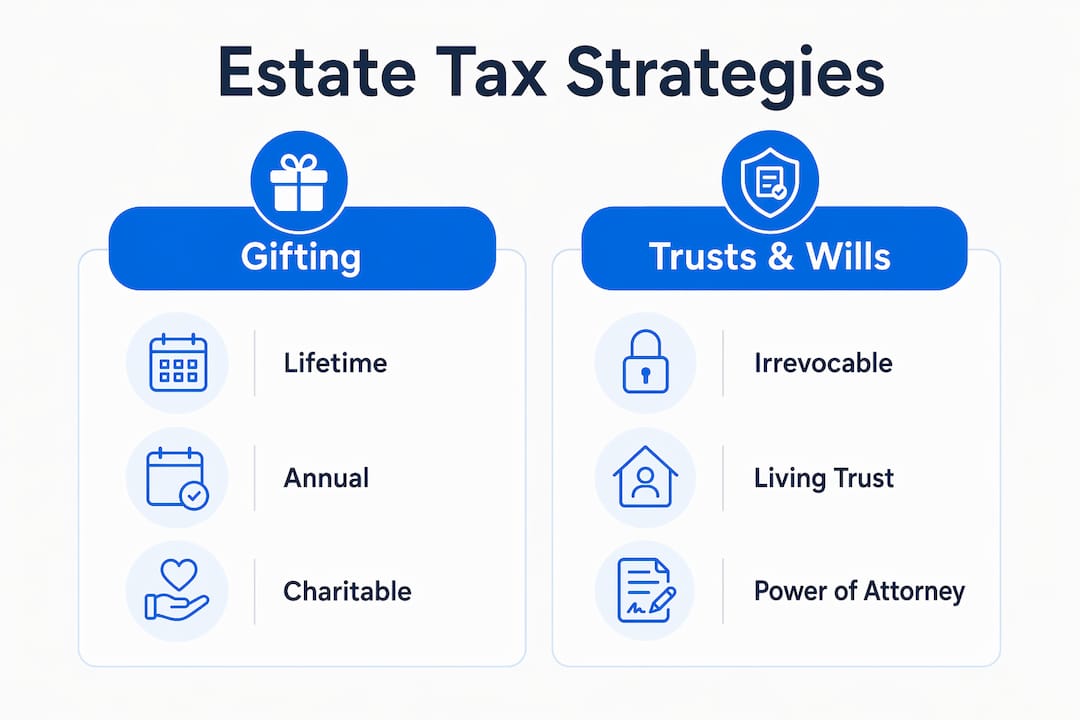
Strategies to reduce estate tax exposure include gifting assets during your lifetime, using irrevocable trusts, and making charitable contributions. Each strategy has trade-offs, and the right combination depends on your total asset picture and family goals.
What are the most common estate planning mistakes?
Even people who start the process make errors that undermine their plans. These are the ones Finblog sees most often.
- Not updating your will or trust. A will written before a divorce, a second marriage, or the birth of a grandchild may direct assets in ways you no longer intend. Courts enforce the document as written, not as you meant it.
- Skipping healthcare directives and powers of attorney. Many people focus entirely on asset distribution and ignore incapacity planning. If you are hospitalized and cannot speak for yourself, the absence of these documents forces your family into court.
- Failing to fund a trust. A trust that holds no assets is a legal shell. Every major asset must be formally transferred into the trust to receive its protections and avoid probate.
- Ignoring beneficiary designations. Outdated beneficiary designations can send assets to unintended recipients, bypassing your will entirely. This is especially common with old 401(k) accounts from previous employers.
- Overlooking digital assets. Cryptocurrency wallets, online brokerage accounts, and even social media accounts have real value or require specific handling. Without instructions and access credentials, these assets can be lost permanently.
- Delaying professional consultation. Online tools work for simple situations. But if you own a business, have a blended family, or hold assets in multiple states, a qualified estate planning attorney is not a luxury. It is a necessity.
“The cost of not planning is always higher than the cost of planning. Probate fees, family disputes, and unnecessary taxes are all avoidable with the right documents in place.”
Reviewing your wealth protection strategies alongside your estate plan gives you a more complete picture of how your assets are shielded during your lifetime and after.
Key takeaways
A complete estate plan, built on the right documents and reviewed regularly, is the most direct way to protect your assets and honor your wishes after death.
| Point | Details |
|---|---|
| Start with six core documents | Will, trust, power of attorney, healthcare directive, letter of instruction, and beneficiary designations form the foundation. |
| Fund your trust | Transferring assets into a trust is required for it to work. An unfunded trust provides no protection. |
| Know the 2026 tax rules | The federal exemption is $15 million, but state taxes may apply at much lower thresholds. |
| Update after life changes | Marriage, divorce, births, and deaths all require immediate plan review to prevent unintended outcomes. |
| Involve professionals for complexity | Attorneys and financial advisors are necessary for blended families, business ownership, or multi-state assets. |
Estate planning is a living process, not a one-time task
I have reviewed a lot of estate plans over the years, and the ones that fail almost never fail because of bad intentions. They fail because of inertia. Someone creates a will in their 30s, puts it in a drawer, and never looks at it again. Then a divorce happens, or a child is born, or a business is sold, and the document no longer reflects reality.
The most important shift in thinking I can offer you is this: your estate plan is not a destination. It is a practice. The iterative nature of estate planning means you revisit it regularly, not just when something goes wrong. I recommend treating it like a financial checkup. Schedule it. Put it on the calendar. Make it a habit.
The second thing I would push back on is the idea that professional help is optional once you pass a certain asset threshold. I have seen six-figure estates create enormous family conflict because a trust was never funded or a beneficiary form was never updated. The role of financial advisors in estate planning is not just about tax strategy. It is about catching the details that non-experts miss.
Finally, talk to your family. The most technically perfect estate plan still creates confusion if no one knows it exists or where to find it. Have the conversation. Tell your executor where the documents are. Tell your healthcare proxy what you actually want. That transparency is the part no attorney can do for you.
— Povilas
Start building your estate plan with Finblog
Finblog offers resources designed to help you move from intention to action on your estate plan. Whether you are starting from scratch or updating an existing plan, the wealth transfer strategies and planning guides on Finblog give you a structured path forward. Pair that with a retirement planning checklist to align your estate plan with your broader financial goals. For situations that call for professional input, connecting with a qualified estate planning attorney or financial advisor through Finblog’s network ensures your plan reflects your actual circumstances. Your legacy deserves more than good intentions. It deserves a real plan. Explore professional guidance options at Finblog today and take the first concrete step toward protecting what you have built.
FAQ
What is estate planning, exactly?
Estate planning is the legal and financial process of arranging how your assets will be managed if you become incapacitated and distributed after your death. It includes documents like wills, trusts, powers of attorney, and healthcare directives.
Do i need an estate plan if i am not wealthy?
Yes. Estate planning basics apply to anyone with assets, dependents, or healthcare preferences. Without a plan, state law decides who receives your property and who raises your children.
What is the difference between a will and a living trust?
A will goes through probate, becomes public record, and takes effect only at death. A living trust avoids probate, stays private, and can manage assets during your lifetime if you become incapacitated.
How often should i update my estate plan?
Estate planning requires updates after major life events like marriage, divorce, the birth of a child, or the death of a beneficiary. A general review every three years is a sound baseline practice.
What happens if i die without a will?
Your estate enters intestate succession, where state law determines who inherits your assets. This process often excludes unmarried partners, distributes assets in proportions you would not have chosen, and can delay distribution for months or longer.