



Over $68 trillion in assets will change hands among American families over the next few decades, making generational wealth planning more critical than ever. For high-net-worth individuals, the decisions made now can shape not just your own future but the trajectory of your entire lineage. This resource dives into the core principles, structures, and smart strategies to help you protect and pass on your American financial legacy with confidence.
Table of Contents
- Defining Generational Wealth And Key Concepts
- Types Of Wealth Transfer Strategies For Families
- Core Structures: Trusts, Entities, And Governance
- Legal And Tax Frameworks Shaping Transfers
- Risks, Costs, And Common Mistakes To Avoid
Key Takeaways
| Point | Details |
|---|---|
| Understanding Generational Wealth | It encompasses both financial and non-financial assets, influencing economic opportunities for multiple generations. |
| Wealth Transfer Strategies | Employ diverse methods like trusts, direct gifting, and life insurance to effectively preserve and distribute wealth. |
| Legal and Tax Considerations | Navigate complex tax regulations to minimize liabilities while executing intergenerational wealth transfers. |
| Potential Risks and Mistakes | Address risks such as inadequate planning and poor communication to safeguard family wealth and maintain its legacy. |
Defining Generational Wealth and Key Concepts
Generational wealth represents more than just financial assets passed down through families. It encompasses a comprehensive network of resources that can profoundly shape economic opportunities across multiple generations. Generational wealth fundamentally describes financial and non-financial advantages transferred between family members, creating sustained economic momentum.
This sophisticated concept extends far beyond simple monetary inheritance. Generational wealth includes tangible assets like real estate, investment portfolios, and business enterprises, as well as intangible advantages such as social connections, educational access, and financial literacy. The strategic accumulation and preservation of these resources can significantly impact a family’s long-term economic trajectory, providing crucial advantages that compound over time.
Understanding generational wealth requires recognizing its multifaceted nature. Key components include strategic financial planning, investment diversification, legal wealth transfer mechanisms, and intentional knowledge transmission. Wealthy families often develop comprehensive strategies that protect assets, minimize tax implications, and create sustainable financial frameworks designed to support future generations.
Pro tip: Start documenting your family’s financial history and strategic planning approaches now, creating a comprehensive roadmap that future generations can leverage and learn from.
Types of Wealth Transfer Strategies for Families
Successful wealth transfer requires strategic planning and a comprehensive approach that goes beyond simple financial transactions. Families seeking to preserve and grow their financial legacy must understand the nuanced wealth transfer strategies that can protect and optimize their assets across generations.
Typically, families have several primary wealth transfer mechanisms at their disposal. These include direct inheritance through wills, establishing trust structures, gifting strategies, life insurance policies, and creating family limited partnerships. Each method offers unique advantages in terms of tax efficiency, asset protection, and control. Trusts, for instance, provide exceptional flexibility by allowing precise stipulations about how and when beneficiaries can access inherited resources.
The most sophisticated wealth transfer strategies incorporate multiple approaches tailored to specific family dynamics and financial goals. High-net-worth families often utilize advanced techniques like generation-skipping transfers, creating educational funds, establishing family foundations, and implementing strategic tax planning mechanisms. These strategies not only preserve wealth but also transmit financial knowledge and values across generations, ensuring a holistic approach to intergenerational financial planning.
Pro tip: Consult with a qualified estate planning attorney and financial advisor to develop a personalized wealth transfer strategy that aligns with your unique family circumstances and long-term financial objectives.
Here’s a comparison of common wealth transfer mechanisms and their distinct characteristics:
| Method | Control Over Assets | Tax Efficiency | Flexibility in Distribution |
|---|---|---|---|
| Will-Based Inheritance | Limited after death | Low, subject to estate tax | Low, set by terms |
| Trust Structures | High with trustee input | High, can minimize taxes | High, tailored guidelines |
| Direct Gifting | None after transfer | Moderate, annual exclusions | Low, immediate transfer |
| Life Insurance Proceeds | None after payout | Often tax-free | Medium, payout terms vary |
| Family Limited Partnerships | Shared among partners | High for valuation discounts | Medium, depends on terms |
Core Structures: Trusts, Entities, and Governance
Effective generational wealth management requires sophisticated structural frameworks that protect and perpetuate family assets. Family wealth governance represents a critical strategic approach for preserving long-term financial value and minimizing potential intergenerational conflicts.
Trusts serve as fundamental legal instruments in wealth preservation, offering multiple strategic advantages. These legal structures allow families to establish precise guidelines for asset distribution, create tax-efficient transfer mechanisms, and maintain significant control over inherited resources. Different trust types including revocable living trusts, irrevocable trusts, and dynasty trusts provide unique benefits tailored to specific family financial objectives. Families can strategically design these instruments to protect assets from potential creditors, minimize estate tax implications, and ensure controlled wealth transmission across generations.

Beyond trust structures, sophisticated families often implement comprehensive governance frameworks that extend beyond legal mechanisms. This includes creating formal family councils, developing mission statements, and establishing clear decision-making protocols. These governance models help align family members around shared financial values, create transparent communication channels, and develop a collective approach to wealth management that transcends individual perspectives. By establishing clear roles, expectations, and collaborative processes, families can successfully navigate complex wealth transfer challenges while maintaining family unity.
Pro tip: Develop a comprehensive family governance document that outlines shared financial values, decision-making processes, and long-term wealth management objectives to create a unified strategic approach.
Legal and Tax Frameworks Shaping Transfers
Intergenerational wealth transfers represent a complex landscape of legal and tax considerations that significantly impact family financial strategies. Wealth transfer taxation plays a crucial role in addressing economic equity and managing large-scale asset transitions between generations.
The United States tax system incorporates multiple mechanisms to manage wealth transfers, including estate taxes, inheritance taxes, and capital gains tax strategies. Estate taxes are typically levied on the total value of a deceased individual’s assets, with current federal exemption thresholds protecting smaller estates. High-net-worth families must navigate sophisticated legal structures like grantor retained annuity trusts (GRATs), intentionally defective grantor trusts (IDGTs), and family limited partnerships to minimize tax liabilities while effectively transferring wealth across generations.
Complex tax policies aim to balance economic fairness with wealth preservation objectives. Advanced strategies such as lifetime gifting, generation-skipping trusts, and strategic asset valuation can help families minimize tax exposure while maintaining the integrity of their wealth transfer plans. Understanding the nuanced interactions between federal and state tax regulations is critical for developing comprehensive wealth transfer approaches that protect family assets and provide long-term financial stability.
Pro tip: Consult with a specialized tax attorney and financial planner to develop a customized wealth transfer strategy that leverages current tax laws and minimizes potential tax liabilities.
Risks, Costs, and Common Mistakes to Avoid
Generational wealth planning involves navigating complex financial terrain with potential pitfalls that can significantly undermine long-term family financial objectives. Common investment mistakes can erode years of carefully accumulated wealth and derail strategic transfer plans.
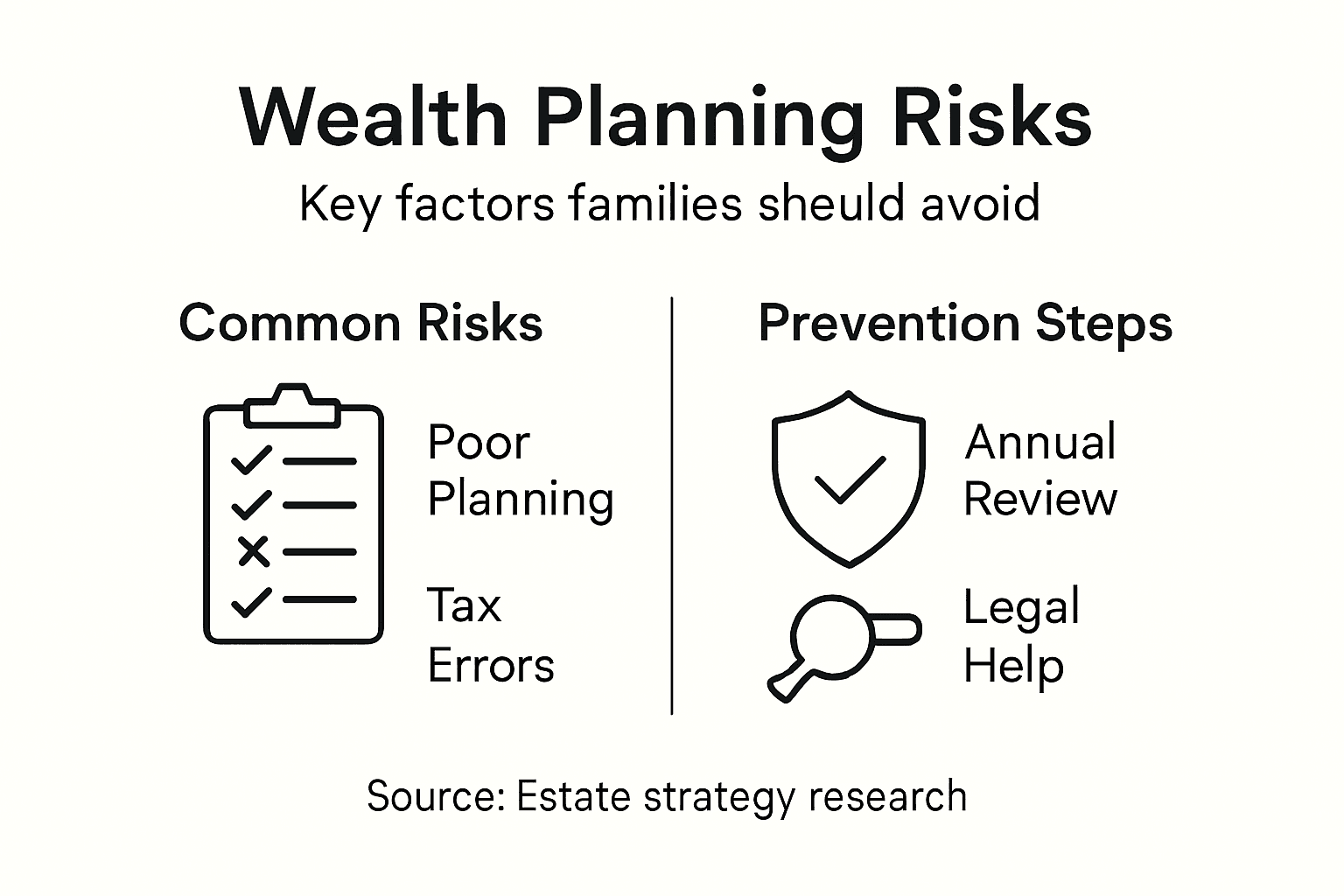
Critical risks in generational wealth management include inadequate estate planning, poor tax strategy implementation, and ineffective communication among family members. High-net-worth families frequently encounter challenges such as improper asset allocation, failing to update estate documents, overlooking tax efficiency, and creating unsustainable wealth transfer mechanisms. Specific risks include unexpected tax liabilities, potential family conflicts over inheritance, lack of clear wealth transition guidelines, and inefficient investment strategies that fail to protect and grow family assets across generations.
Sophisticated wealth preservation requires a proactive approach to identifying and mitigating potential risks. Families must develop comprehensive strategies that address legal complexities, tax implications, and potential interpersonal dynamics. This includes creating robust governance structures, implementing flexible estate planning tools, maintaining transparent communication protocols, and developing comprehensive financial education programs for younger generations. Successful wealth transfer demands a holistic approach that balances financial strategy, legal protection, and family relationship management.
To help you recognize and avoid critical risks in generational wealth planning, review this quick reference table:
| Risk Area | Potential Impact | Prevention Strategy |
|---|---|---|
| Inadequate Planning | Loss of assets, family disputes | Update estate documents regularly |
| Poor Tax Strategy | Higher taxes, reduced inheritance | Engage tax professionals early |
| Communication Gaps | Misunderstandings, legal contests | Hold regular family meetings |
| Unsustainable Investments | Wealth erosion, instability | Diversify across asset classes |
| Lack of Education | Poor decisions by heirs | Provide ongoing financial training |
Pro tip: Conduct an annual comprehensive review of your wealth transfer strategy with professional advisors to identify potential risks and adjust your approach proactively.
Secure Your Family Legacy With Expert Generational Wealth Planning
Planning generational wealth involves overcoming complex challenges like intricate tax frameworks, trust setup, and family governance to avoid costly mistakes. If you want to protect your assets, minimize tax burdens, and ensure that your financial legacy benefits future generations, understanding advanced wealth transfer strategies and legal structures is essential. Your family’s long-term financial security deserves a clear, personalized plan that turns these challenges into lasting advantages.
Take control of your financial future today by exploring expert insights and tailored solutions at finblog.com. Discover how to implement effective wealth transfer strategies and build resilient governance structures that safeguard your legacy. Don’t wait until tax laws or family conflicts threaten your goals—start crafting your comprehensive wealth plan now by visiting finblog.com and securing a consultation with trusted advisors committed to your family’s success.
Frequently Asked Questions
What is generational wealth?
Generational wealth refers to the financial and non-financial resources, including monetary assets, real estate, investments, and educational access, passed down through family members to create sustained economic advantages over multiple generations.
What are effective wealth transfer strategies for families?
Effective wealth transfer strategies include wills, trust structures, direct gifting, life insurance policies, and family limited partnerships. Each method offers unique benefits, such as tax efficiency and control over asset distribution, tailored to a family’s specific financial goals.
How do trusts help in generational wealth planning?
Trusts serve as legal instruments that enable families to set precise conditions for asset distribution, minimize estate taxes, and maintain control over inherited resources, thereby ensuring a smooth and efficient transfer of wealth across generations.
What risks should families be aware of in wealth planning?
Families should be aware of risks such as inadequate estate planning, ineffective tax strategies, poor communication among members, and unsustainable investments. Proactive strategies, including regular reviews and transparent discussions, can help mitigate these risks.
Recommended
- Master Generational Financial Planning for Lasting Wealth – Finblog
- Wealth Transfer Strategies: Secure Your Financial Legacy – Finblog
- Wealth Management Explained: Complete Guide – Finblog
- Complete Guide to Wealth Preservation Strategies – Finblog
- How to Safeguard Rental Investment: A Step-by-Step Guide – Rental Income Insurance
- 2024 is the Perfect Time to Become a Real Estate Investor – Bold Street AI