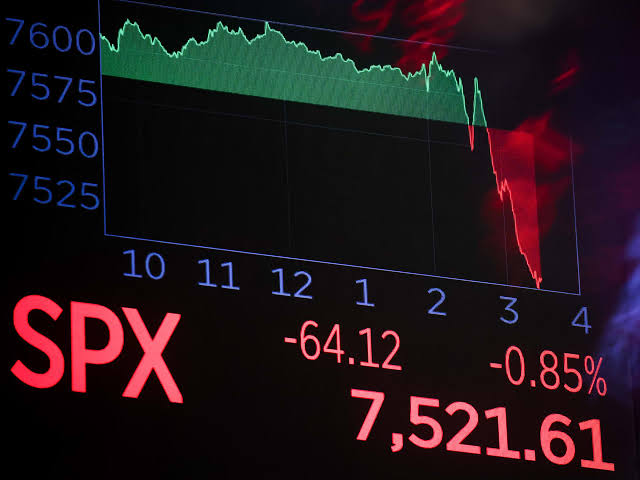



TL;DR:
- Bear markets typically occur every six years and eventually recover.
- They are caused by economic slowdowns, inflation, high interest rates, and geopolitical shocks.
- Successful investing during bear markets relies on discipline, diversification, and long-term planning.
Most investors treat a bear market like a once-in-a-generation catastrophe. In reality, bear markets occur roughly every six years, and every single one in recorded U.S. history has eventually recovered. The fear around them is understandable, but it often leads to the worst possible decisions: panic selling at the bottom, sitting in cash too long, or abandoning a solid plan. This article breaks down exactly what a bear market is, what causes one, how it differs from smaller downturns, how long they typically last, and what you can actually do to protect and grow your portfolio when markets turn south.
Table of Contents
- What is a bear market?
- What causes bear markets?
- Bear markets vs. corrections and pullbacks
- How long do bear markets last and what happens next?
- Smart investor strategies for bear markets
- What most experts miss about bear markets
- Next steps to strengthen your investing knowledge
- Frequently asked questions
Key Takeaways
| Point | Details |
|---|---|
| Bear market basics | A bear market is a 20% or more market drop from recent highs, marked by extended pessimism. |
| Causes and triggers | Bear markets are commonly triggered by economic stress, investor fear, and global events. |
| Don’t confuse downturns | Bear markets are deeper and longer than corrections or pullbacks, demanding distinct strategies. |
| History and recovery | Bear markets on average last less than 15 months and US markets have always recovered. |
| Active investor response | Practical strategies include dollar-cost averaging, diversification, and disciplined investing. |
What is a bear market?
A bear market has a clear, widely accepted definition. A decline of at least 20% from recent market highs, sustained over a period of time, qualifies as a bear market. This threshold matters because it separates serious, prolonged downturns from the normal noise of short-term market swings.
Bear markets are typically measured using major indices like the S&P 500, the Dow Jones Industrial Average, or the Nasdaq Composite. When one of these benchmarks drops 20% or more from its peak, the market is officially in bear territory. Individual stocks can also enter their own bear markets, but the term usually refers to broad index-level declines.
Here is what typically characterizes a bear market:
- Sustained price declines of 20% or more from recent highs
- Widespread investor pessimism and reduced buying activity
- Falling corporate earnings expectations
- Increased volatility and sharp daily swings
- A shift from greed to fear in market sentiment
“Bear markets are not anomalies. They are a normal, recurring feature of investing, and understanding them is the first step toward surviving them.”
One of the most persistent misconceptions is that bear markets are rare. They are not. Since 1928, the U.S. market has experienced more than a dozen bear markets. If you are investing in bear markets for the first time, knowing this history helps you stay grounded when the news cycle turns alarming. The psychological dimension matters as much as the technical one: prolonged pessimism feeds more selling, which deepens the decline, which feeds more pessimism. Breaking that cycle starts with understanding it.
What causes bear markets?
No two bear markets are identical, but they tend to share common triggers. Bear markets arise from a combination of investor fear, economic slowdowns, rising unemployment, declining corporate earnings, high inflation, geopolitical instability, and shifts in monetary policy. Often, several of these factors hit at the same time.
Here are the most common causes:
- Economic slowdown: When GDP growth stalls or contracts, corporate revenues fall and investors reprice stocks lower.
- High inflation: Rising prices erode consumer spending and corporate margins, pressuring earnings.
- Rising interest rates: When the Federal Reserve raises rates aggressively, borrowing costs climb and growth stocks get hit hardest.
- Unemployment spikes: Job losses reduce consumer spending, which feeds back into weaker corporate results.
- Geopolitical shocks: Wars, trade conflicts, and unexpected global events can trigger rapid selloffs.
- Policy uncertainty: Sudden regulatory changes or unclear fiscal policy can shake investor confidence quickly.
The psychological mechanics are just as important as the economic ones. Once fear takes hold, selling begets more selling. Investors who see their portfolios drop 10% start to worry about 20%. Those who see 20% start to fear 30%. This cycle amplifies the decline beyond what fundamentals alone would justify.

It is worth noting that not every bear market comes with a recession. About 75% of bear markets overlap with recessions, but some are driven purely by sentiment shifts or external shocks. Monitoring stock market trends closely can help you spot early warning signs before the full decline sets in.
Pro Tip: Do not wait for a bear market to be officially declared before reviewing your portfolio. By the time it is confirmed, markets may already be 20% lower. Watching leading indicators like yield curves and credit spreads gives you earlier signals.
Bear markets vs. corrections and pullbacks
Not every market drop is a bear market. Understanding the difference between a pullback, a correction, and a bear market helps you respond proportionally rather than reactively.
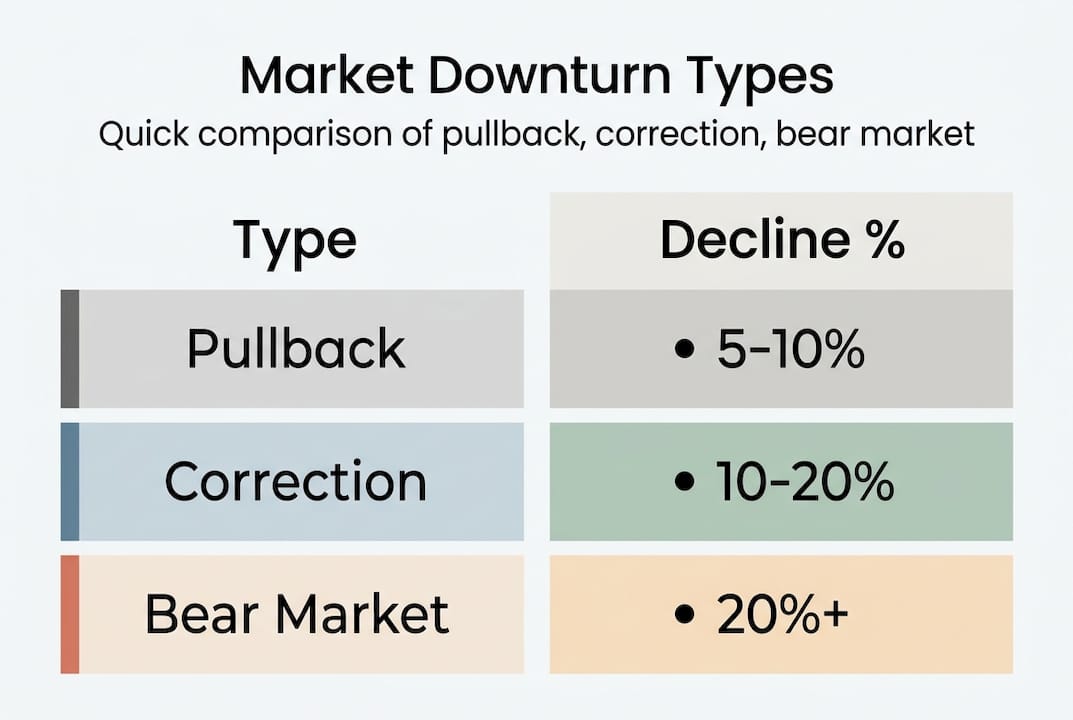
Bear markets differ from corrections and pullbacks in both severity and duration. Here is a quick breakdown:
| Type | Decline | Typical Duration | Investor Mood |
|---|---|---|---|
| Pullback | 5% to 10% | Days to weeks | Mild concern |
| Correction | 10% to 20% | Weeks to months | Noticeable worry |
| Bear market | 20% or more | Months to years | Widespread fear |
The key differences go beyond percentages. A pullback is a brief pause in an otherwise healthy trend. A market correction is more meaningful but typically resolves within a few months. A bear market involves a deeper psychological shift: investor demand dries up, institutional money moves to safety, and the general mood turns from optimism to doubt.
Here is how to think about each type of decline in terms of your response:
- Pullback: Stay the course. These are normal and frequent. Reacting to every 5% dip is expensive and counterproductive.
- Correction: Review your allocation. Make sure you are not overexposed to high-risk positions, but avoid wholesale changes.
- Bear market: Reassess your strategy. This is when discipline, diversification, and a long-term plan matter most.
Geopolitical events can accelerate any of these declines. War-driven corrections show how fast sentiment can shift from manageable dip to something more serious. Knowing which type of decline you are in helps you avoid overreacting to a pullback or underreacting to a genuine bear market.
How long do bear markets last and what happens next?
This is the question most investors want answered first. The data is actually reassuring. Bear markets have averaged roughly 9 to 15 months in duration, with average declines of 30 to 33%, and markets have historically recovered to new highs in about 2.5 years from the bottom.
There are three main types of bear markets, and their timelines differ:
- Cyclical bear markets: Tied to the normal business cycle. They last one to several years and are the most common type.
- Secular bear markets: Long-term structural downturns that can last a decade or more, often driven by prolonged economic stagnation or demographic shifts.
- Event-driven bear markets: Triggered by a specific shock. The 2020 COVID crash is the clearest example, lasting roughly one month before recovery began.
Here is what the historical data shows about bear market outcomes:
| Metric | Average figure |
|---|---|
| Average duration | 9 to 15 months |
| Average decline | 30% to 33% |
| Average recovery time | About 2.5 years |
| Bull market average gain | Over 100% |
The most important takeaway from this data: bull markets last longer and gain more than bear markets lose. Every bear market in U.S. history has been followed by a recovery. That does not make downturns painless, but it does make them survivable. Understanding market volatility investing strategies helps you stay positioned for the recovery rather than sitting on the sidelines when it arrives.
Smart investor strategies for bear markets
Knowing what a bear market is and how long it lasts only helps if you translate that knowledge into action. Here is what actually works.
- Avoid panic selling. Selling at the bottom locks in losses permanently. Markets recover; your sold positions do not benefit from that recovery unless you buy back in, usually at higher prices.
- Use dollar-cost averaging. Invest a fixed amount at regular intervals regardless of price. This strategy means you automatically buy more shares when prices are low, lowering your average cost over time.
- Buy quality gradually. Bear markets are when strong companies go on sale. Accumulate shares of businesses with solid balance sheets, consistent earnings, and durable competitive advantages.
- Diversify into defensive sectors. Utilities, consumer staples, and healthcare tend to hold up better during downturns because demand for their products stays relatively stable.
- Add bonds or cash equivalents. New investor strategies often include rebalancing toward fixed income during bear markets to reduce volatility.
One thing that almost never works: trying to time the exact bottom. Stock picking challenges are amplified during bear markets because correlations rise and individual stock behavior becomes harder to predict. The investors who do best are usually those with a clear plan they stick to, not those who make the cleverest calls.
Pro Tip: Keep a written investment policy statement. It sounds formal, but having your strategy documented before a bear market hits makes it far easier to follow during one. Emotion is the enemy of good decisions when markets are falling fast.
Reviewing market-shifting strategies that have worked across different cycles can also help you refine your approach before the next downturn arrives.
What most experts miss about bear markets
Most bear market guides focus on tactics: which sectors to rotate into, when to buy, how to hedge. That is useful, but it misses the deeper lesson. Our view at Finblog is that bear markets reveal investor temperament far more than investing skill.
The investors who come out ahead are rarely the ones with the most sophisticated strategies. They are the ones who do not flinch. Emotional discipline, the ability to hold a position when every headline screams danger, consistently outperforms elaborate tactical adjustments. The data backs this up: missing just the ten best days in the market over a 20-year period can cut your returns nearly in half.
There is also a real danger in over-preparing for downturns. Investors who move heavily to cash at the first sign of trouble often miss the sharpest recovery rallies, which tend to happen before the bear market is officially declared over. The bear market guide that serves you best is one that builds confidence in your long-term plan, not one that teaches you to dodge every dip. Patience is not a passive strategy. It is one of the highest-returning moves available to any investor.
Next steps to strengthen your investing knowledge
Ready to take the next step? Understanding bear markets is one piece of a much larger puzzle. At Finblog, we publish practical, evidence-based guides built specifically for individual investors and working professionals navigating every phase of the market cycle. Whether you are trying to protect your portfolio during a downturn or position yourself for the recovery that follows, we cover it in plain language with real data. Start with our full guide on bear markets explained to go deeper on the strategies, historical patterns, and mindset shifts that separate investors who survive downturns from those who thrive through them.
Frequently asked questions
How often do bear markets occur?
Bear markets occur about every six years on average in the U.S. market, making them a regular feature of long-term investing rather than a rare catastrophe.
Are bear markets always followed by a recession?
No. About 75% of bear markets overlap with recessions, but some are driven by sentiment shifts or external shocks without a full economic contraction.
What’s the average length and depth of a bear market?
Bear markets average 9 to 15 months in duration, a 30 to 33% decline from peak, and a recovery period of roughly 2.5 years.
What’s the difference between a bear market and a correction?
A correction is a market drop of 10 to 20%; a bear market means a drop of 20% or more accompanied by extended pessimism and reduced investor demand.
Do markets always recover from bear markets?
Yes. Every bear market in U.S. history has been followed by a recovery to new highs, though the timeline varies depending on the type and severity of the downturn.