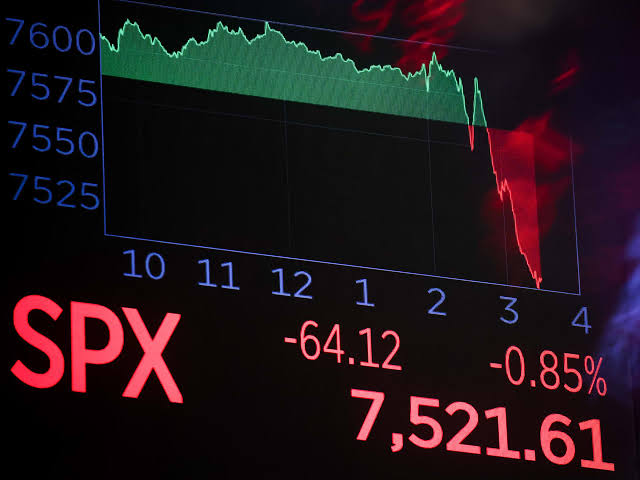


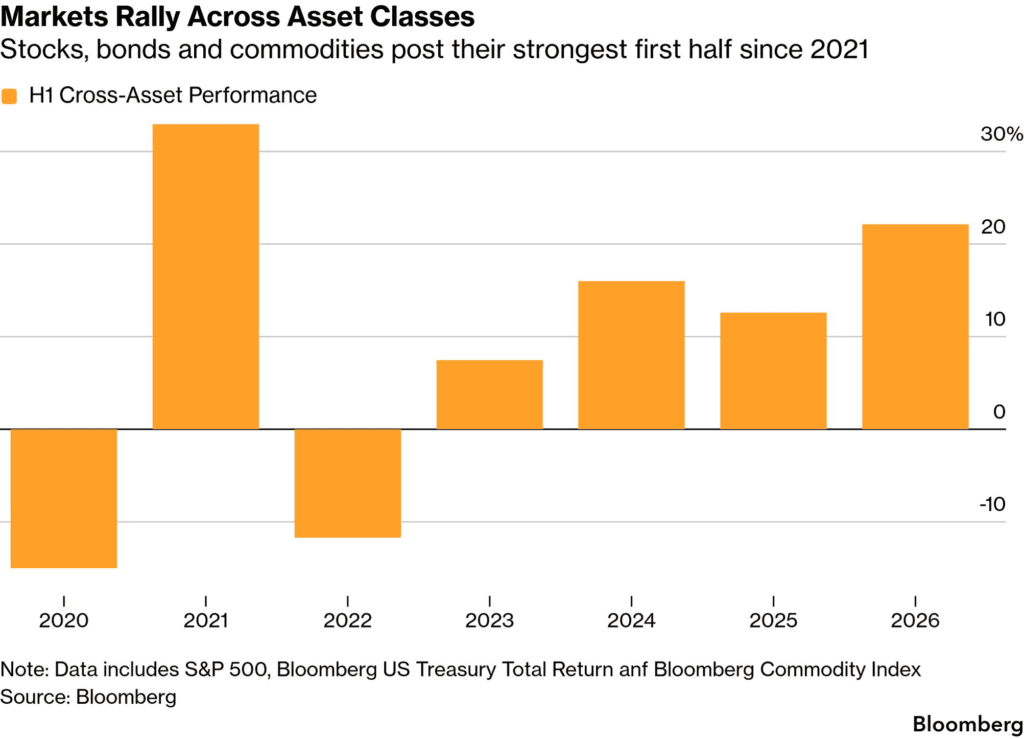
Wall Street has delivered its strongest first-half performance since 2021, overcoming geopolitical tensions, volatile interest rate expectations, and rising energy prices that dominated markets throughout the first six months of 2026.
A diversified portfolio of stocks, bonds, and commodities gained more than 20% during the period, according to Bloomberg data, as investors continued buying market dips instead of pulling back. The rally came despite conflicts in the Middle East, inflation concerns, and uncertainty surrounding central bank policy.
One of the biggest drivers has been retail investors, who have consistently stepped in during market selloffs. According to Citadel Securities, individual investors bought nearly 3.5 times the average daily amount whenever the S&P 500 declined, reinforcing the popular “buy the dip” strategy.
The first half of the year also showed that market leadership is beginning to broaden. While the AI boom continues to support economic growth and corporate investment, some of the biggest technology names have started to lose momentum. The Magnificent Seven have fallen around 2% on a total return basis this year, while gold, silver, and Bitcoin also ended the first half in negative territory.
Despite that shift, many Wall Street firms remain optimistic about the months ahead.
JPMorgan expects business confidence to improve, inventories to recover, and AI spending to continue expanding. Meanwhile, BlackRock and Invesco say investment in artificial intelligence is now spreading beyond technology companies into the broader economy, supporting long-term growth.
Still, analysts caution that the second half of 2026 is unlikely to be smooth. Investors continue to face several risks, including:
- Sticky inflation and uncertainty over interest rates.
- Ongoing geopolitical tensions.
- The upcoming US midterm elections.
- Signs that parts of the AI rally may be becoming overheated.
For investors, the first half of 2026 demonstrated the market’s resilience. However, with economic and political risks still building, analysts expect volatility to remain high, making diversification and selective investing increasingly important during the rest of the year.
Disclosure: This article does not represent investment advice. The content and materials featured on this page are for educational purposes only.