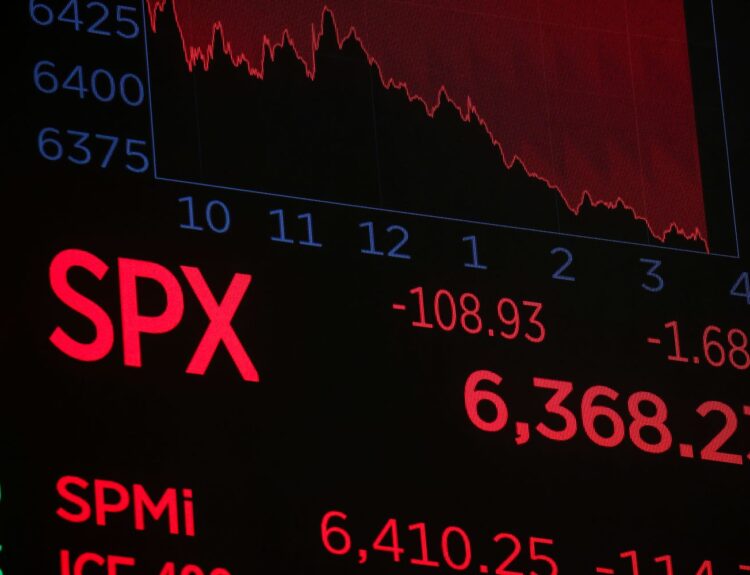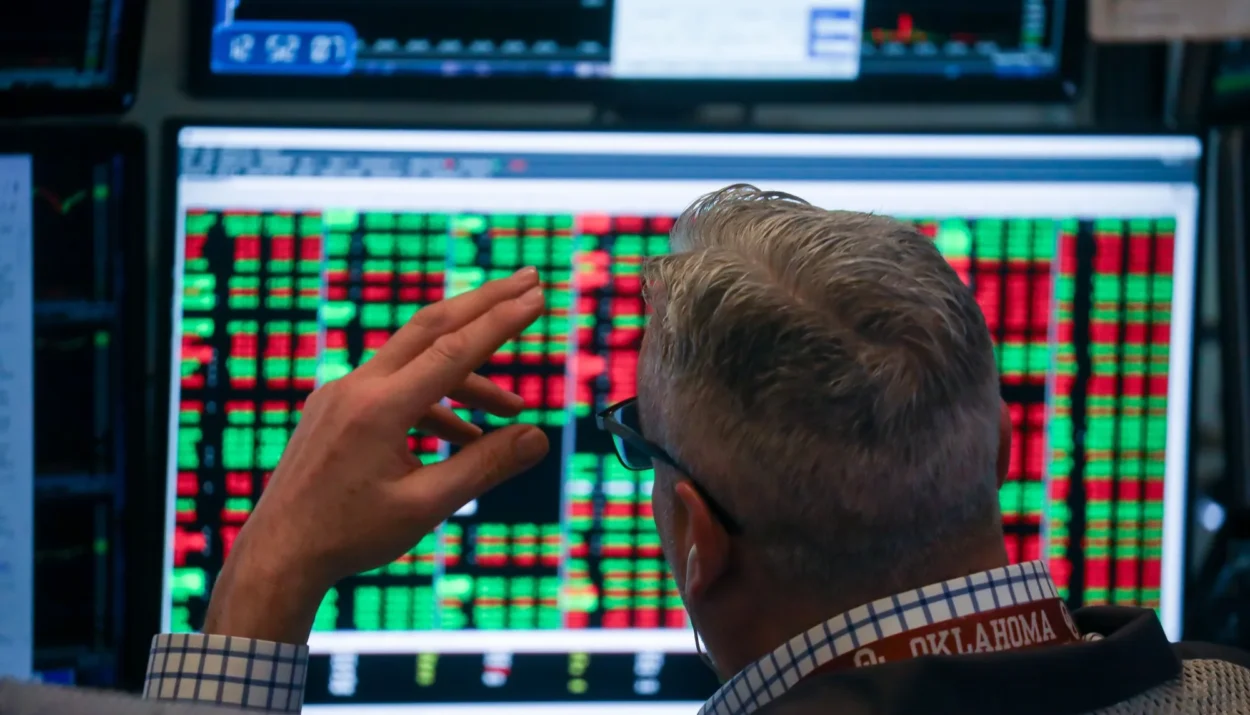

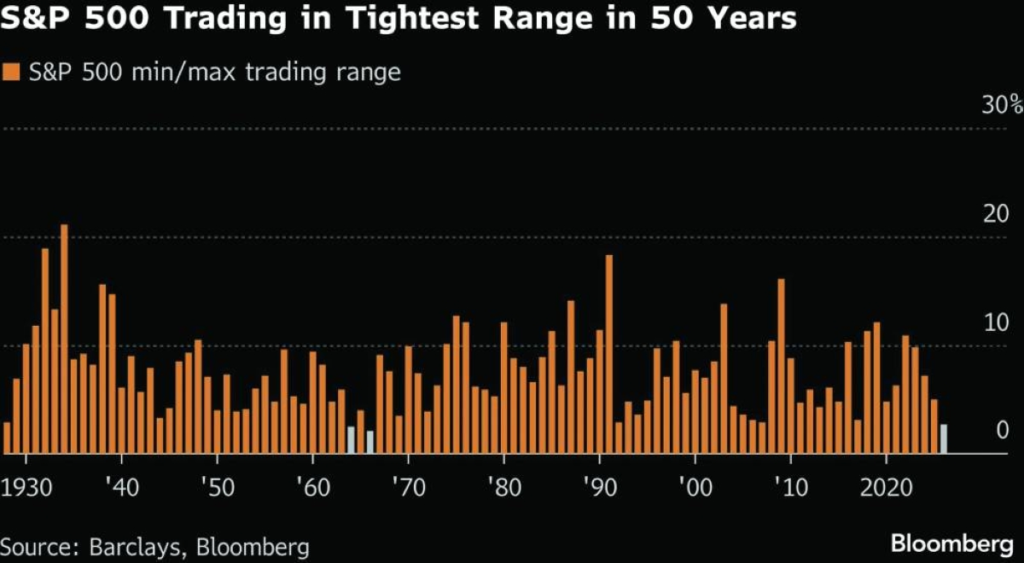
The US stock market may appear calm on the surface, but underneath, it is behaving anything but stably. While the S&P 500 has traded in one of its tightest ranges to start a year since the 1960s, analysts say sharp swings between individual stocks and sectors reveal a market filled with tension and uncertainty.
According to data from Barclays, volatility in single stocks is now about seven times higher than the broader market, the widest gap in at least three decades. That divergence suggests investors are aggressively repositioning portfolios as they try to determine which industries will benefit from artificial intelligence and which could be disrupted by it.
“This is a stock picker’s market, but not in a conventional sense,” said Michael O’Rourke of JonesTrading. “Stock picking is about avoiding implosions.”
What’s Driving the Hidden Volatility
Analysts point to three main forces shaping today’s unusual market conditions:
1. AI uncertainty: Rapid advances in AI, once a purely bullish story, are now creating doubt. Investors are uncertain about which companies will succeed and which will fail, leading to sector-by-sector rotations.
2. High valuations and interest rates: Strategists at JPMorgan say elevated valuations combined with still-high borrowing costs are making markets fragile. When prices are stretched, even small surprises can trigger sharp moves.
3. Concentration risk: Many portfolios remain heavily weighted toward a handful of mega-cap tech names. When sentiment shifts, those positions can unwind quickly and cause dramatic single-stock swings.
Warning Signs Investors Are Pulling Back
Several indicators suggest investors are becoming more cautious:
- Hedge funds have been net sellers of US equities at the fastest pace since March, according to Goldman Sachs.
- Clients at Bank of America sold $8.3 billion in individual stocks last week, one of the largest outflows since 2008.
- Active managers cut equity exposure to the lowest level since July, a survey from the National Association of Active Investment Managers showed.
These moves indicate professionals are reducing risk even while headline indexes remain stable.
Why This Matters for Markets
Historically, similar patterns of calm indexes paired with extreme internal volatility have appeared before major market shifts. Barclays analysts note that comparable setups preceded events such as the 2008 financial crisis and last year’s tariff-driven market disruptions.
Strategists warn that when uncertainty rises, correlations between stocks can suddenly jump. That means shares that once moved independently may fall together if a major shock hits.
Possible triggers investors are watching include:
- geopolitical escalation involving Iran
- upcoming earnings from chip giant Nvidia
- unexpected economic data surprises
Not All Signals Are Negative
Despite the hidden turbulence, there are also signs of strength. A higher-than-usual share of S&P 500 companies reported profit growth this earnings season, the strongest showing in four years. Analysts at State Street say broader participation across sectors suggests systemic risk remains limited for now.
In other words, the market may not be weak. It may simply be adjusting.
The current market is unusual. Indexes look calm, but individual stocks are moving wildly. Experts say this environment rewards diversification and careful stock selection rather than broad bets on the market as a whole.
As one portfolio manager put it, investors are now trying to figure out whether AI will be a blessing or a threat. Until that question becomes clearer, volatility beneath the surface may remain the market’s defining feature.
Disclosure: This article does not represent investment advice. The content and materials featured on this page are for educational purposes only.
Related: Two Stock Market Trends Investors Should Know
Are Prediction Markets the Future of Finance and News?
6 Questions on the Future of Trump’s Tariffs
Could these 6 non-AI chip stocks be the next leg of the AI boom?