

As markets move into Q2 2026 (second quarter of), US investors are facing a growing wall of uncertainty, with risks piling up across geopolitics, inflation, and financial markets.
Financial advisors warn that rising geopolitical tensions, inflation pressures, and market instability are creating one of the most complex investing environments since 2022.
According to advisors across the country, the challenge is no longer just volatility, but a lack of clarity about what comes next.
“Markets can handle bad news,” one advisor said. “What they struggle with is uncertainty.”
Related: What Went Wrong and Right for Stocks Q1 2026?
A difficult start to the year
Despite a late rally at the end of March, the broader picture remains weak.
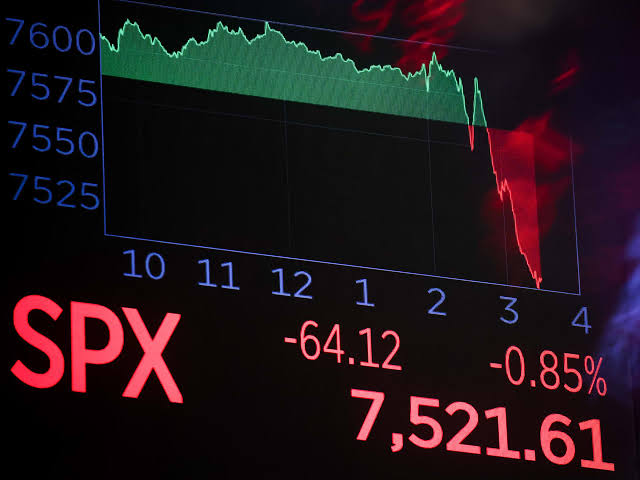
The S&P 500 fell 4.6% in the first quarter, marking its worst quarterly performance since 2022. At the same time, investors faced sharp swings across multiple asset classes, making it harder to position portfolios with confidence.
Volatility increased significantly, even if declines appeared relatively orderly on the surface.
No safe haven this time
One of the biggest concerns is the simultaneous weakness in both stocks and bonds. Traditionally, investors rely on bonds to offset equity losses. But this year, that strategy has not worked.
- 10-year Treasury yields surged from 4.01% to 4.44% in March
- Stocks declined across the quarter
- Even gold dropped 13% in March, its worst month since 2008
This has exposed the limits of the classic 60/40 portfolio strategy, long considered a reliable foundation for investors.
As one advisor put it, “this is one of the toughest market environments we’ve seen.”
Geopolitics and oil are back in focus
A major driver of uncertainty is the ongoing conflict involving Iran. The war has pushed oil prices higher, disrupted supply chains, and raised concerns about long-term inflation pressure.
Advisors warn that this combination could slow economic growth, especially if energy prices remain elevated. There is also a growing fear of stagflation, a scenario where inflation stays high while growth slows, something markets historically struggle to handle.
A fragile economic outlook
Beyond geopolitics, concerns are building around the broader economy. Some investors fear that consumer spending, especially from high-income households, could weaken, which would reduce one of the key drivers of growth.
Others are watching the role of AI and productivity gains, which are expected to support the economy. But if those expectations fail, markets could face additional downside.
One advisor warned of a possible two-phase market decline:
- First driven by war-related uncertainty
- Then followed by a broader economic slowdown or recession
Investors are feeling overwhelmed
Advisors say the psychological impact on clients is becoming noticeable. With so many risks unfolding at once, some investors are becoming hesitant, disengaged, or even frozen in decision-making.
“Are they numb, overwhelmed, or just waiting?” one advisor asked.
This shift in behavior could itself become a risk, as reduced spending and investment activity may feed back into slower economic growth.
Right now, markets are balancing multiple forces at once:
- War and geopolitical uncertainty
- Rising energy prices and inflation risks
- Weak performance across stocks and bonds
- Uncertainty around economic growth and policy direction
Even traditional strategies are being questioned, as correlations between assets break down.
As the second quarter begins, one question dominates investor thinking: Can markets stabilize if uncertainty remains this high, or is more downside ahead?
The answer will likely depend on a few key factors:
- Direction of the Iran conflict
- Path of inflation and oil prices
- Federal Reserve policy decisions
- Strength of consumer spending and AI-driven growth
Until then, advisors say investors should prepare for continued volatility and an unusually unpredictable market environment.
Disclosure: This article does not represent investment advice. The content and materials featured on this page are for educational purposes only.